Why a Plasma Etch Heating Jacket Prevents Chamber Drift
In plasma etch work, temperature is not simply a utility setting. It influences how the chamber, gases, surfaces, and hardware settle into a repeatable operating condition. A plasma etch heating jacket is therefore often considered when a process team needs a more deliberate way to manage heat around a chamber or connected hardware. It is not a substitute for process development, chamber cleaning, or equipment qualification. Its value is in helping the system hold a defined thermal condition when that condition has been established by the process owner.
From an equipment-integration perspective, the useful question is not whether a heating jacket is universally needed. The question is which temperature-sensitive connections are contributing to drift, and whether an external heating zone can be controlled safely alongside the chamber’s existing heaters, cooling paths, sensors, and interlocks.
What Chamber Drift Can Look Like During Plasma Etch
Chamber drift is a broad shop-floor description rather than one diagnosis. Teams may observe changes in endpoint behavior, etch-rate trend, selectivity, uniformity, matching conditions, pressure response, or particle performance over a sequence of wafers. Those observations can have several causes: consumable condition, seasoning state, gas delivery, RF matching, leaks, recipe changes, wall condition, and thermal behavior can all matter.
Thermal behavior deserves attention because a chamber does not reach one uniform temperature at once. The wafer support, walls, lid, gas paths, fixtures, and surrounding hardware may warm and cool at different rates. If a surface sees a changing temperature through the run sequence, its interaction with reaction products can change as well. Published plasma-etch reviews also describe temperature as a variable that affects surface reactions; the direction and size of the effect depend on the chemistry, material, and process conditions. That is why a plasma etch heating jacket should be evaluated against a specific drift signature rather than added as a generic upgrade.
How a Plasma Etch Heating Jacket Supports a Stable Thermal Boundary
A heating jacket adds a controlled heat source around a defined external surface. Combined with insulation and suitable sensing, it can reduce the gap between the intended wall or line temperature and the temperature that hardware would otherwise reach during idle periods, starts, or changing ambient conditions. This can make thermal recovery more predictable, provided the jacket’s heat input, coverage, and control logic match the equipment’s permitted operating envelope.
The effect is indirect but important. When external heat loss is more consistent, the chamber’s thermal surroundings may become less sensitive to room changes and interruption patterns. A heating jacket can also be useful on adjacent components when the process team has identified a temperature-sensitive zone outside the main chamber. It should not be described as a way to solve every deposition or drift issue; it is one thermal-management component within a larger process-control plan.
Why Wall Temperature Deserves a Process-Specific Review
Etch by-products can interact with chamber surfaces, and the wall condition can affect subsequent processing. Technical literature and patent material discuss deposition of etch by-products on chamber walls. In some chemistries, very low temperatures may also create conditions where gases or reaction products condense on surfaces. That does not establish one target temperature for every tool. Instead, it explains why the acceptable window should be defined around the actual chemistry, pressure regime, materials, clean sequence, and wafer temperature plan.
For this reason, a plasma etch heating jacket is most useful when a team can state the working hypothesis clearly: for example, a particular external zone cools excessively between lots, or a wall-region temperature is slow to recover after a clean. The hypothesis should then be checked with logged temperatures and process data. Without that baseline, it is easy to confuse a thermal symptom with a gas-delivery, RF, maintenance, or recipe issue.
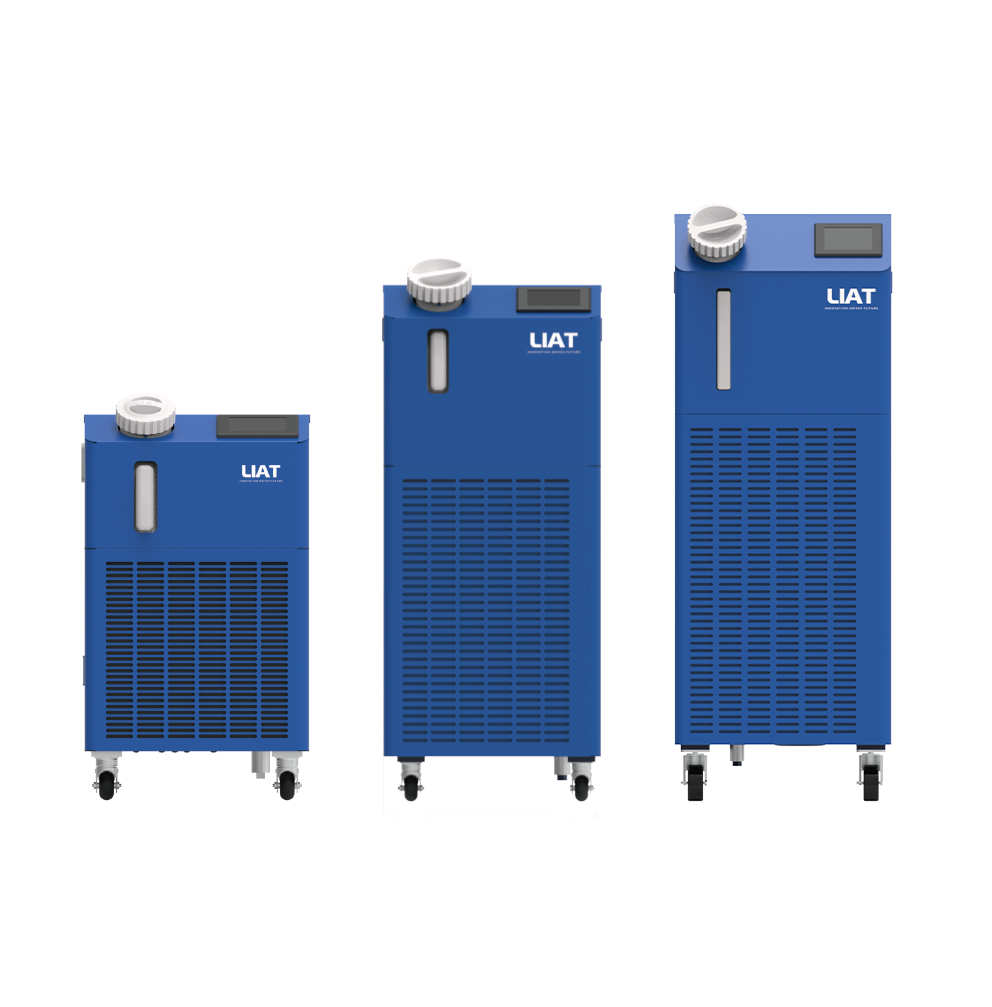
Illustrative view of a controlled heating zone around plasma etch equipment.
Integration Details That Determine Whether the Jacket Helps
In practice, the jacket itself is only part of the implementation. Before specifying a plasma etch heating jacket, review the following items with the equipment owner and qualified electrical or thermal personnel:
-
Target zone: Identify the exact external chamber or line surface to be heated and the reason it has been selected.
-
Permitted temperature window: Confirm limits for seals, coatings, cabling, nearby components, and the original equipment documentation.
-
Heat-loss path: Consider insulation, access panels, mounting points, and adjacent cooling paths, not only the jacket wattage.
-
Sensing and control: Define sensor location, controller setpoint, alarm behavior, over-temperature protection, and what happens after a sensor fault.
-
Electrical and mechanical connection: Check voltage, grounding, cable routing, service access, contamination-control requirements, and whether the installation affects maintenance procedures.
-
Recipe and qualification plan: Decide which monitor wafers, chamber states, and run sequences will be used to compare conditions.
These checks matter because a nominal temperature by itself says little about the heat actually reaching a surface. A narrow gap, a cold mounting flange, or a poorly located sensor can change the response. Put differently, thermal control should be considered as a system of jacket, chamber geometry, insulation, sensing, control, and operating sequence.
A Practical Way to Investigate Temperature-Related Drift
Start with an evidence trail rather than a component choice. Log the relevant temperatures across idle, warm-up, production, clean, and recovery periods. Align that record with lot sequence, RF and pressure data, endpoint indicators, and maintenance events. Then ask whether the observed change tracks a thermal transition strongly enough to justify a controlled-heating trial.
A useful trial defines acceptance criteria before the trial. The team might compare time to thermal stabilization, repeatability over a fixed wafer sequence, and any process metric already used by the fab. Keep nonthermal inputs fixed where possible. If the jacket changes the trend, the next task is to verify the control range and safe operating boundary—not to assume the result transfers to a different chamber, chemistry, or production schedule.
Questions to Resolve Before Selecting a Heating Jacket
For a technical discussion with a thermal-control supplier, prepare the chamber model and permitted modification scope, the external geometry of the target zone, target and maximum surface temperatures, warm-up and idle behavior, available electrical supply, sensor locations, cleanroom materials requirements, and the process symptom being investigated. It is also helpful to state what data will be available for commissioning.
Lingheng Thermal Control Technology (Suzhou) Co., Ltd. focuses its technical discussions on the relationship between temperature range, heat load, medium, and equipment connections. For semiconductor applications, that systems view is useful: a heating jacket decision should connect to the chamber’s process objective and integration constraints, not rely on an isolated specification.
Conclusion
A plasma etch heating jacket can support a more consistent thermal boundary around selected equipment surfaces, which may help a team investigate or manage temperature-related chamber drift. Its contribution depends on the chemistry, chamber design, control strategy, and validation method. Begin with logged evidence, define the permitted temperature window, and qualify the solution against the actual process sequence. That approach gives the heating jacket a clear role in a disciplined plasma-etch thermal-control plan.
 Hot News