How a Battery Chiller Delivers Safe Thermal Control
A battery chiller is part of the thermal-management path that removes unwanted heat from a battery through a controlled coolant loop. In an indirect architecture, the chiller removes heat from the coolant rather than exposing the cells directly to the refrigerant circuit. The distinction matters because safe thermal control depends on the entire system: the battery pack, cooling plate, coolant, piping, sensors, controls, and the duty cycle they must handle together.
From a thermal-management application engineer’s perspective, a battery chiller should be evaluated by returning to four practical conditions: target temperature range, heat load, coolant properties, and control connections. A unit that appears suitable on a nameplate may need a different configuration once charging peaks, ambient conditions, or the test schedule are understood.
What a Battery Chiller Does in the Cooling Loop
The basic task of a battery chiller is heat transfer. Coolant picks up heat at the battery cooling plate or another heat-exchange surface, then flows to the chiller. Inside the chiller, heat is transferred out of that coolant loop through a refrigeration or other temperature-control circuit. The conditioned coolant then returns to the battery side.
This arrangement lets engineers manage battery temperature without treating the chiller as an isolated device. The coolant flow rate, pressure drop through the pack, pipe routing, valve positions, and sensor locations all affect the temperature the cells actually experience. In other words, an industrial chiller can contribute to a stable loop only when the rest of the loop is specified and verified with it.
Why Thermal Control Is a Safety Discussion
Safe thermal control is not simply about reaching one setpoint. A battery sees changing heat input during charge, discharge, soak, transport, and test cycles. If the heat load rises quickly, the control system needs enough response margin to keep coolant conditions within the agreed operating envelope. If the load falls, the same system must avoid unnecessary temperature swings, short cycling, or a control response that does not match the process.
That is why the engineering conversation should start with the whole duty profile rather than a single temperature. A battery chiller used for a steady laboratory soak may face a different requirement from one serving repeated charge-discharge testing or an electrified vehicle subsystem. The phrase “safe thermal control” should therefore mean that the operating limits, alarms, interlocks, and response actions have been defined for the actual application—not that one device alone can establish safety.
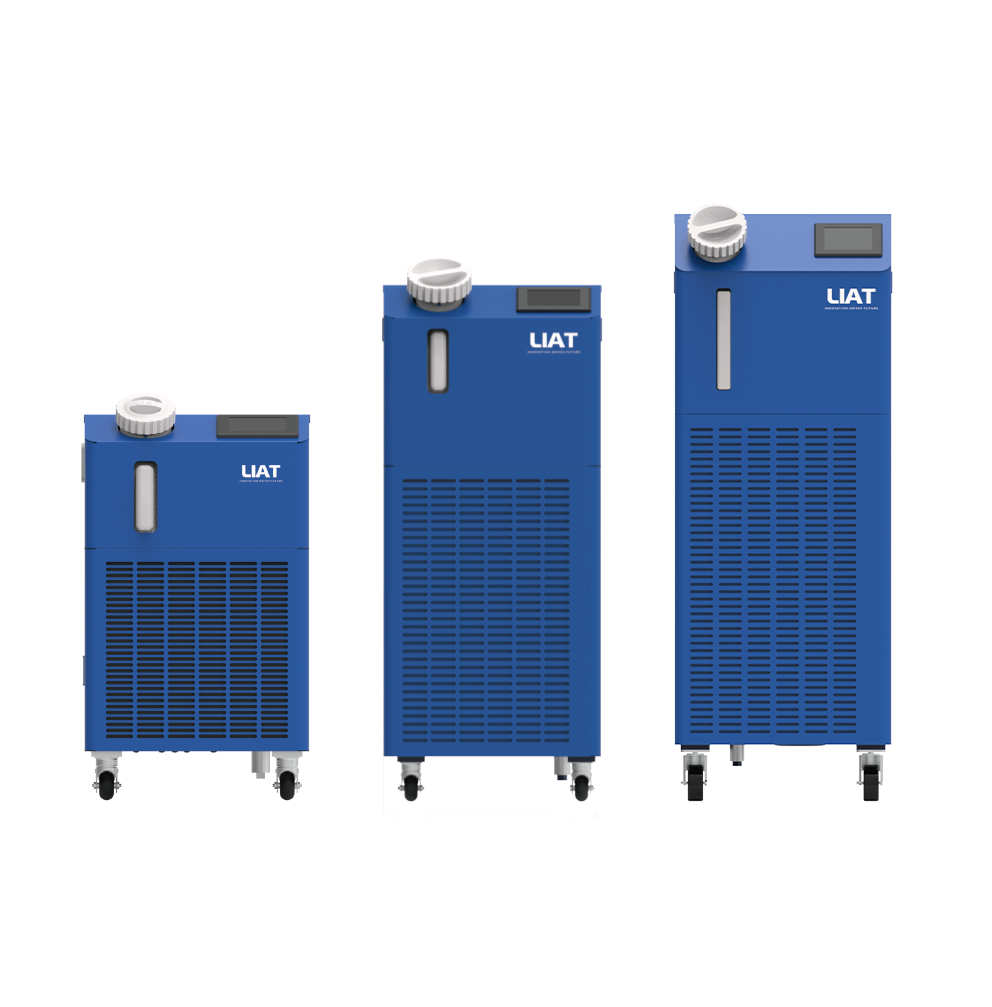
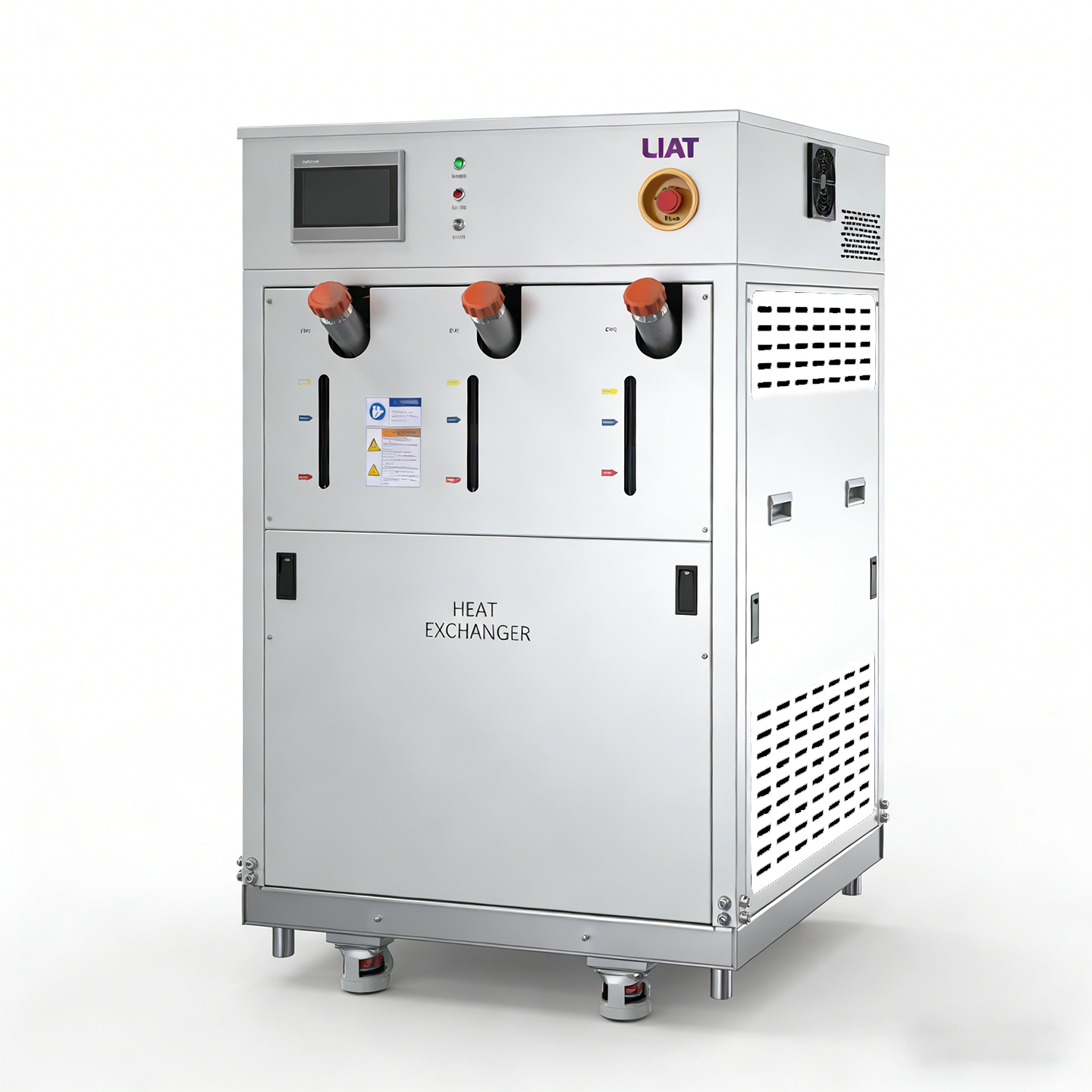
An engineering view of a battery thermal-management loop.
Four Conditions That Shape Battery Chiller Selection
1. Temperature Range and Stability Target
Start by documenting the desired coolant supply temperature, allowable deviation, ambient conditions, and any low-temperature or warm-up phases. Temperature range alone does not settle the selection; the control tolerance and the rate at which the loop must recover also matter. If a test procedure changes from a cold soak to a high-load discharge, the control requirements may be more demanding than the steady-state setpoint suggests.
2. Heat Load and Its Rate of Change
Heat load should include expected continuous dissipation as well as short-duration peaks. An industrial chiller discussion becomes clearer when the team separates average heat from transient heat. Average load informs sustained capacity planning, while the shape and duration of peaks influence control strategy, buffer volume, and the need to validate response behavior. If the heat-load information is incomplete, it is more useful to identify the missing measurements than to make a broad capacity claim.
3. Coolant and Hydraulic Conditions
Coolant composition, viscosity, cleanliness requirements, flow rate, and permitted pressure drop affect the loop as much as cooling capacity does. The pump, filters, hoses, quick connections, and cooling plate must be considered as one hydraulic path. For example, a change in coolant formulation or a restriction in the circuit can alter flow and heat-transfer conditions even when the chiller setpoint stays the same. Compatibility and maintenance requirements should be confirmed from the project documentation.
4. Controls, Sensors, and Equipment Connections
A battery chiller should exchange meaningful signals with the test stand, battery-management controls, or supervisory system where required. Teams commonly need to clarify remote start and stop logic, temperature feedback, flow or pressure monitoring, alarm handling, emergency-stop behavior, and communication interfaces. More accurately, the right connection set depends on the site’s control-system architecture. A clear I/O and interlock list helps reduce late integration changes.
A Practical Verification Sequence
Rather than comparing equipment by one headline parameter, use a structured review. The sequence below keeps the safety discussion connected to real operating conditions:
-
Map the duty cycle: Record the battery state, charge or discharge profile, anticipated heat load, ambient conditions, and required duration for each phase.
-
Define the coolant-side limits: Confirm supply and return temperature ranges, flow requirements, pressure limits, coolant specification, and cleanliness expectations.
-
Review control behavior: Identify sensor placement, setpoint logic, alarm thresholds, permissives, and the action expected after a fault or communication loss.
-
Check integration requirements: Verify electrical supply, footprint, hose routing, connections, drainage, service access, and how the unit connects to the wider test or vehicle system.
-
Plan acceptance testing: Agree on what will be measured during commissioning, including temperature response, flow conditions, alarm behavior, and representative load transitions.
This approach turns a battery chiller from a catalog category into an engineered part of the thermal loop. It makes later conversations with an industrial chiller supplier more specific as well: instead of asking for a generic recommendation, the project team can share the operating envelope and the verification plan.
Common Gaps to Resolve Before Commissioning
-
Only a nominal temperature is provided: Add tolerance, ambient conditions, load profile, and the expected rate of temperature change.
-
The heat load is expressed as one number: Separate continuous load from peak and transient load, then identify how long the peak lasts.
-
Coolant information is incomplete: Confirm fluid type, concentration, materials compatibility, flow range, and filtration practice.
-
Alarm ownership is unclear: Decide which controller detects each condition, who receives the alarm, and what state the system should enter.
-
Interfaces are left until installation: Review electrical, communication, mechanical, and service connection requirements before equipment arrives on site.
These gaps do not imply that a project will have a problem. They are simply the conditions most likely to change the thermal-control design. Stating them early creates a more reliable basis for testing and documentation.
How to Use an Industrial Chiller in a Battery Test Strategy
In battery development and validation work, an industrial chiller can support repeatable coolant conditions so teams can observe how a pack or subsystem responds to controlled changes. The chiller is not a substitute for battery safety procedures, a protection strategy, or a qualified test plan. Its role is to provide a managed thermal boundary while the broader system monitors the variables that matter.
For that reason, confirm the operating envelope with the responsible engineering and safety teams before use. Review how the coolant loop responds to power loss, sensor disagreement, a blocked flow path, an out-of-range temperature, or an emergency stop. Where project requirements call for it, record the acceptance criteria and test the response under representative conditions.
Partnering With Lingheng Thermal Control
Lingheng Thermal Control Technology (Suzhou) Co., Ltd. focuses its technical expertise on precision temperature-control and thermal-management equipment, including advanced solutions for new-energy thermal management, semiconductor thermal control, and specialized industrial chillers. When specifying a battery chiller, collaborating with an experienced partner to align the target temperature range, heat load, coolant conditions, and control integration ensures a reliable and safe thermal-management path.
Conclusion: Final Takeaway
A battery chiller delivers safer thermal control when it is selected and verified as part of a complete coolant and controls system. Begin with the target temperature, heat-load profile, coolant conditions, and interfaces; then define alarms, interlocks, and commissioning checks around the real duty cycle. This condition-based approach gives engineers a clearer path to evaluate an industrial chiller without overstating what a standalone unit can do.
 Hot News