
What Is an Industrial Heating Jacket and Where Is It Used
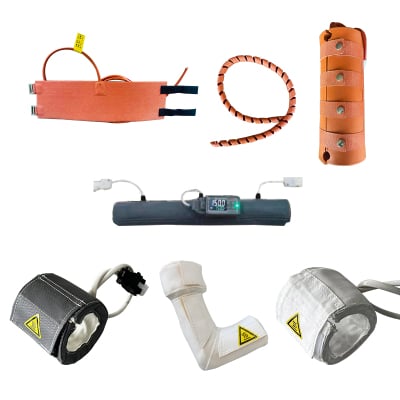
When a liquid thickens, crystallizes, or loses processing consistency as the surrounding air cools, maintaining temperature becomes a process requirement rather than a convenience. An industrial heating jacket is a heated enclosure or fitted layer placed around equipment to transfer heat toward its contents or surface. It is commonly specified for drums, IBCs, pipes, pumps, valves, mixers, tanks, and selected process vessels.
For engineering and purchasing teams, the useful question is not simply whether an industrial heating jacket can get warm. It is whether the jacket can deliver controlled, compatible heat across the actual geometry, temperature range, environment, and operating routine. That distinction helps turn a broad thermal-management request into inputs a supplier can evaluate.
What does an industrial heating jacket do?
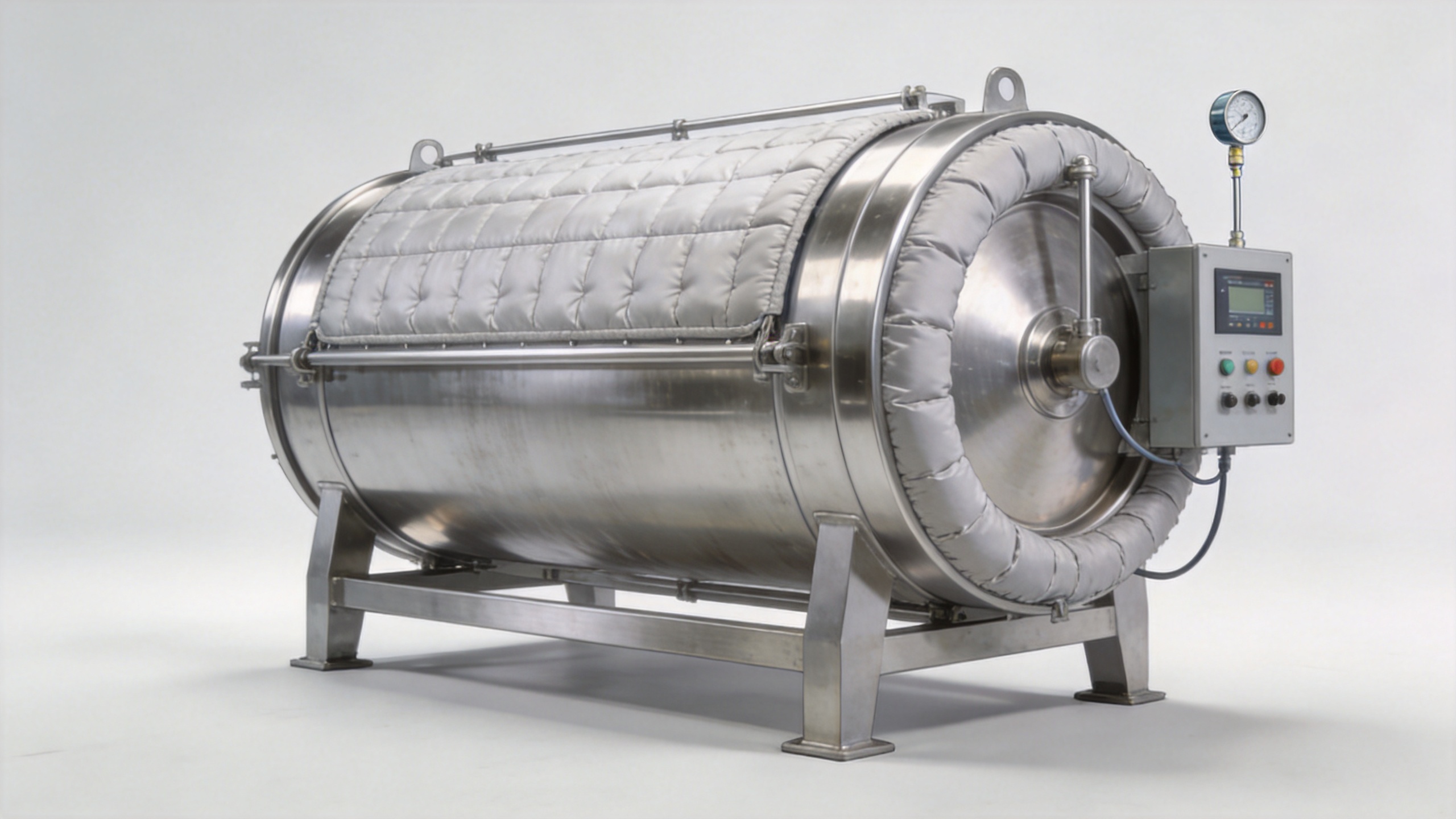
An industrial heating jacket adds heat from outside a container or line. Depending on the design, electrical heating elements, insulated fabric layers, heat-transfer fluid channels, or a combination of these may surround the surface. Heat moves through the wall of the drum, pipe, or vessel and then into the process medium.
The purpose is usually to maintain a workable temperature, reduce viscosity changes, support flow, limit unwanted solidification, or bring a batch closer to its operating setpoint. An industrial heating jacket is not a substitute for validating the whole process: heat losses, product sensitivity, ambient conditions, vessel construction, and control response still shape the result.
How does an industrial heating jacket work?
A typical industrial heating jacket combines a heat source, a contact surface, insulation, fastening hardware, and a controller or thermostat. The heat source raises the jacket temperature. Close surface contact helps heat enter the equipment wall rather than dissipate into the room. Insulation reduces outward heat loss, while the controller measures or regulates temperature according to the installation design.
Uniformity depends on more than heater wattage. Gaps, loose straps, irregular vessel profiles, damaged insulation, or poor sensor placement can create uneven heating. For this reason, an industrial heating jacket should be evaluated as part of an assembly that includes the asset, product, sensor location, power supply, and operating procedure.
Where is an industrial heating jacket used?
An industrial heating jacket is often used where a material must remain pumpable or where a stable process temperature supports repeatable handling. The specific application determines the configuration and verification work.
- Drums and IBCs: Materials stored in portable containers may need warming before transfer or dispensing.
- Pipes, hoses, and valves: Localized heating can support viscosity management or reduce the chance of material cooling in a transfer path.
- Pumps: A fitted industrial heating jacket can help keep temperature-sensitive media within a defined handling range before or during transfer.
- Mixers and tanks: External heating may support batch preparation, mixing, or holding when the vessel and process permit it.
- Laboratory and pilot equipment: Smaller setups may use an industrial heating jacket when controlled external heating is more practical than modifying the vessel.
These are application categories, not proof that one jacket design suits every service. Chemical compatibility, pressure boundaries, hazardous-area requirements, cleaning methods, and plant electrical rules need separate confirmation.
What should you confirm before selecting one?
Start with the process condition, then work outward. A clear specification for an industrial heating jacket should describe the target temperature, starting temperature, expected ambient conditions, and acceptable time to reach or maintain the target. It should also state the container or line dimensions, material, shape, and any obstructions such as handles, fittings, supports, or insulation already in place.
Process and material compatibility
Identify the medium, its temperature sensitivity, and the equipment-wall material. A jacket, its fasteners, and its external surfaces should be appropriate for the operating environment. If a process involves chemicals, washdown, dust, outdoor exposure, or a potentially hazardous atmosphere, the assessment should include the relevant site and safety requirements rather than assuming a general-purpose industrial heating jacket is appropriate.
Temperature control and sensing
Ask what temperature is being controlled: the jacket surface, the vessel wall, or the process medium. Those readings can differ. A controller can only respond to the signal it receives, so sensor location and setpoint strategy matter. Specify over-temperature protection, alarms, interlocks, and operator access according to the plant’s operating philosophy.
Fit, insulation, and serviceability
A correctly sized industrial heating jacket should make consistent contact without obstructing safe access to fittings or routine inspection points. Consider how personnel will install it, remove it, inspect cables, clean the outside, and replace worn straps or insulation. Serviceability may be more important than a nominal feature list when the equipment is used frequently.
Installation and operating practices
Before energizing an industrial heating jacket, inspect the jacket, cables, connectors, control device, and mounting arrangement. Confirm that the equipment is suitable for the intended heat exposure and that the jacket is secured as designed. Do not cover controls or create a trip, pinch, or access hazard during installation.
During commissioning, record the initial condition, setpoint, sensor location, ambient condition, and observed response. That record helps distinguish a heat-transfer issue from a control or process issue later. Operators should be trained to recognize abnormal temperature readings, damaged insulation, loose fasteners, and changes in product behavior.
Maintenance questions that reduce avoidable surprises
Routine checks for an industrial heating jacket can include visible damage, fastening condition, cable strain, connector integrity, controller function, and cleanliness. Maintenance intervals should reflect duty cycle, environment, and site procedures. If temperature behavior changes, investigate the process load, sensor position, supply condition, contact area, and insulation before drawing conclusions about the heater itself.
A practical next step
The right industrial heating jacket begins with a concise requirement sheet: asset dimensions, medium, target and starting temperatures, ambient conditions, required controls, electrical supply, installation constraints, and maintenance access. With those facts documented, engineering teams can compare suitable configurations on fit and verification needs rather than relying on a generic temperature claim.
 Hot News