Why an ALD Heating Jacket Matters for Nanolayer Control
In atomic layer deposition, a thin film is built through repeating surface reactions rather than one continuous coating event. That makes the route from precursor source to chamber part of the process conversation. An ALD heating jacket is not simply an insulated wrap around a component. When it is specified around the real temperature window, component geometry, and control architecture, it can help an integration team keep gas-delivery conditions more consistent while it evaluates film-repeatability risks.
From a semiconductor equipment-integration perspective, the useful question is not whether an ALD heating jacket has the highest nominal temperature. The question is whether its heating zones, sensing points, insulation, fastening method, and service access fit the valves, manifolds, or gas lines that influence a particular ALD recipe.
Why temperature stability reaches beyond the jacket
ALD depends on sequential precursor exposure and purge steps. If a volatile material encounters a section of delivery hardware that is cooler than the intended process condition, condensation can become a concern. If a section is held too hot for that chemistry, decomposition may become a concern instead. The appropriate window is therefore chemistry- and tool-specific; it should come from the process owner’s approved documentation and validation plan, not from a generic jacket rating.
This is why an ALD heating jacket matters for nanolayer control. It can be one element in a thermal path that includes source vessels, tubing, valves, manifolds, chamber connections, sensors, and the controller. A single well-controlled component does not establish uniform conditions across that path. Conversely, a localized cold region can complicate the effort to maintain repeatable delivery conditions even when the chamber setpoint is stable.
What to examine in an ALD heating jacket
Fit and contact on the actual component
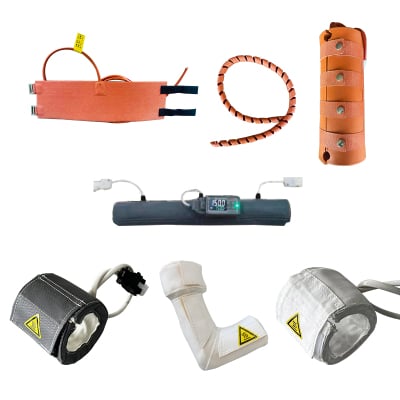
Many ALD assemblies include bends, fittings, valve bodies, branches, and irregular transitions. An ALD heating jacket should be evaluated for coverage and contact around those features rather than only against a nominal pipe diameter. Gaps, awkward seam placement, or interference with fittings can change how heat is distributed. For components that need regular access, a removable construction may be more practical, provided its closure and reinstallation method are documented.
Heating zones and sensor placement
Where a component has varied mass or exposed surface area, one sensor reading may not represent every location. A well-framed review asks where the sensor will sit, what part of the assembly it represents, how the controller responds to a changing load, and whether adjacent hardware creates a cooler transition. The goal is not to claim a universal uniformity value; it is to define what must be measured during commissioning.
Materials and cleanroom compatibility
Outer materials, insulation, wiring exits, fasteners, and cleaning limits should be checked against the equipment environment and maintenance practice. Chemical exposure, outgassing expectations, bend radius, and routing constraints can all affect an ALD heating jacket decision. These details are especially important when the jacket sits near high-purity delivery hardware or must be opened during scheduled service.
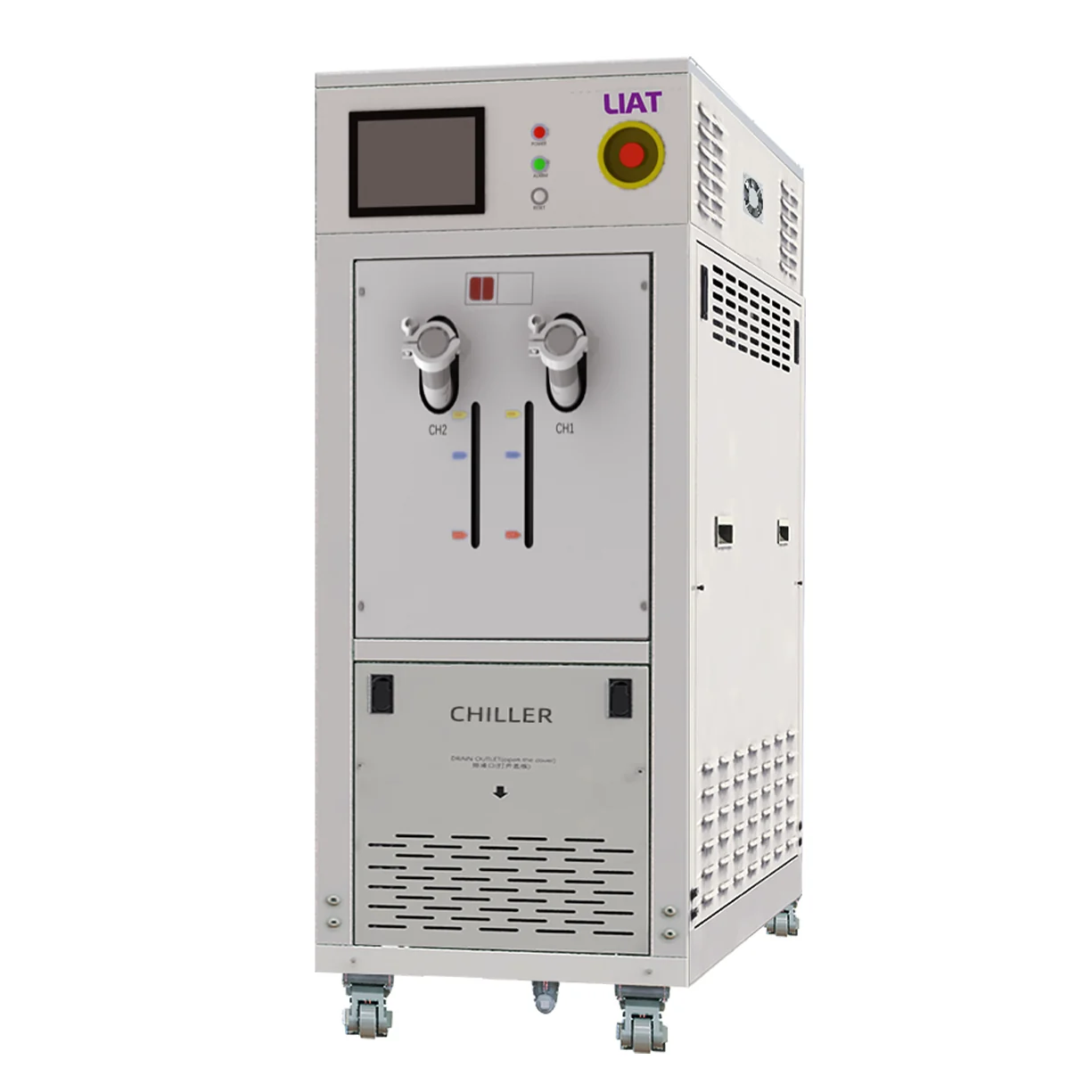 An ALD heating jacket should be reviewed as part of the gas-delivery thermal path.
Connecting thermal control to nanolayer repeatability
Nanolayer control is ultimately verified through the process and the film, not by the jacket alone. Still, thermal consistency in delivery components can support a more disciplined process window. If precursor transport changes because of an unplanned local temperature difference, an engineer may need to investigate delivery behavior before attributing a film variation solely to chamber timing or substrate conditions.
A practical way to use an ALD heating jacket is to map it against the conditions that the recipe team already monitors: source condition, line condition, valve and manifold connections, chamber inlet, pulse sequence, purge sequence, and any approved maintenance limits. This makes the jacket part of a verification chain rather than a standalone accessory.
| Review area | Why it matters | Question to confirm |
|---|---|---|
| Temperature window | The suitable condition depends on precursor chemistry and hardware. | What approved range applies at this component? |
| Coverage | Fittings and transitions may behave differently from straight sections. | Which surfaces need controlled coverage? |
| Sensor location | A reading must represent the condition being controlled. | Where is the sensor mounted and what does it miss? |
| Control connection | Heater and controller behavior must fit the tool architecture. | How are alarms, limits, and interlocks handled? |
| Service access | Routine inspection should not compromise reinstallation. | Can technicians remove and refit the jacket consistently? |
Common specification mistakes
One common mistake is choosing an ALD heating jacket solely from a maximum-temperature figure. That number does not establish compatibility with the actual component, the required control range, or the integration method. Another is treating insulation as a substitute for measurement. Insulation can help manage heat loss, but it does not confirm the temperature at a critical transition.
A third mistake is separating the mechanical and controls discussions. A jacket may fit physically while its sensor lead, power connection, controller logic, or service sequence causes an avoidable integration issue. It is more useful to review those elements together before finalizing the design.
A commissioning checklist for process teams
- Document the component drawing, materials, geometry, and surrounding connections.
- Define the approved temperature condition for the chemistry and recipe, including alarm and limit expectations.
- Identify representative sensor locations and any areas that require temperature verification.
- Confirm power, controller, wiring, grounding, and interlock compatibility with the tool.
- Review removal, inspection, and reinstallation steps before routine service begins.
- Compare process and film-monitoring results before and after a controlled change; keep the interpretation within the validated process plan.
Use the jacket as part of an evidence-based thermal plan
An ALD heating jacket can be relevant to nanolayer control because it helps address a specific part of the delivery-side thermal environment. Its value depends on the component, chemistry, temperature window, sensor strategy, and integration details. Rather than treating the jacket as a generic performance claim, teams can use it as a defined element of a broader validation plan that connects hardware condition to process observations.
Before selection, request drawings, temperature-control documentation, materials information, electrical connection details, and service instructions. That keeps the discussion grounded in the real ALD tool and gives the process team a clearer basis for evaluating the next commissioning step.
 Hot News