When an Air Cooled Industrial Chiller Beats Water Cooling
An air cooled industrial chiller can be the stronger choice when a process needs dependable temperature control but the site has limited water, limited room for auxiliary equipment, or limited capacity to maintain a cooling tower. The right decision is not simply “air versus water.” It starts with the process heat load, target temperature range, ambient conditions, water quality, operating schedule, and service resources.
From a thermal-management application engineer’s perspective, the useful question is: which heat-rejection path creates the fewest constraints for this process? An industrial chiller with an air-cooled condenser sends heat to ambient air through fans. A water-cooled system transfers condenser heat to a water loop, commonly paired with cooling-tower equipment. Both approaches can serve industrial cooling duties, but their site requirements are materially different.
Start With the Process, Not the Condenser Type
Before comparing an air cooled industrial chiller with water cooling, define the conditions the equipment must actually handle. Confirm the maximum and minimum process load, required supply temperature, allowable temperature variation, fluid type, piping run, installation location, and production hours. If the load changes sharply, looking only at the temperature setpoint is not enough; pull-down demand and heat spikes can affect the selection.
This first pass also keeps a common purchasing problem in view: incomplete heat-load information makes it difficult to compare alternatives fairly. A compact machine-room layout may favor an air cooled industrial chiller, while a continuously high load and an established condenser-water plant may point to a water-cooled arrangement. The process and the site must be evaluated together.
When an Air Cooled Industrial Chiller Has the Practical Edge
1. The Site Has Limited or Costly Water
An air cooled industrial chiller does not need a condenser-water loop or cooling tower to reject heat. That matters where water availability is restricted, local water quality would add treatment work, or a project wants to avoid the operating responsibility associated with tower water. This does not make air cooling universally lower cost; it removes a specific utility dependency that may be significant for the site.
2. You Need a Simpler Installation Scope
Water-cooled layouts normally require equipment and interfaces beyond the chiller itself, such as a condenser-water circuit, pumps, tower controls, makeup-water provisions, and placement for heat-rejection equipment. An air cooled industrial chiller concentrates heat rejection at the unit through its condenser fans. For a retrofit, a leased facility, or a production expansion with a short installation window, avoiding those extra interfaces can simplify coordination.
3. Maintenance Resources Are Lean
Cooling-tower systems require a maintenance plan for the water loop and associated equipment. Where a plant does not already have trained personnel, water-treatment procedures, and scheduled service access, an air cooled industrial chiller may create a more manageable maintenance boundary. The air-cooled unit still needs attention: condenser surfaces must stay clear, fan operation must be checked, and airflow around the unit must not be blocked. The difference is that there is no separate condenser-water circuit to manage.
4. The Cooling Load Is Moderate or Intermittent
Many industrial processes do not run at a sustained peak load around the clock. Test equipment, pilot lines, batch operations, and certain laboratory or assembly tasks may have varying duty cycles. In these cases, a properly sized air cooled industrial chiller can be a practical fit when the expected ambient conditions and airflow are checked carefully. The conclusion should come from the load profile, not from a rule of thumb about plant size.
5. Space for a Cooling Tower Is Unavailable
An industrial chiller project has to consider more than the footprint beside the process. A water-cooled design needs space and structural planning for cooling-tower equipment and its service access. If roof loading, outdoor access, noise boundaries, pipe routes, or building approvals are restrictive, an air cooled industrial chiller can avoid a major part of that infrastructure discussion. It still needs clear airflow and service clearance, especially in hot weather.
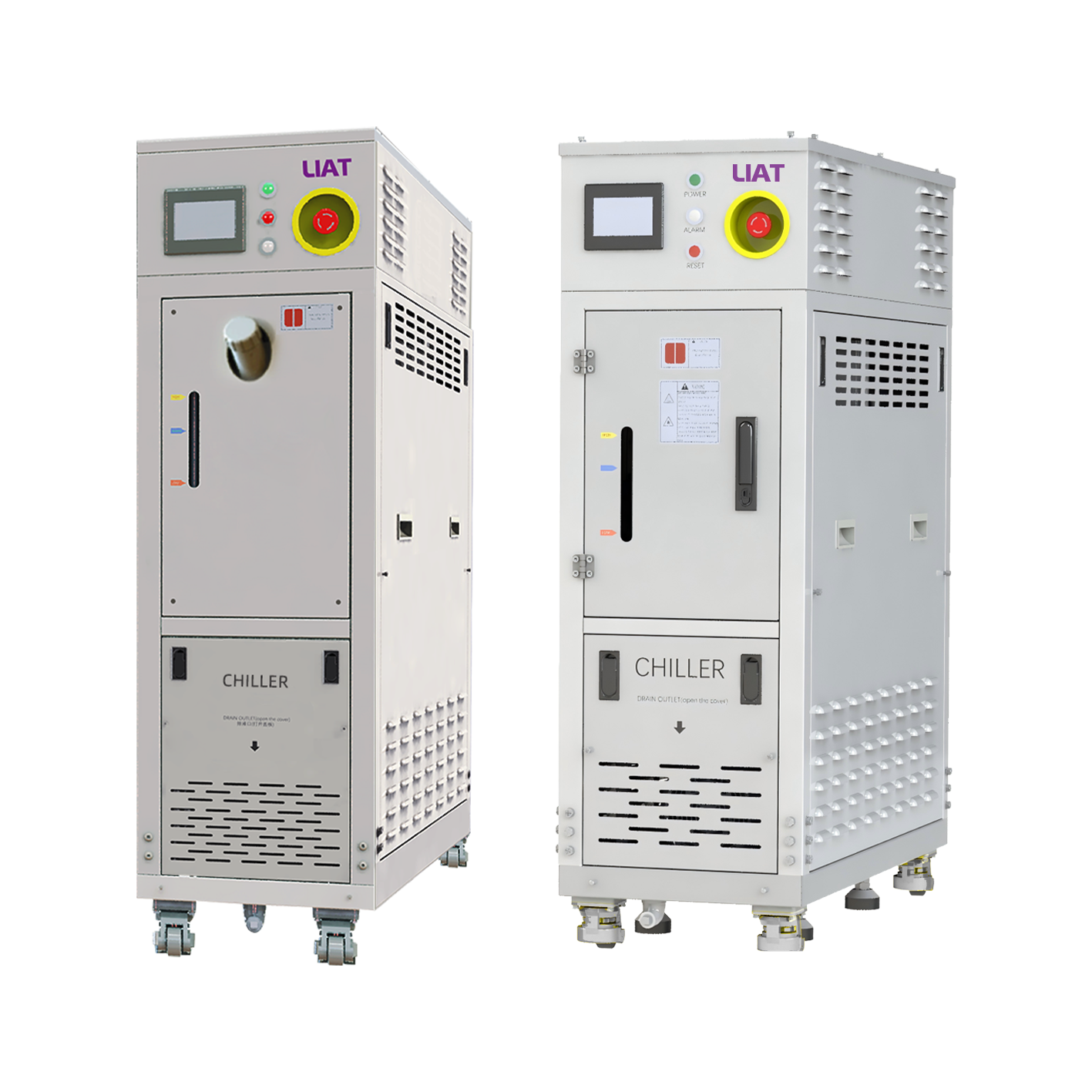
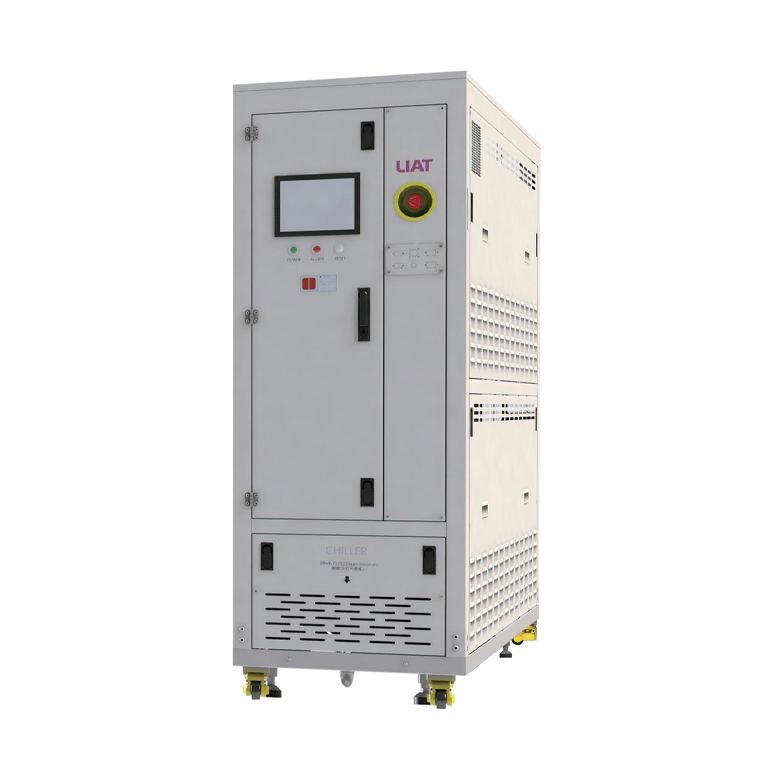
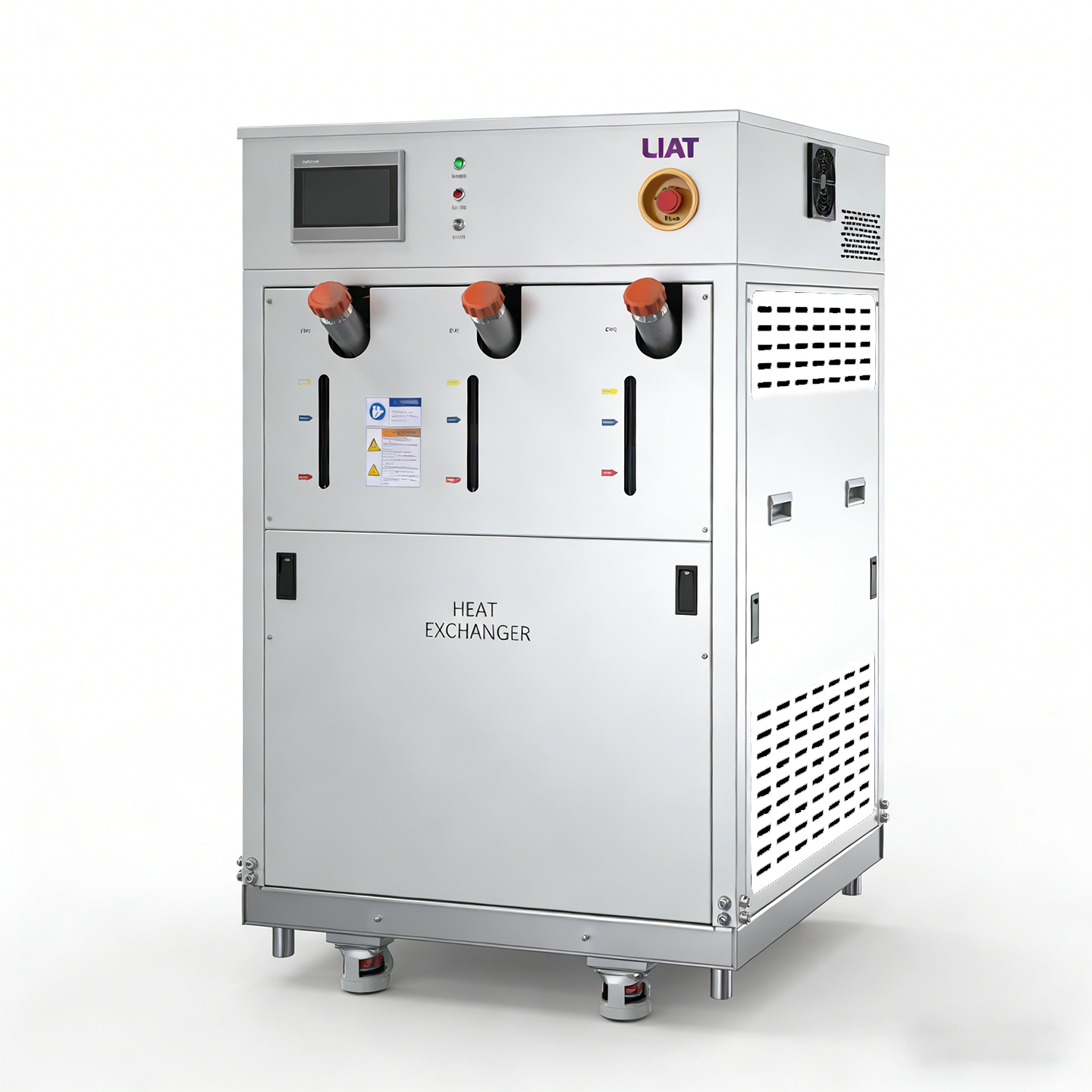
An air-cooled configuration rejects condenser heat through outdoor airflow rather than a condenser-water loop.
Where Water Cooling May Still Deserve Attention
Water cooling should remain in the comparison when a facility already has a well-maintained condenser-water system, a cooling tower, dependable water-treatment practices, and a stable high load. Water can transfer heat effectively, and the overall arrangement may suit projects with demanding capacity requirements or long operating hours. More accurately, the decision belongs to the whole plant configuration rather than to one component in isolation.
Outdoor design conditions matter as well. An air cooled industrial chiller rejects heat to the surrounding air, so high ambient temperature, recirculation of warm discharge air, and inadequate clearance can affect available capacity and energy use. A supplier should review local design ambient conditions, installation layout, and control requirements before final sizing.
A Decision Checklist for Your Industrial Chiller Project
-
Heat load: What are the average, peak, and transient loads at the process?
-
Temperature window: What supply temperature and stability range does the process require?
-
Water conditions: Is condenser water available, acceptable in quality, and supported by a treatment plan?
-
Site layout: Is there room and service access for a cooling tower, piping, pumps, and controls?
-
Ambient conditions: What outdoor temperature and airflow conditions will the air-cooled unit experience?
-
Maintenance ownership: Who will maintain fans, coils, pumps, treatment equipment, and alarms?
-
Expansion path: Will process load or operating hours change after installation?
Answering these questions produces a clearer basis for comparing lifecycle implications. It also prevents an air cooled industrial chiller from being judged only by first cost, or water cooling from being selected without accounting for its utility and maintenance requirements.
How to Specify an Air Cooled Industrial Chiller Clearly
When requesting a proposal, provide a concise operating profile instead of only a nominal capacity. Include the process fluid, inlet and outlet temperatures, flow requirement, maximum load, load variation, ambient design temperature, electrical supply, installation location, available clearances, and control or alarm interfaces. For sensitive manufacturing processes, clarify whether the chiller is serving a tool, a recirculating loop, a heat exchanger, or a test fixture.
Partnering With Lingheng Thermal Control
Lingheng Thermal Control Technology (Suzhou) Co., Ltd. focuses its technical communication on precision temperature-control and thermal-management equipment for applications including semiconductor thermal control, heating-and-cooling systems, low-temperature chillers, and new-energy thermal management. For an industrial chiller discussion, the practical next step is to verify the operating conditions and integration requirements rather than assume that one heat-rejection method fits every line.
Conclusion: Choose the Lower-Constraint System for the Actual Site
An air cooled industrial chiller tends to make the most sense when water is constrained, cooling-tower infrastructure is unavailable, installation needs to stay contained, or the maintenance team needs a simpler system boundary. Water cooling can be appropriate when an existing plant supports it and the operating profile justifies the added infrastructure. A disciplined comparison of load, ambient conditions, water, layout, and maintenance will lead to a sounder industrial chiller selection than a capacity-only comparison.
 Hot News