
Why a Removable Heating Jacket Is the Safer Maintenance Choice
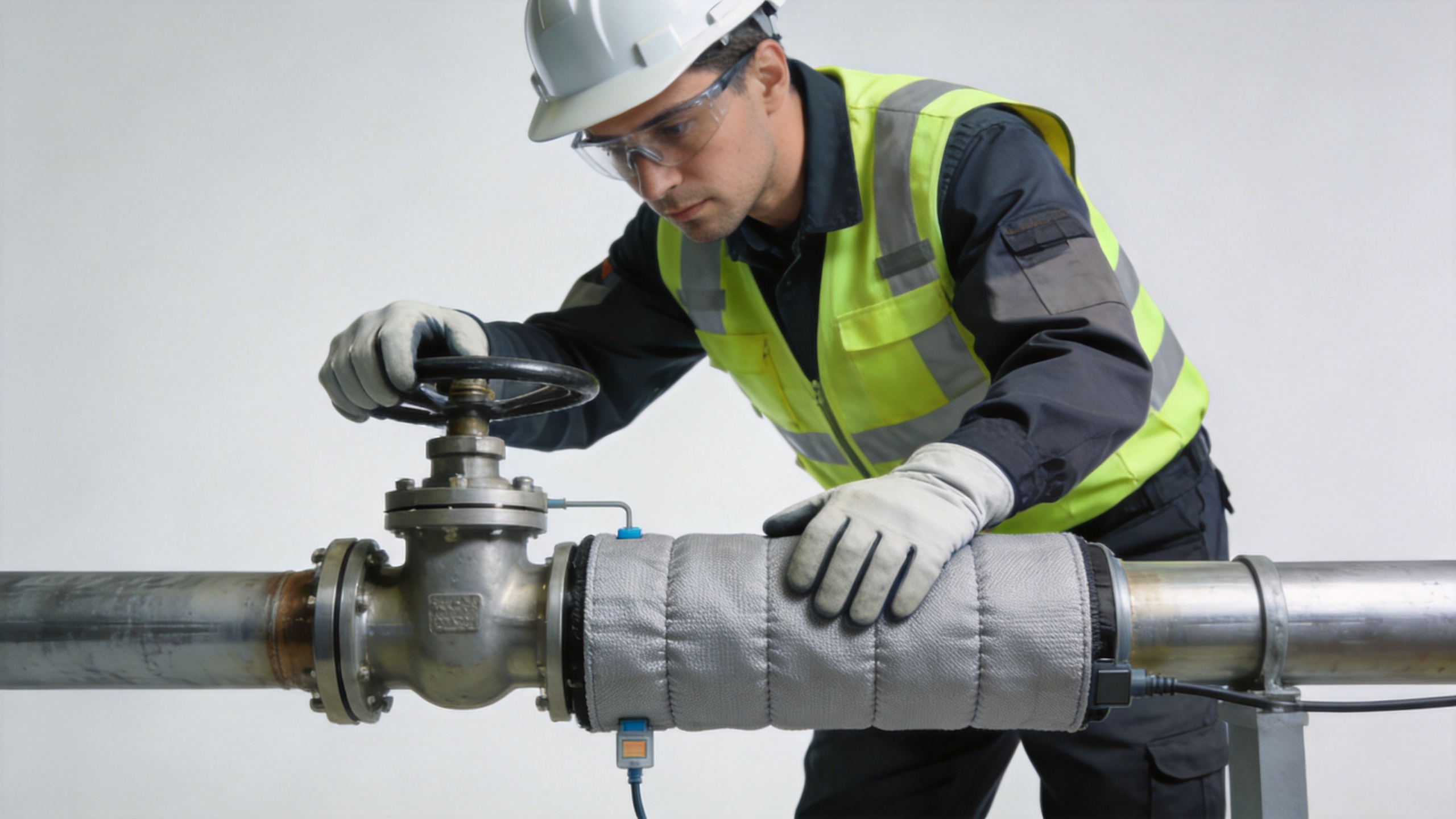
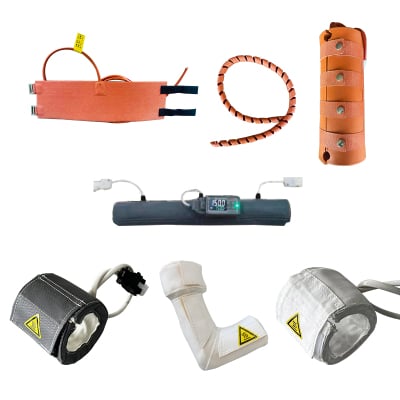
A removable heating jacket is more than a layer around a hot pipe, valve, vessel, or process component. In a well-planned maintenance program, it can help teams reach service points without cutting aside fixed insulation and then rebuilding it after the task. That access can make shutdown work easier to organize, while keeping thermal protection part of the equipment’s normal operating condition.
From an industrial procurement perspective, the useful question is not simply whether a heating jacket can add heat. It is whether the jacket’s fit, closure, power arrangement, and removal procedure suit the equipment, the maintenance routine, and the site’s safety controls. A practical removable heating jacket should be assessed as part of the whole maintenance workflow.
Why maintenance access changes the safety discussion
Fixed insulation may work well when a component is rarely opened. The picture changes when technicians need recurring access to valves, instruments, flanges, filters, pumps, or trace-heated pipe sections. If access requires tearing, cutting, or disturbing a permanent covering, the work can create loose material, unclear reinstallation steps, and an uncovered surface after the repair.
A removable heating jacket gives the maintenance team a defined item to remove, inspect, store, and reinstall. That does not replace lockout/tagout, electrical isolation, cool-down planning, permits, or task-specific risk assessment. It can, however, support a more repeatable sequence when those controls are already in place.
Safety guidance commonly considers exposed heated surfaces as a hazard when people could be injured by contact. For that reason, a jacket should not be viewed as a substitute for site procedures. It is one layer in a broader approach that may include guarding, warning practices, access control, and verification before equipment returns to service.
What makes a removable heating jacket easier to manage
Removal is only useful when the jacket can be handled consistently. During specification, ask how the cover opens, where fasteners sit, how cable exits are protected, and whether the installed assembly leaves the intended service points reachable. The answers depend on equipment geometry, available clearance, surface temperature, process media, and the maintenance method.
- Defined seams and closures: A jacket designed for the component can give technicians a clear opening path instead of encouraging improvised removal.
- Repeatable positioning: Labels, orientation marks, and matched sections can help the team return the cover to its intended location after service.
- Inspectable condition: When the jacket is off, staff can inspect the cover, closures, leads, and the underlying equipment rather than assuming they remain suitable.
- Clear electrical boundaries: If the heating jacket has electrical elements, the disconnect point, controller connection, and verification steps should be clear before removal begins.
Those details matter because a removable heating jacket is handled repeatedly. A design that looks straightforward on a drawing may be awkward around supports, instrument tubing, tight bends, or adjacent equipment. The safer choice is usually the one that has been checked against the actual access route, not just the nominal diameter.
A maintenance sequence worth defining before purchase
Before choosing a heating jacket, map one routine maintenance job from start to finish. Include isolation, cool-down, access, removal, inspection, reinstallation, and functional checks. This moves the discussion from a general promise of convenience to the conditions that the site can actually verify.
- Identify the service task. State which part must be reached and how often the work occurs. A valve packing adjustment and a full flange break are different access cases.
- Confirm the energy-control process. Document how electrical power and process energy are isolated, who verifies the condition, and when removal is permitted.
- Check the physical removal path. Review clearance around fasteners, lifting needs, pointed edges, nearby hot surfaces, and any requirement for more than one person.
- Set an inspection point. Define what technicians should examine on the jacket and the underlying component before it is put back.
- Specify reinstallation checks. Confirm orientation, closure engagement, lead routing, sensor placement where applicable, and controller checks before restarting.
This sequence is especially valuable for a removable heating jacket used on equipment with changing operating stages. Temperature targets, heat load, media, and control connections should be discussed together. A cover that fits mechanically may still need further review if the control arrangement or operating conditions change.
Where a heating jacket can reduce avoidable rework
A heating jacket can be considered for applications that need localized heat input or thermal retention around process equipment. In maintenance-heavy areas, removability can reduce the need to rebuild a covering after each inspection. The result is not automatic: it depends on fit, installation discipline, the condition of the jacket, and whether the team follows the established work instruction.
There is also a planning advantage. A removable assembly can make it easier to distinguish the equipment’s thermal cover from the component beneath it in maintenance documentation. Technicians can record the jacket’s condition, confirm whether the closure system is intact, and escalate concerns before a worn cover is returned to operation.
For buyers, it is more accurate to compare maintenance implications than to assume a generic cost outcome. Ask how the design accommodates expected service intervals, whether replacement sections can be identified, and what information is needed to confirm fit. Heat load, target temperature range, media conditions, electrical supply, controls, connections, and physical access all affect that evaluation.
Questions to ask before specifying a removable heating jacket
- Which component must remain accessible, and what task will technicians perform there?
- What are the normal and abnormal surface-temperature conditions?
- What isolation, cool-down, and verification steps apply before removal?
- Does the jacket need to accommodate instruments, supports, flanges, bends, or actuators?
- How will the team verify correct reinstallation after maintenance?
- What documentation is needed for fit, electrical connections, inspection, and replacement?
It is useful to gather these details before comparing configurations. Discussing thermal equipment in terms of temperature range, heat load, media, and connections helps avoid viewing a single product feature as proof of suitability. Lingheng Thermal Control Technology (Suzhou) Co., Ltd. focuses its technical communication on those project conditions, so a requirement can be reviewed as a system question rather than as a list of isolated claims.
The practical takeaside
A removable heating jacket can be a safer maintenance choice when it supports controlled access and a documented return-to-service process. Its value comes from making removal and reinstallation intentional, not from removing the need for electrical isolation, hazard assessment, or trained personnel.
Start with the maintenance task, then verify the equipment geometry, operating temperature, process conditions, heat load, access constraints, and control arrangement. With those conditions clear, a removable heating jacket can be evaluated as a maintainable part of the thermal-management system rather than an afterthought around the equipment.
 Hot News