
How a Precision Heating Jacket Holds Tight Tolerances
When a process has a narrow temperature window, a precision heating jacket is not simply an insulated heater wrapped around equipment. It is part of a thermal-control loop that must move heat into the vessel or line at a measured rate, read the right temperature, and respond before a small drift becomes a process issue. For teams working with viscous materials, temperature-sensitive ingredients, or repeatable batch conditions, that distinction matters.
As a thermal-management engineer would frame it, a precision heating jacket holds tight tolerances only when the heater, the load, the sensor location, the controller, and the installation all agree with the real duty. A setpoint alone does not prove that the material inside a vessel has reached, or is holding, the intended temperature.
What “tight tolerance” means in jacketed heating
A tolerance is the acceptable gap around a target temperature, measured at a defined point and over a defined period. The definition should answer practical questions: Is the value taken from the jacket surface, the vessel wall, the process fluid, or a representative point in a pipe? Does the requirement apply after warm-up, during dosing, or through an entire hold stage?
This is why a precision heating jacket needs a clear measurement plan before anyone compares heater ratings. A system can show a stable controller display while the process temperature lags behind, especially where a heavy vessel wall, low product movement, or changing fill level slows heat transfer. In other words, stable equipment behavior and stable process behavior are related, but they are not identical.
How a precision heating jacket controls heat flow
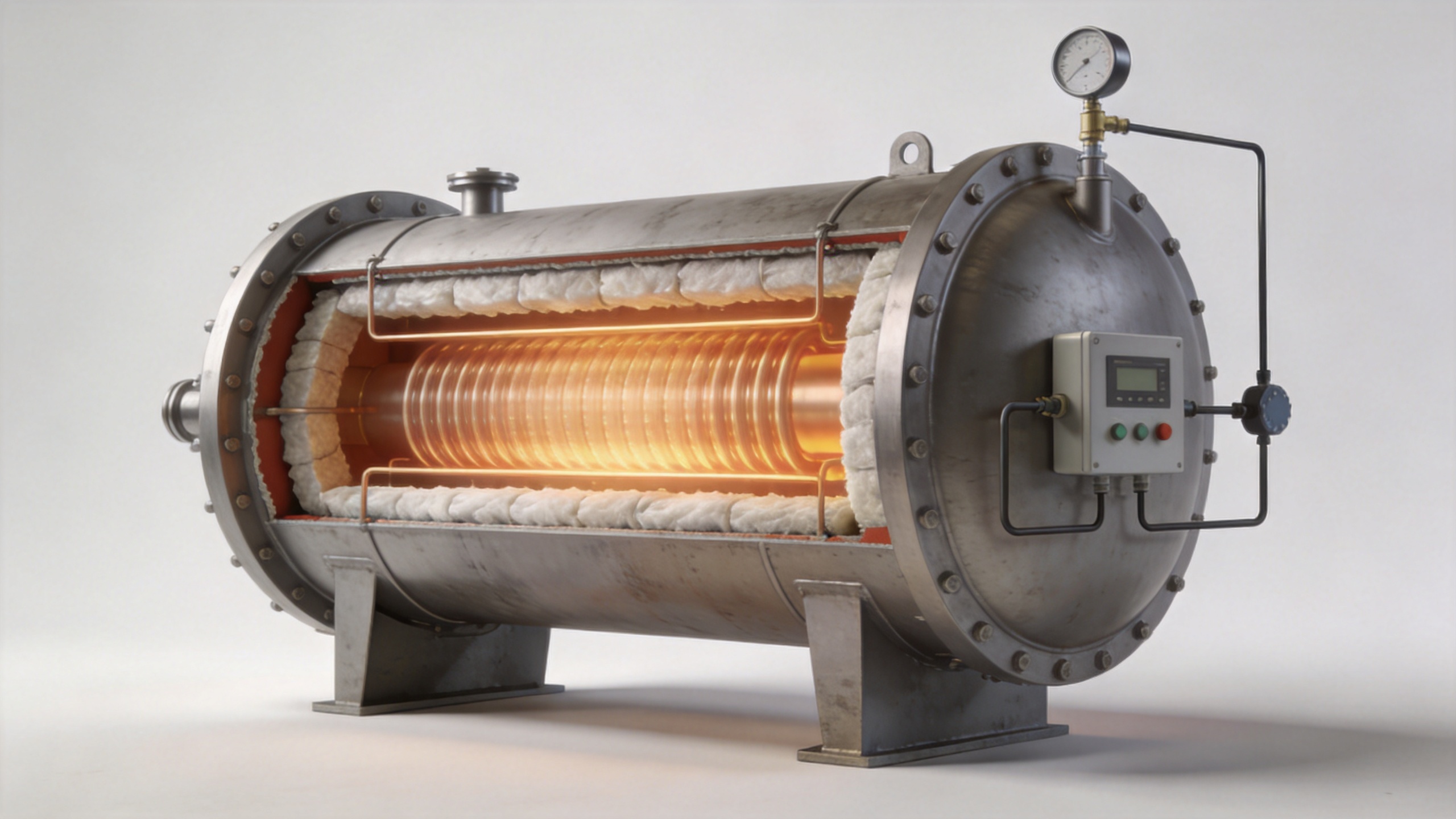
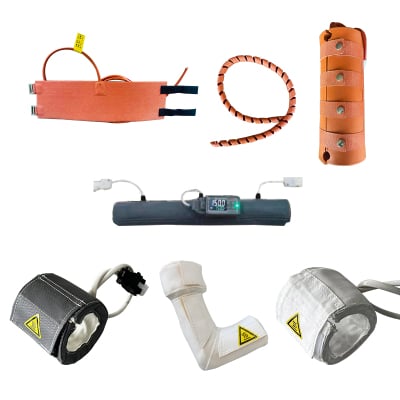
A precision heating jacket typically surrounds part or all of a vessel, pipe, valve, filter housing, or transfer path. Its heating elements supply energy through a contact surface; insulation limits unwanted heat loss; and a controller adjusts output from a temperature signal. The control sequence is straightforward in principle:
- The sensor reports a measured temperature.
- The controller compares that value with the target.
- The controller changes heater output according to its configured logic.
- The heated equipment and process mass respond over time.
- The sensor reads the new condition and the cycle repeats.
What makes a precision heating jacket different from a basic warming layer is the attention given to each link in that loop. If the sensor is poorly coupled, the controller reacts to a misleading signal. If the jacket does not make consistent contact, some areas receive heat earlier than others. If the control tuning is too aggressive for a slow-moving thermal mass, the system may overshoot and then spend time correcting.
Four conditions that decide whether the tolerance is realistic
1. The actual heat load
Heat load changes with vessel size, product mass, starting temperature, ambient conditions, insulation, and any flow through the equipment. A precision heating jacket sized only for the nominal vessel may respond differently when the vessel is partly full or when colder material enters during a production step. For that reason, load changes should be documented rather than treated as a minor detail.
2. Sensor placement and contact
Sensor placement deserves as much attention as heater coverage. A temperature probe mounted near the heater can read warmer than the bulk process. A probe placed in a stagnant zone may react slowly. For a precision heating jacket, the useful sensor location is the one that represents the control objective, not merely the easiest point to wire. Where the process is critical, teams often compare the control sensor with a separate verification measurement during commissioning.
3. Jacket fit and heat-transfer path
Gaps, folds, uneven fastening, and damaged insulation can make a heating jacket less uniform. A fitted heating jacket helps establish repeatable contact, but geometry still matters: nozzles, supports, clamps, and irregular surfaces can change the path heat takes into the equipment. A precision heating jacket should therefore be specified around the real installed geometry, including areas that must remain accessible for operation or maintenance.
4. Controller behavior and process delay
Every heated system has delay. The controller may command more output, yet the measured process temperature may not move for several minutes because energy is still traveling through the jacket and wall. A precision heating jacket needs control settings that reflect this delay. Before drawing conclusions from a trend, confirm the medium, sensor position, fill condition, and timing of process changes. Those conditions frequently explain temperature variation more clearly than a single hardware parameter.
A practical commissioning sequence
Commissioning turns the intended tolerance into a documented operating condition. For a precision heating jacket, use a repeatable sequence rather than relying on a single successful warm-up:
- Record the target temperature, allowable band, sensor location, and measurement method.
- Confirm the jacket is fitted, secured, and insulated as intended before energizing it.
- Run a controlled warm-up from a known starting condition and log the response.
- Observe overshoot, settling time, and temperature differences between control and verification points.
- Repeat the check at expected fill levels, flow states, or product conditions where practical.
- Set an inspection routine for connectors, fastening points, insulation condition, and sensor integrity.
This sequence does not assign a universal tolerance to every precision heating jacket. It gives the operating team a way to decide whether the observed behavior matches the process requirement. The relevant acceptance band must come from the process owner, validated procedure, or applicable project documentation.
Common reasons a controlled process still drifts
When temperature leaves its expected band, start with conditions rather than assumptions. A loose heating jacket, a shifted sensor, a changed batch mass, an open enclosure, or altered product circulation can all change the response. It is also worth checking whether the recorded value is a jacket temperature rather than the material temperature the process actually needs.
For a precision heating jacket, a useful troubleshooting order is: verify the measurement, inspect contact and insulation, compare present load with the commissioning load, then review controller output and timing. This approach turns an unexplained deviation into a testable chain of questions. It also helps maintenance and process teams discuss the same evidence instead of treating the setpoint as the whole story.
Questions to ask before specifying a precision heating jacket
Ask for the operating range, target band, process medium, vessel or line geometry, fill range, ambient exposure, available power, required access points, controller connection requirements, and verification method. A precision heating jacket can support repeatable thermal conditions when those details are defined early. Without them, a nominal wattage or material description gives only part of the picture.
The central takeaway is simple: tight tolerances come from a matched system, not a label. Select the precision heating jacket around the process measurement and heat path, verify its response under representative conditions, and keep a record of the boundaries that make the result repeatable.
 Hot News