
How an Industrial Chiller Stabilizes Your Production Line
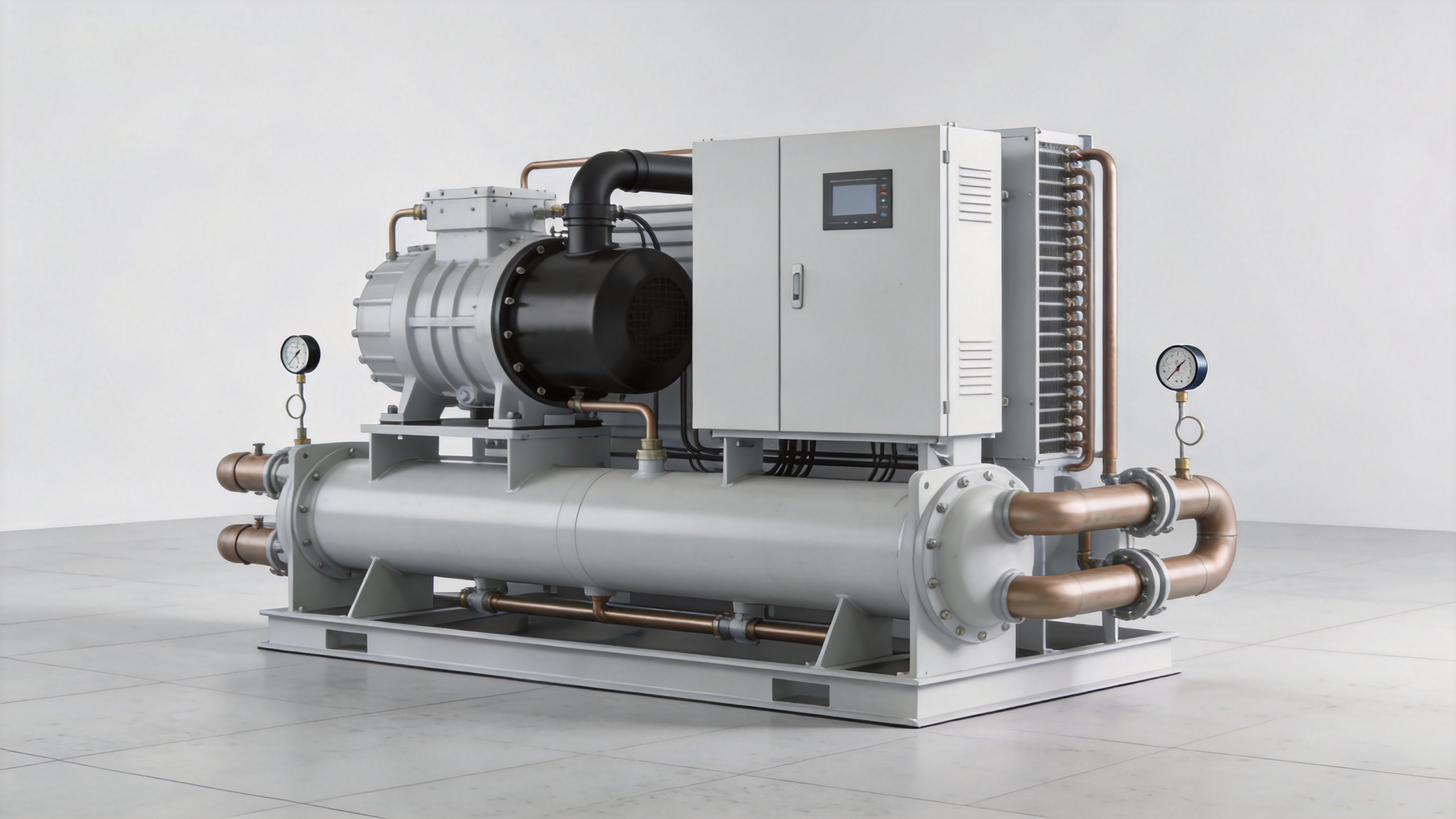
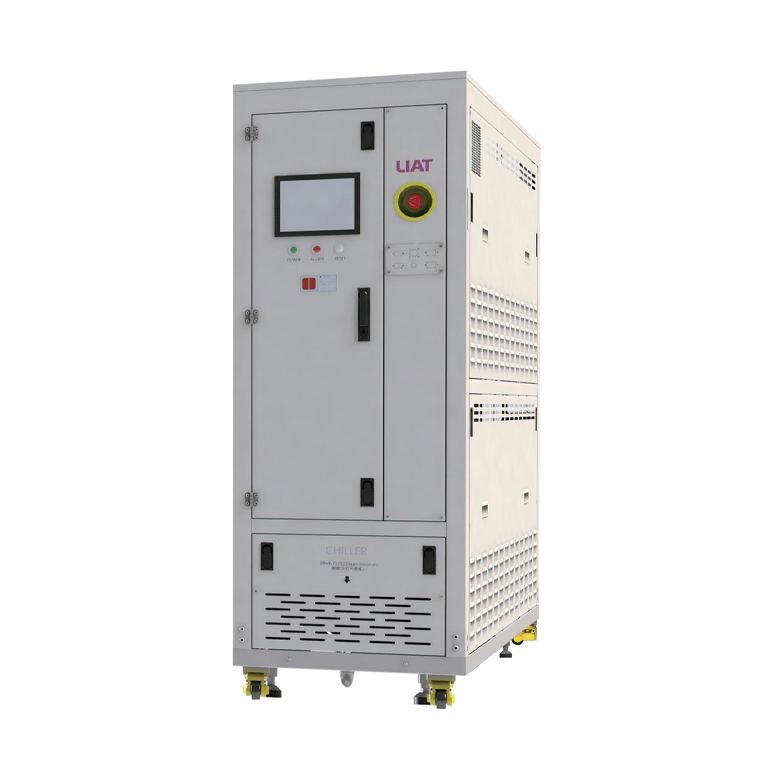
When a process starts drifting out of its temperature window, the first visible symptom may be a rejected part, a slower cycle, or an unexplained tool alarm. The underlying issue is often less dramatic: heat entering the process faster than the cooling loop can remove it. An industrial chiller gives the line a controlled path for that heat. It circulates conditioned fluid, receives warmer return fluid, rejects the collected heat, and sends fluid back at a managed supply temperature.
As a thermal-management application engineer would point out, stable production is not the same as a cold pipe. It is the ability to hold a process within its approved operating range while load, ambient conditions, and production rhythm change. The industrial chiller is one part of that system, alongside the tool, piping, pump, heat exchanger, sensors, controls, and maintenance routine.
Why temperature movement becomes a production problem
Many industrial processes create heat in pulses rather than at one smooth rate. A laser may change power, a reactor may pass through a more active stage, a battery test station may switch profiles, or a semiconductor tool may move between idle and production states. If the coolant arriving at the process changes at the wrong moment, the tool can respond with dimensional variation, unstable test conditions, longer recovery time, or a protective shutdown.
An industrial chiller helps buffer these disturbances, but the required stability has to match the actual process limit. A general utility loop may tolerate a wider temperature band than a precision tool. Asking for an extremely narrow band without defining the load, sensor location, and acceptance point can add cost without improving the result. Start by documenting the temperature the process needs, where it must be measured, and how much deviation the process can accept.
The stabilization loop: measure, respond, and verify
A properly applied industrial chiller operates as a feedback system. The pump moves heat-transfer fluid through the load. Sensors report temperatures and, where available, pressure and flow. The controller adjusts refrigeration capacity or other control elements as the return condition changes. The reservoir and piping volume can soften short disturbances, while the heat-rejection side transfers collected heat out of the loop.
That sequence explains why a displayed setpoint alone is not enough evidence of line stability. If the sensor is located in a reservoir, the displayed value may change slowly while the return from a dynamic tool is already moving. Trend the supply temperature, return temperature, tool temperature where practical, flow, and alarms together. This turns a vague complaint such as “the line runs hot in the afternoon” into a time-linked operating record.
| What to observe | What it can reveal | Useful next check |
|---|---|---|
| Supply temperature | How closely the cooling loop follows its target | Compare it with the approved process setpoint and time of production events |
| Return temperature | How much heat the process is sending back | Look for steps that coincide with cycle or power changes |
| Fluid flow or pressure trend | Whether heat can move through the loop consistently | Inspect pump condition, valves, filters, and restrictions |
| Condenser-side condition | Whether the chiller can reject collected heat | Review airflow or condenser-water conditions and cleanliness |
Match capacity to peak behavior, not only the average
Selection begins with heat load, but the useful question is not simply “How large is the industrial chiller?” It is “What heat must be removed at the target supply temperature under the most demanding expected condition?” Average energy use can hide startup peaks, batch transitions, simultaneous tools, or a seasonal change in heat rejection. Those events determine whether the cooling loop recovers quickly enough for the production schedule.
Gather the process temperature range, fluid type and concentration, expected flow, equipment heat contribution, peak and normal operating states, ambient or condenser-water condition, pipe run, and control-communication requirements. For a line that also needs heating, treat the heating and cooling stages as separate operating cases. An industrial chiller sized from a complete operating envelope is easier to commission than one chosen from a single nominal number.
Keep the fluid circuit stable at the point of use
Fluid temperature can change between the chiller outlet and the tool. Long pipe runs, poor insulation, nearby heat sources, undersized lines, bypass arrangements, and fluctuating flow all affect what the process actually receives. In a precision application, the relevant measurement point may be near the tool rather than inside the industrial chiller. That distinction matters when setting an offset or deciding where to place sensors.
Flow deserves the same attention as temperature. Too little flow can limit heat transfer and create a large temperature rise across the load. Excessive flow may introduce other hydraulic concerns. Rather than applying a generic rule to every facility, confirm the required flow and pressure range with the process equipment documentation, then verify the installed loop against that requirement. This is especially important after a piping change, filter replacement, or expansion of the line.
Use controls to make changing loads visible
A modern industrial chiller can provide useful operating signals to a plant controller or supervisory system. Alarms are valuable, but trends are more informative when they show what happened before an alarm. Link supply and return temperature, flow status, pump state, cooling demand, and selected process events. A repeated rise in return temperature at the same point in a cycle may indicate a predictable load change; a slow loss of margin may point to heat-rejection degradation or a developing process issue.
Controls should also reflect how the line runs. A system tuned only during a quiet commissioning period can react differently during full throughput. Commissioning should include normal production transitions, not just steady operation. If several loads share one loop, identify which events occur together and whether the industrial chiller has enough response margin for that combined condition.
Maintenance protects the stability you commissioned
Thermal performance changes over time. Fouled heat-transfer surfaces, weak airflow, poor condenser-water conditions, contaminated filters, pump wear, sensor drift, or a fluid issue can reduce margin without causing an immediate stop. The practical aim of maintenance is to detect that gradual change before it affects the product or schedule.
- Review temperature and flow trends at a regular interval that fits the process criticality.
- Inspect filters, valves, hoses, insulation, and visible leaks according to the site maintenance plan.
- Check heat-rejection conditions and clean relevant surfaces using the equipment instructions.
- Confirm sensor readings against an appropriate reference during planned service.
- Record changes to tools, production recipes, pipework, or coolant so the cooling load history remains understandable.
This record gives the maintenance team context. A stable industrial chiller is not simply one with no active alarm; it is one whose temperatures, flow, and response remain consistent with the validated operating condition.
A commissioning checklist for a steadier line
- Define the allowed process-temperature band and the measurement location that determines acceptance.
- List normal, peak, startup, and simultaneous heat-load conditions.
- Verify supply temperature, return temperature, flow, and pressure at representative operating points.
- Check the heat-rejection side under the relevant ambient or water conditions.
- Run production transitions and document recovery behavior rather than testing only at steady state.
- Set trend and alarm limits that help the team investigate a change before it affects output.
For facilities working in semiconductor, pharmaceutical chemical, new-energy, or aerospace-related processes, the same framework applies even though the acceptable range and fluid choice differ. Discuss the target temperature range, heat load, medium, connections, and control signals as one operating picture. That is the clearest way to specify an industrial chiller that supports the production line instead of treating it as an isolated utility.
Conclusion
An industrial chiller stabilizes production by making heat removal repeatable as the process changes. The equipment is most effective when its capacity, fluid loop, sensor placement, controls, and maintenance plan are aligned with the actual production condition. Measure at the point that matters, test the line during real transitions, and keep a record of trends. Those steps give engineering, operations, and maintenance a shared basis for keeping temperature-related variability under control.
 Hot News