
Why Motor Test Thermal Management Improves Test Confidence
When a motor test produces a result that does not repeat, the first question is often about the motor. In many test cells, the more useful first question is whether the thermal condition repeated. Motor test thermal management gives engineers a way to treat temperature as a controlled test variable rather than background noise. It does not make a weak test method valid on its own. It does make it easier to see whether changes in torque, speed, efficiency, vibration, or electrical behavior belong to the unit under test or to the conditions around it.
That distinction matters during endurance work, performance mapping, development trials, and fault investigation. A motor can generate heat in its windings, rotor, bearings, housing, inverter connection, or load arrangement. Meanwhile, the coolant circuit, ambient air, fixture, sensors, and test sequence can each change what the motor experiences. A disciplined motor test thermal management approach defines those conditions, measures them, and records how they evolve.
Temperature is part of the test condition
A test specification normally sets inputs such as voltage, speed, torque, duty cycle, and duration. Temperature deserves the same treatment because material resistance, lubricant behavior, magnetic response, insulation stress, and control limits may shift as the assembly heats or cools. If two runs begin at different thermal states, a comparison between them can be less meaningful even when the command values match.
The practical aim of motor test thermal management is not to hold every point at one fixed number. It is to establish a defined temperature window, a consistent starting state, and a documented response during load transitions. For some tests, that means stabilizing coolant before the run. For others, it means deliberately cycling between defined conditions and allowing enough soak time before recording a result. The relevant plan depends on the motor, the fixture, the heat path, and the question the test is meant to answer.
Why uncontrolled heat weakens confidence
Uncontrolled thermal behavior can introduce several forms of uncertainty. A warm unit may enter a different resistance range than a cool unit. A rising coolant return temperature can signal that heat removal is changing during a run. A local hot spot can be missed if the only sensor is placed at a convenient but unrepresentative location. None of these observations automatically proves a failure. They do mean that the data should be interpreted with its thermal history attached.
Consider two endurance runs with the same commanded speed and torque. If one run starts after a long cool-down and the other follows a high-load sequence, the motor, fixture, and fluid loop may not begin in equivalent states. Motor test thermal management helps the team write down the precondition, hold criteria, and measurement points that make the comparison defensible. This is more informative than reporting a single temperature setpoint without the context of flow, return temperature, time, and load.
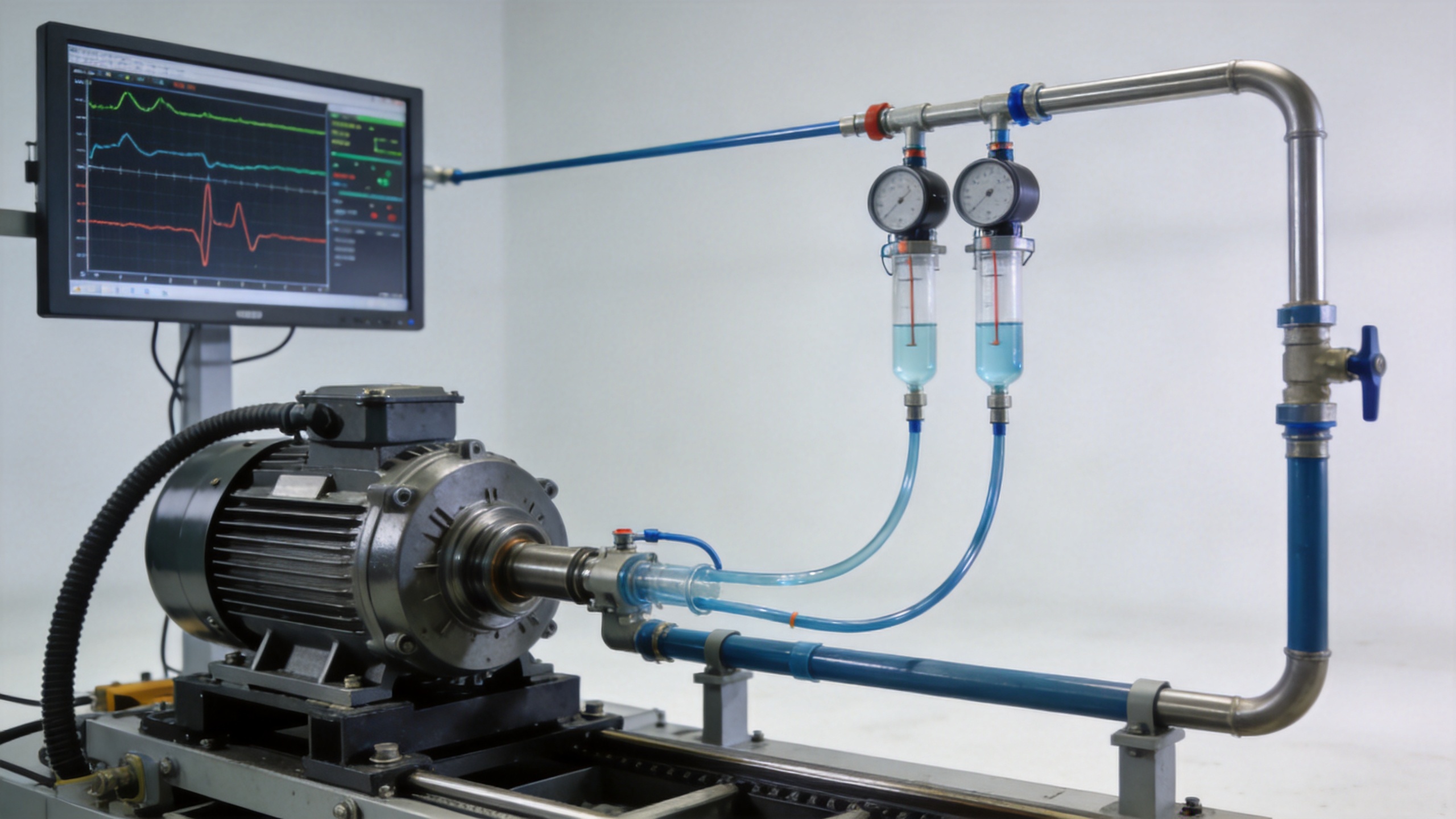
What a controlled thermal setup should verify
An industrial chiller or other conditioning loop can be part of the test system, but its presence alone is not evidence of control. The test team should confirm how the loop and the motor test cell behave together. A useful verification checklist includes:
- Supply condition: Record the fluid temperature at a meaningful point near the test article, not only at the conditioning equipment display.
- Return behavior: Monitor return temperature to understand heat pickup and whether the loop is approaching a different operating state.
- Flow and pressure: Confirm that the delivered flow is appropriate for the fixture and remains stable enough for the test objective.
- Sensor placement: Identify what each sensor represents: inlet fluid, outlet fluid, housing, winding estimate, fixture, or ambient air.
- Stabilization rule: State when a run may begin, such as a defined hold period or a measured rate-of-change criterion.
- Time alignment: Synchronize thermal records with speed, torque, electrical input, alarms, and control events.
This checklist does not prescribe one universal configuration. It turns motor test thermal management into a verification activity. If a result moves, the engineer has a clearer path to ask whether the cause was motor behavior, a changing heat load, a connection issue, or a measurement problem.
Heat-load transitions deserve special attention
Steady-state operation is only one part of many motor tests. Acceleration, high-torque segments, regenerative events, and rapid duty changes can create a thermal response that lags behind the electrical and mechanical commands. A conditioning loop may be stable before the transition yet still show a delayed return-temperature rise after it. The delay is useful information when it is measured; it becomes a source of uncertainty when it is ignored.
For this reason, motor test thermal management should include the sequence, not just the nominal setpoint. Engineers can define the expected load profile, observe supply and return response, and specify when measurements are captured. During method development, it is often sensible to review a complete time trace before reducing the run to summary values. That review can reveal whether a measured difference occurred during a stable window or during thermal recovery.
Build confidence through traceable records
Test confidence grows when another engineer can understand the condition behind a result. A concise record should identify the target thermal window, actual supply and return values, flow or pressure where relevant, ambient condition, sensor locations, preconditioning duration, test sequence, and any excursions. It should also distinguish confirmed readings from assumptions that still need verification.
This record supports a practical link between thermal control and repeatability. The applicable program may reference environmental testing guidance such as ISO 16750 for vehicle electrical and electronic equipment, but the correct requirement and acceptance criteria must be confirmed for the specific product and test plan. Standards context is not a substitute for a validated procedure. It is a reminder that environmental conditions belong in the evidence trail.
Use thermal management as a test-method check
The strongest benefit of motor test thermal management is methodological. It encourages teams to ask whether thermal conditions were comparable before they conclude that a motor changed. Start by defining the condition to control, choose measurement points that represent the heat path, log the response through meaningful load events, and review exceptions before comparing runs.
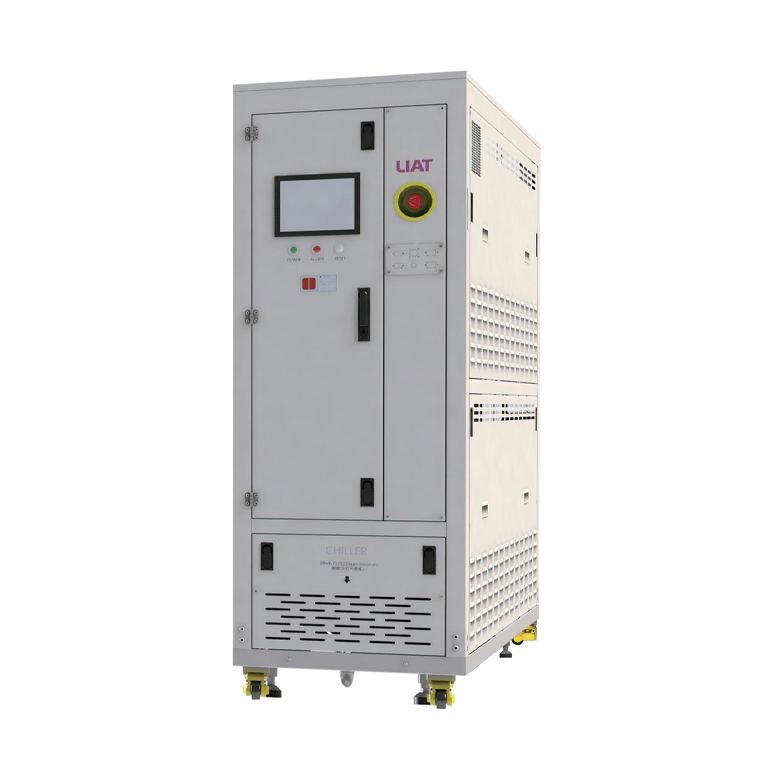
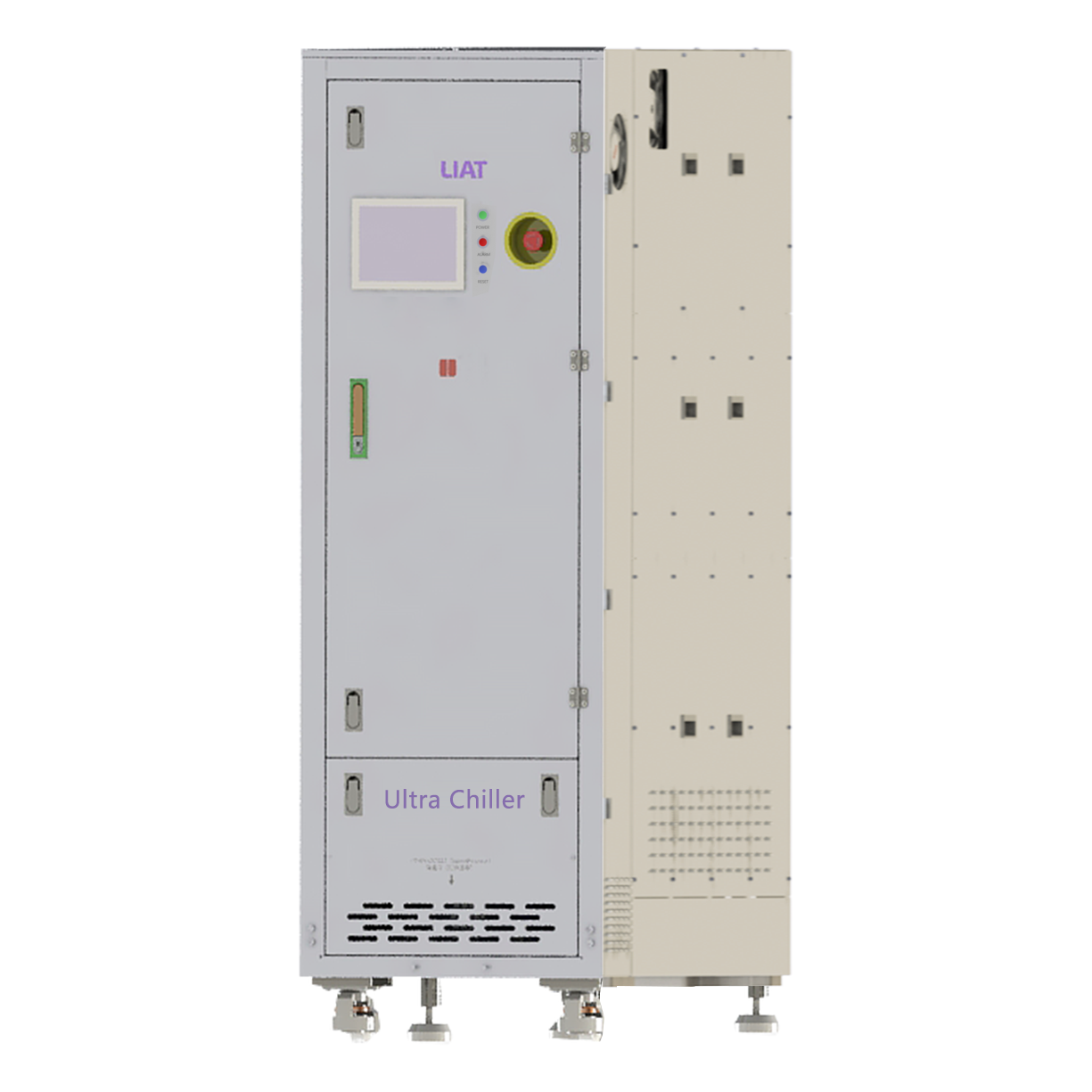
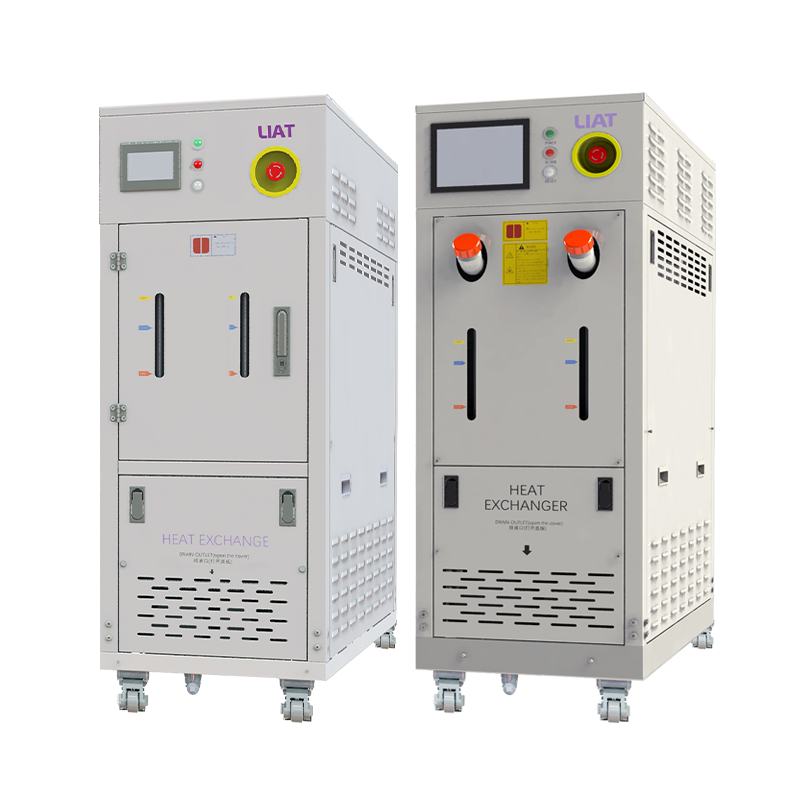
For an industrial chiller-based loop, selection and setup should be discussed in terms of required temperature range, expected heat load, fluid, flow path, controls, and connection details. Those project conditions matter more than a generic equipment claim. With that discipline in place, motor test thermal management becomes a clearer foundation for repeatable observations, more useful troubleshooting, and decisions that can be reviewed with confidence.
 Hot News