How an Etch Gas Line Heating Jacket Shields Critical Delivery
In semiconductor etch work, a gas line is not merely a connection between a source cabinet and a process tool. It is part of the delivery path that must preserve defined conditions while flow, pressure, routing, ambient exposure, and tool demand change. An ETCH gas line heating jacket is a controllable thermal layer installed around a suitable section of that path. Its purpose is not to make a line “hot” in the abstract. It is to help the equipment team manage a defined temperature condition where the chemistry, materials, routing, and control architecture call for it.
From a semiconductor equipment-integration perspective, the central question is not whether a jacket looks robust on its own. The useful question is whether the heating arrangement fits the gas-delivery system, its interfaces, and its verification plan. A pipe heating system can be relevant when a process owner has identified a thermal sensitivity in the delivery route, but the correct setpoint and construction must be confirmed for the actual chemistry and facility rules.
Why line temperature belongs in the delivery discussion
Etch processes may use gases and vapor-phase precursors whose behavior changes with temperature and pressure. A local cold section, an unevenly insulated fitting, or an unmonitored run can introduce a condition that differs from the intended delivery environment. That does not mean every line needs active heating. It means the line should be evaluated as part of the process system rather than treated as neutral hardware.
One published discussion of hydrogen-halide delivery notes that HF can be prone to condensation in lines and purifiers under certain pressure and temperature conditions, and identifies heated delivery as one possible measure. That is a useful illustration of the engineering logic, not a universal recipe for etch gas lines. Gas composition, purity requirements, operating pressure, source configuration, material compatibility, and the approved process window determine what is appropriate.
More accurately, an ETCH gas line heating jacket is only one component in a broader thermal-control decision. The source, valves, filters, mass-flow-control area, fittings, line length, insulation transitions, and chamber-side connection points can all matter. The aim is to avoid unexplained thermal changes along the parts of the route that the process team has designated as sensitive.
What the heating jacket actually contributes
A properly specified heating jacket places distributed heat around a section of pipe or tubing while allowing the installation to retain access to practical features such as joints, labels, supports, and inspection points. Depending on the design, it may include insulation, a heating element, sensor accommodation, closures, and leads that connect to an approved controller. It is not a substitute for compatible tubing, sound mechanical routing, or gas-system safety practices.
Its value comes from repeatable integration. A jacket that is poorly matched to the line diameter, bend geometry, branch layout, or support spacing may create gaps, compressed insulation, awkward service access, or uneven contact. Conversely, a flexible pipe heating system can help a project team cover a defined route while retaining the ability to remove or inspect the thermal layer during maintenance.
Uniformity matters more than a single temperature reading
A controller display can show one acceptable number while a long or complex route still has different thermal conditions at bends, fittings, and exposed sections. For that reason, a design review should consider zones, sensor placement, insulation continuity, routing through cabinets or enclosures, and the relationship between local measurements and the process-relevant location. The appropriate acceptance method belongs to the equipment and process teams; it may involve mapped measurements, commissioning checks, or documented operating procedures.
Control and protection need to be designed together
Heating hardware, sensing, over-temperature protection, power distribution, alarms, and tool interlocks should be considered as one control chain. Before selecting an ETCH gas line heating jacket, ask which device owns the temperature signal, what happens after a sensor fault, how alarm information is handled, and which operating states allow heat. Those answers are project-specific. They should be documented rather than assumed from a generic heater-jacket description.
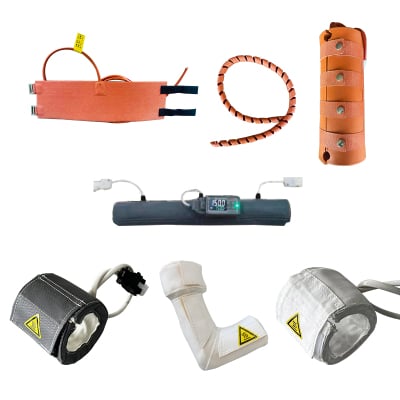
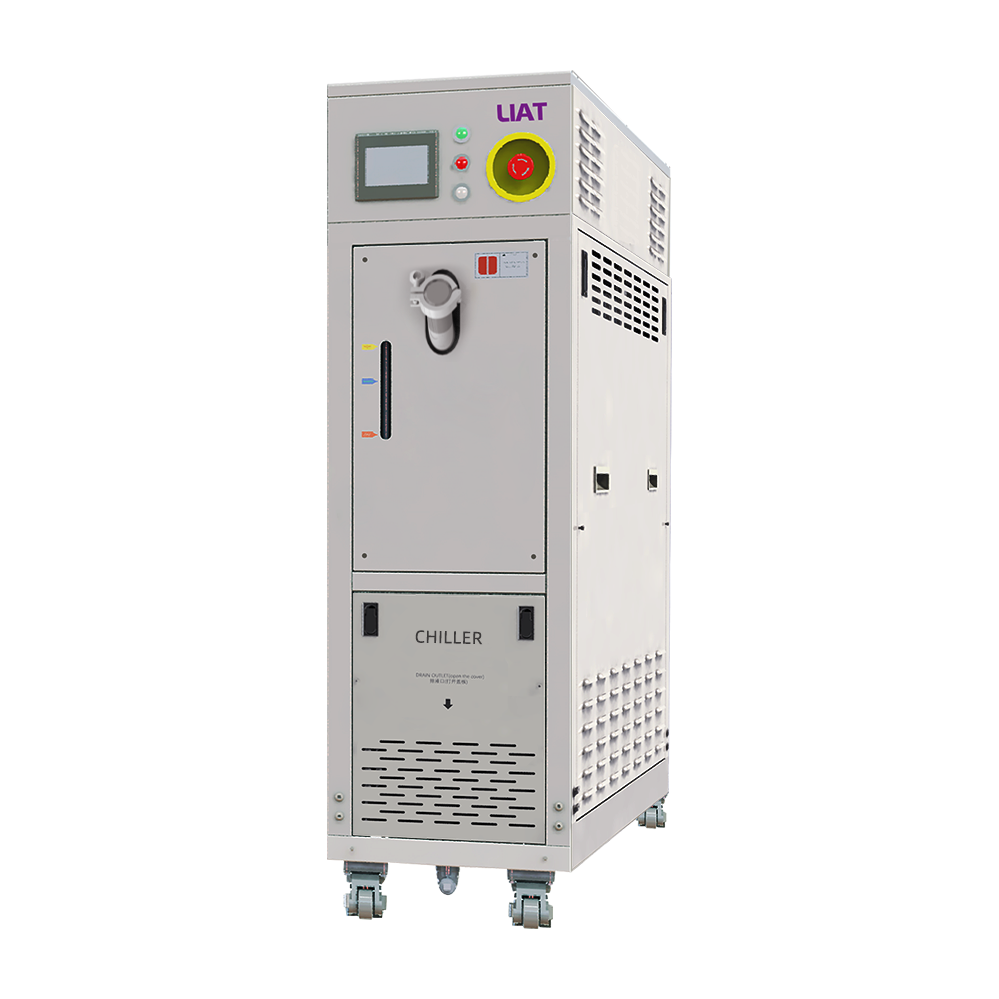 Illustrative view of a heating-jacket zone integrated with a semiconductor gas-delivery route.
A practical review path for an ETCH gas line heating jacket
Early conversations become more productive when the team works from the delivery route outward. Rather than beginning with a catalogue size, build a short condition sheet that distinguishes confirmed information from items still requiring review.
- Define the process objective. Identify the process segment, the reason for thermal control, the allowed operating window, and the person responsible for approving it. Do not infer these from the gas name alone.
- Map the physical route. Record tubing or pipe dimensions, straight lengths, bends, tees, valves, regulators, filters, supports, cabinet penetrations, and sections exposed to different ambient conditions.
- Check materials and cleanroom constraints. Confirm jacket-facing materials, fastening methods, insulation construction, outgassing expectations, cleanability, and compatibility with the line, enclosure, and facility practices.
- Plan measurement and zoning. Determine where temperature will be sensed, whether one zone is sufficient, and how the team will assess variation between the measured point and the critical delivery section.
- Review electrical and service interfaces. Include controller location, cable routing, grounding, access for removal, lockout procedures, labels, and the maintenance sequence.
- Set a verification plan. Define the evidence required before use: installation checks, control-function checks, temperature records, and any process-owner approval steps.
This sequence helps avoid a common mistake: treating a thermal accessory as an isolated purchase. In semiconductor integration, the jacket, pipe heating system controls, gas-system layout, and process requirements need to agree before the assembly is put into routine use.
Installation details that deserve attention
Mechanical fit is the first detail. The heating surface should follow the route without forced stretching, tight folds, or closures placed where they obstruct essential fittings. For removable sections, the team should decide before installation how the jacket will be opened, reinstalled, and inspected. A design that cannot be serviced cleanly may complicate future troubleshooting.
Thermal boundaries are the second detail. Unjacketed valves, supports, brackets, and enclosure transitions can behave differently from the covered line. This is not automatically a defect; it is an item to evaluate against the stated temperature objective. The most useful installation record shows where heat is applied, where insulation begins and ends, and where measurements are taken.
Finally, keep the control narrative simple. A technician should be able to identify the jacket zone, the controller channel, the sensor location, the relevant alarm response, and the authority for changing a setpoint. Clear identification supports safer handoffs between installation, facilities, maintenance, and process teams.
Questions to ask before requesting a configuration
- Which gas-delivery section has a confirmed thermal-control need, and what evidence defines that need?
- What are the line dimensions, routing features, and accessible installation boundaries?
- Which materials and fastening methods fit the chemical, cleanliness, and enclosure requirements?
- Where will sensing occur, and how will the project team verify the relevant line condition?
- What controller, power, alarm, and interlock interfaces must the jacket work with?
- How will operators remove, inspect, and reinstall the assembly without changing the validated route?
Lingheng Thermal Control Technology (Suzhou) Co., Ltd. works in precision temperature-control and thermal-management discussions for semiconductor and other industrial applications. For an ETCH gas line heating jacket inquiry, a useful starting package is the line drawing, target operating conditions approved by the process owner, the media and material constraints, and the control-system connection requirements. That information makes it possible to discuss the configuration boundaries without overstating what a jacket alone can accomplish.
Conclusion
An ETCH gas line heating jacket can support a controlled delivery environment when it is selected as part of a defined system rather than as a standalone accessory. Start with the process condition, then examine the route, materials, sensing, controls, maintenance access, and verification method. This approach gives the engineering team a clearer basis for deciding whether a pipe heating system is needed, where it belongs, and what evidence should accompany commissioning.
 Hot News