
How to Partner with a Reliable Industrial Chiller Supplier
Choosing an industrial chiller supplier is not just a purchasing task. The supplier will influence how clearly your process requirements are translated into an industrial chiller proposal, how commissioning questions are handled, and how quickly your team can resolve an issue later. A reliable partnership starts before a quotation: it starts with a shared definition of the duty, handoff points, and evidence needed for acceptance.
From an industrial procurement perspective, a sound evaluation compares fit, maintainability, and ownership considerations rather than a headline price alone. If the heat load changes significantly, a target temperature by itself is usually not enough to compare proposals. In practice, look for an industrial chiller supplier that asks disciplined questions, documents its assumptions, and stays engaged through the handover.
Start with the process, not the catalog
An industrial chiller supplier can only make a meaningful recommendation when the project inputs are specific. Process-cooling discussions commonly consider cooling load, fluid and flow requirements, ambient conditions, and installation constraints. This does not mean a buyer needs a completed engineering package on day one; it means unknowns should be marked as unknowns instead of hidden inside a generic request for quote.
- Thermal duty: expected heat load, operating cycle, start-up peaks, and whether the load varies by product or shift.
- Temperature window: target supply temperature, allowable stability band, and the process consequence of a deviation.
- Fluid circuit: water, water/glycol mixture, or another approved process fluid; include cleanliness and compatibility concerns.
- Flow and pressure: required flow, pressure-drop allowance, piping length, elevation, and the equipment connected to the circuit.
- Site conditions: ambient temperature, ventilation, water availability where relevant, power supply, footprint, access, and noise constraints.
- Control connection: alarms, signals, communications, remote monitoring expectations, and any connection to a host system.
Discussing an industrial chiller this way avoids a familiar problem: two suppliers may quote equipment with similar-looking capacity labels while assuming different fluid temperatures, ambient conditions, or control boundaries. Ask each industrial chiller supplier to state assumptions beside the proposed configuration. That makes differences visible before the comparison becomes a negotiation.
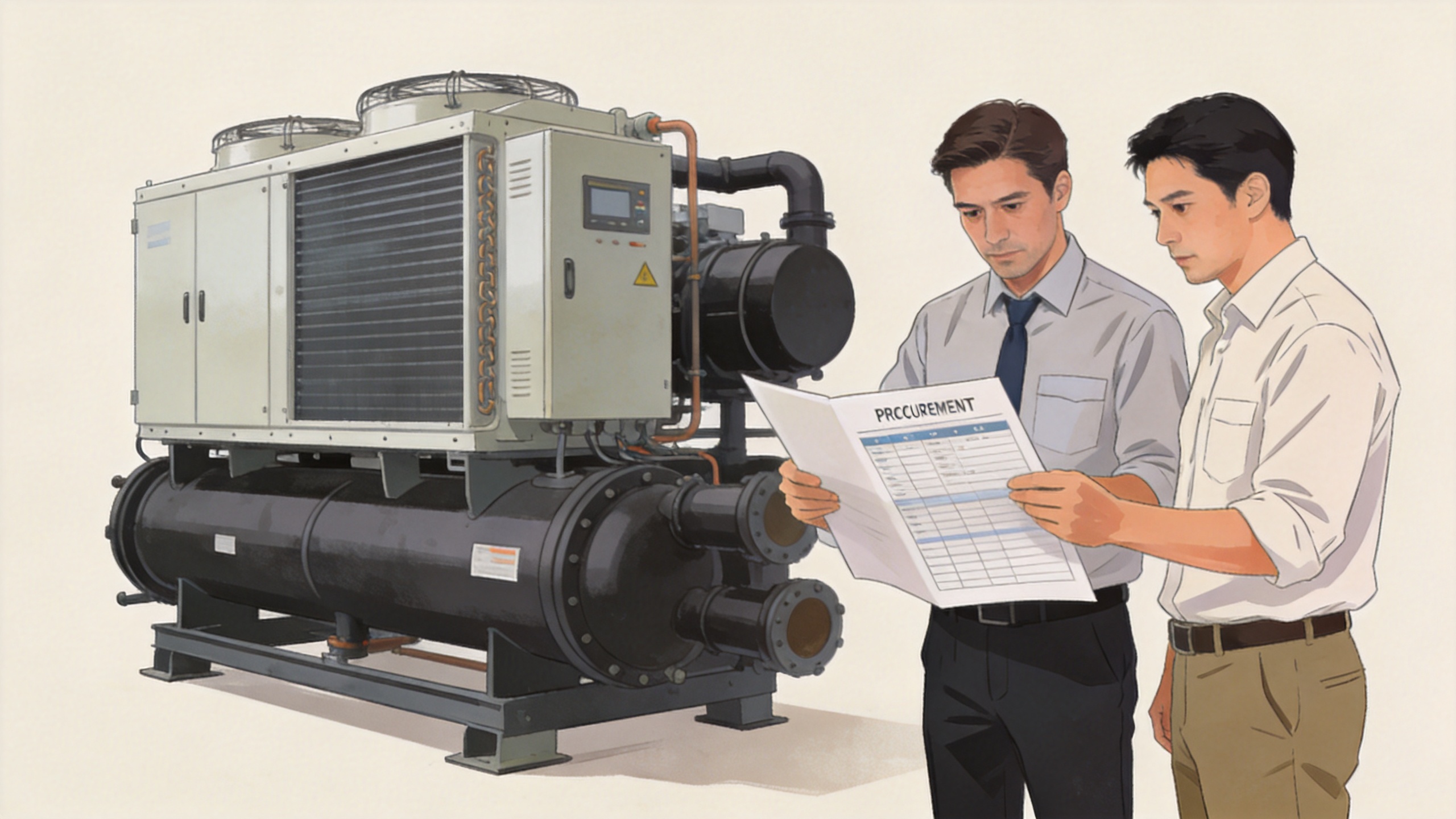
Evaluate the supplier’s questions as carefully as its answer
A capable industrial chiller supplier should investigate the application rather than immediately push a standard model. That first discussion is often revealing. Does the supplier ask about process changes, maintenance access, and utility limitations? Does it distinguish a preliminary recommendation from a verified selection? Can it explain what needs testing or confirmation?
For example, a semiconductor thermal-control project may place particular emphasis on connection coordination and production cadence, while a chemical or pharmaceutical process may need careful discussion of fluid compatibility and operating boundaries. New-energy and aerospace-related projects can introduce different validation or environmental considerations. The point is not that one application dictates a particular industrial chiller. It is that an industrial chiller supplier should show how the actual scenario becomes a documented review.
Use a comparison matrix that procurement and engineering can share
Rather than score suppliers on marketing language, create a matrix with evidence columns. The same document can help purchasing, process engineering, facilities, controls, and maintenance review an industrial chiller supplier on comparable terms.
| Review area | What to request | Why it matters |
|---|---|---|
| Duty basis | Written load, temperature, fluid, flow, and ambient assumptions | Shows whether the proposed industrial chiller is tied to your actual conditions |
| Configuration scope | Clear inclusions, exclusions, utility needs, and connection responsibilities | Reduces gaps between quotation, installation, and start-up |
| Controls | Control narrative, alarm list, communications scope, and responsibility boundaries | Helps teams assess integration work before purchase |
| Documentation | Datasheets, drawings, manuals, test or inspection records where applicable | Creates a basis for engineering review and acceptance planning |
| Service readiness | Commissioning scope, response route, spare-parts process, and maintenance guidance | Clarifies how the industrial chiller supplier will support the operating team |
| Change control | Method for recording design changes and approving substitutions | Prevents assumptions from changing without a shared record |
Evidence does not need to be identical for every project. Still, an industrial chiller supplier should be able to identify what is confirmed, what is preliminary, and which documents will close the remaining gaps. That transparency is more useful than an unsupported claim that a configuration fits every process.
Make commissioning part of the partnership discussion
Delivery is not the end of supplier evaluation. Chiller pre-commissioning practice often includes checks tied to delivery, storage, installation readiness, and the records needed before start-up. For a buyer, the important question is: what will the industrial chiller supplier do, what will the site team do, and what evidence shows that each task is complete?
Ask for a practical handover plan that covers inspection on arrival, installation prerequisites, piping and electrical checks, fluid preparation, start-up sequence, alarm verification, operator orientation, and the format of acceptance records. The plan does not have to promise a particular outcome before site conditions are known. It should, however, define how deviations will be reported and who will decide on corrective actions.
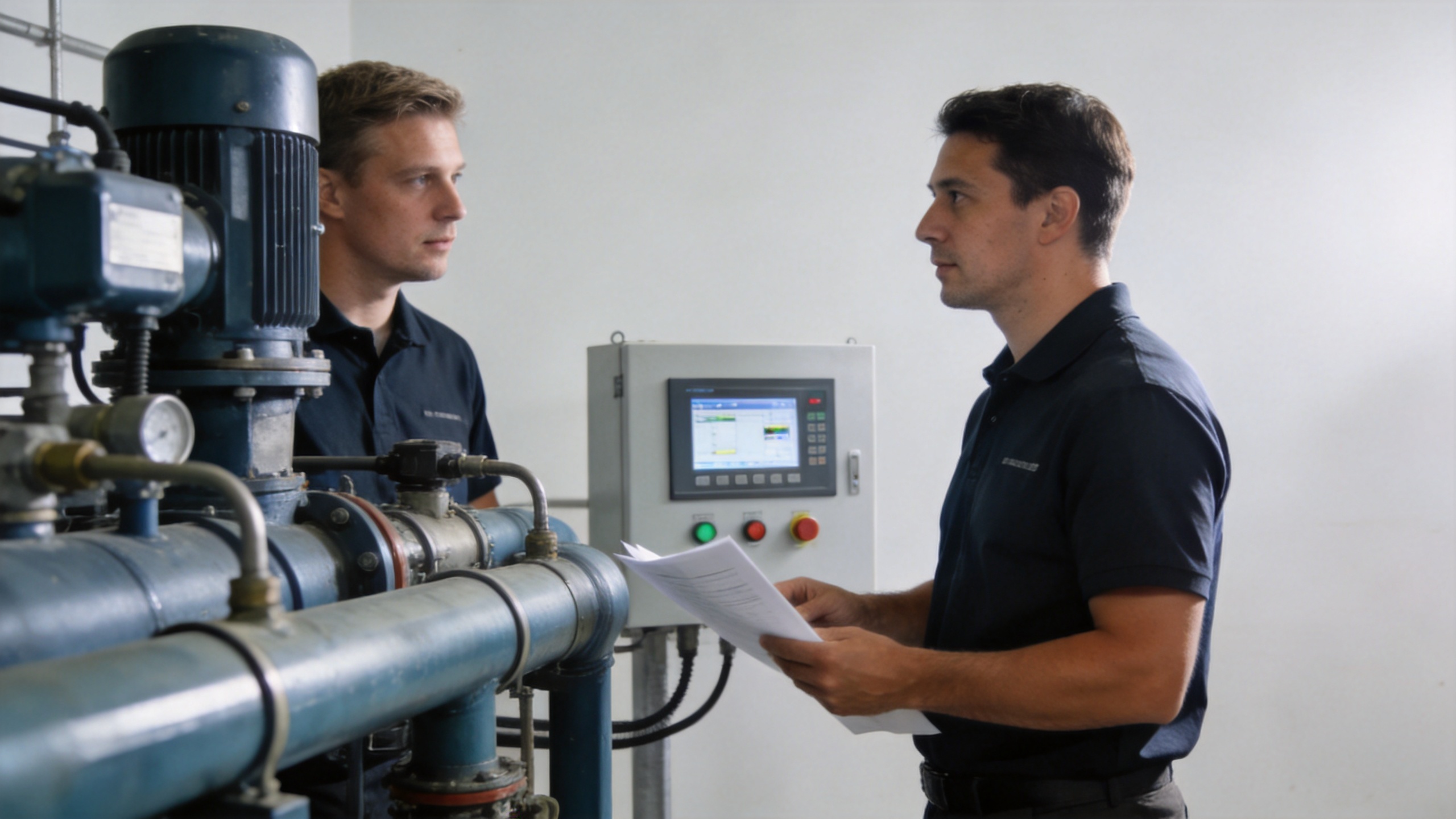
Check maintainability before selecting an industrial chiller supplier
A quotation can look complete while the maintenance path remains vague. Bring the people who will operate or service the industrial chiller into the evaluation early. They can assess access around filters, pumps, sensors, electrical panels, and service points; they can also flag whether routine tasks are realistic within the site’s staffing model.
Useful questions include:
- Which routine inspections does the supplier expect the site team to perform, and at what intervals?
- Which consumables or common spares should be identified before start-up?
- How are fault descriptions, operating records, and remote-support requests shared?
- What information must the site provide before the supplier can diagnose a temperature-control concern?
- How will future process changes be reviewed against the original duty basis?
These questions do not assume a problem will occur. They establish a practical route for the buyer and the industrial chiller supplier when operating conditions change.
Run a small validation loop before issuing the order
Before final approval, bring the evaluation together in a short review meeting. Compare each proposal against the same process inputs, list unresolved items, and assign owners. A preliminary conclusion is useful, but it should be paired with the documents or tests needed to validate it. In other words, the partnership should move from broad equipment discussion to a controlled set of acceptance questions.
- Confirm the process and site inputs used by each industrial chiller supplier.
- Identify configuration differences and commercial exclusions.
- Review controls, installation connections, and maintenance access with the relevant teams.
- Agree on commissioning deliverables and acceptance evidence.
- Record open technical points, owner, due date, and the proof required to close each point.
This approach also helps when project information is incomplete. Instead of forcing a premature yes-or-no decision, the buyer can ask an industrial chiller supplier for a conditional proposal and a focused list of facts that would change the selection.
What a reliable supplier relationship looks like
A reliable relationship is visible in the working method: the industrial chiller supplier listens to the application, writes down assumptions, explains limits, and provides a route from selection through commissioning and routine support. For buyers, the most productive next step is to prepare a concise application brief and invite suppliers to respond to the same questions. That turns an industrial chiller purchase into a reviewable partnership built around process needs rather than vague comparisons.


 Hot News