
What a Heated Pipe Jacket Must Achieve for Clean Lines
In clean-process work, a heated pipe jacket is not simply insulation with a power connection. It is part of the thermal boundary around a line that may carry temperature-sensitive fluid, support cleaning cycles, and pass through crowded equipment layouts. From an engineering review standpoint, the useful question is not whether a heated pipe jacket can make a pipe warm. The question is whether it can maintain the required process condition while leaving the line serviceable, observable, and compatible with the plant’s hygiene controls.
A sound specification starts with the process, not the jacket. Identify the fluid, temperature window, line size, heat loss environment, flow state, hold-up time, cleaning method, control philosophy, and access restrictions. Those inputs reveal what the heated pipe jacket must do at normal operation, during startup, and after a washdown or clean-in-place cycle.
Hold the process at a useful temperature, not merely a hot temperature
The first duty of a heated pipe jacket is controlled heat transfer. A line can have a heater installed and still experience cold sections, excessive wall temperature, or slow recovery after a stop. The heating arrangement should be sized around the actual loss path: pipe material and diameter, insulation condition, ambient air movement, supports, valves, fittings, and exposed instruments all change the load. Treating a straight-pipe calculation as the whole answer often leaves the difficult sections underheated.
For a heated pipe jacket, uniform contact and suitable zoning matter as much as total wattage. A short branch, a valve body, or a section near a support may need a different strategy from a long, accessible run. The design team should define the target as a process-temperature band at relevant points, not a single controller display value. During commissioning, compare measured line temperatures with the setpoint under representative flow and ambient conditions.
A pipe heating jacket should also avoid creating an uncontrolled thermal gradient. Some fluids become more viscous or begin to deposit material when the wall cools; others may be affected by excessive localized heat. The appropriate heated pipe jacket therefore combines heating capacity with sensor placement, limit protection, and a control response that suits the process. Exact limits belong in the project’s thermal assessment and operating procedure.
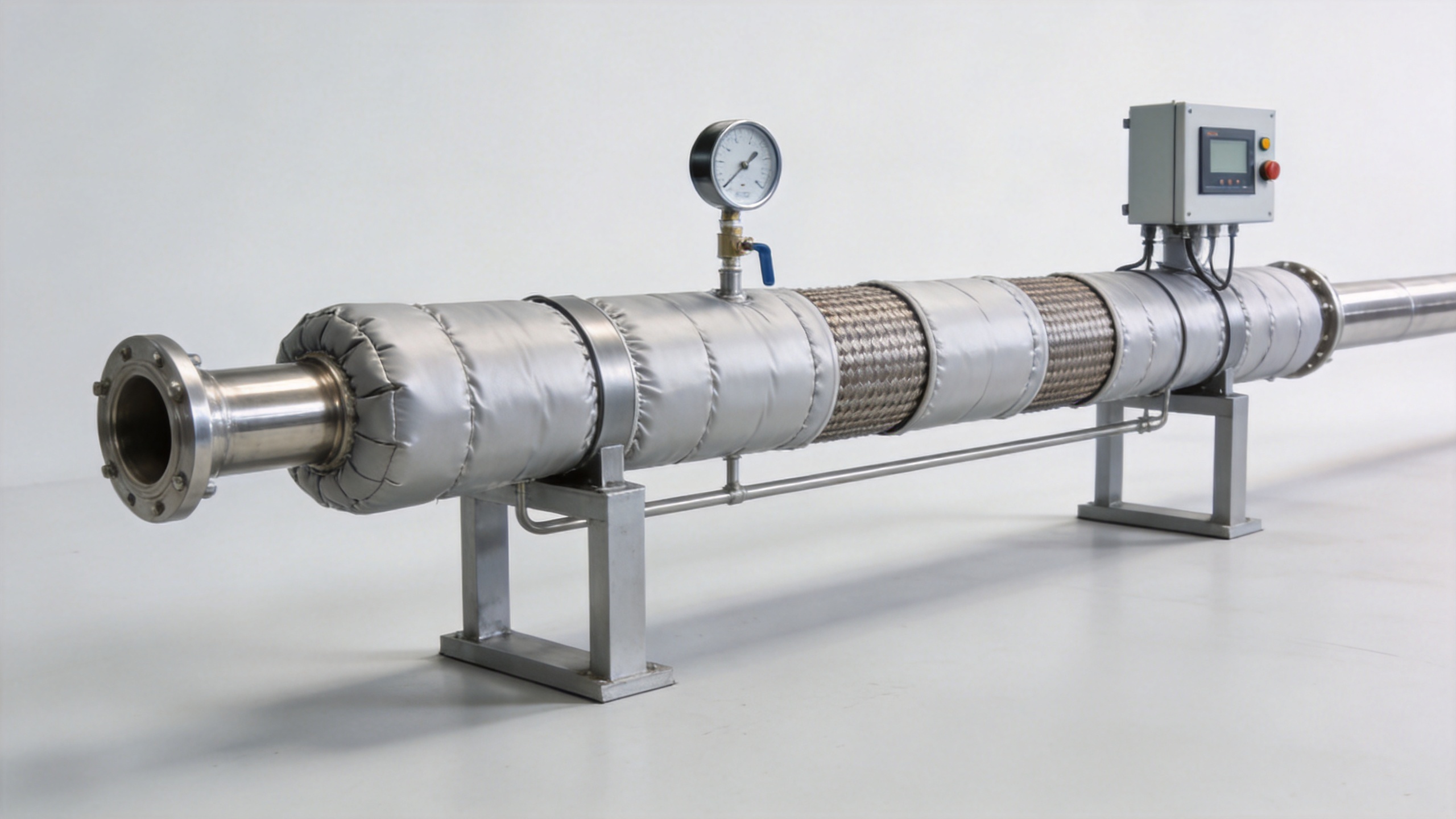
Preserve the conditions that make a line cleanable
Clean-line design depends primarily on the product-contact piping, joints, valves, slopes, and cleaning route. An external heated pipe jacket does not turn a poorly designed line into a hygienic one. It must, however, avoid making the underlying line harder to inspect, clean, drain, or maintain.
General sanitary design guidance emphasizes surfaces and configurations that are smooth, impervious, corrosion resistant, free of inaccessible crevices, and capable of being cleaned. For a heated pipe jacket, that principle translates into practical questions: Can the jacket be opened or removed where inspection is required? Does its closure system trap water after washdown? Does it cover drains, ferrules, valve identifiers, instruments, or access points? Is the selected outer material compatible with the actual cleaning chemicals and environment?
A pipe heating jacket intended for a clean area should be reviewed alongside the cleaning procedure, not after installation. Map the areas that will see splash, foam, rinse water, or condensate. Confirm whether seams, straps, cable entries, and terminations will dry acceptably. If the system is removable, define how it is removed, stored, reinstalled, and checked. If it remains in place, define the inspection points and cleaning boundaries. These decisions make the heated pipe jacket part of a workable sanitation plan rather than an obstacle around the pipe.
Keep the installation accessible and understandable
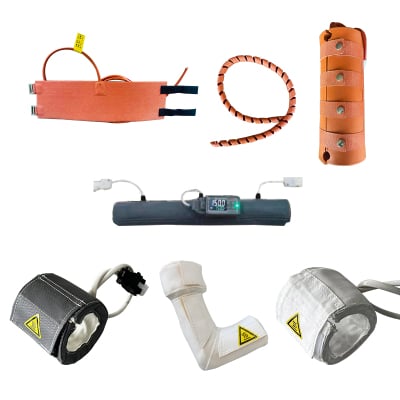
Thermal performance can degrade when an installed jacket is crushed, left partly open, soaked, or patched after unrelated maintenance. For that reason, a heated pipe jacket should be specified as an assembly with clear identification, orientation, electrical isolation points, and service instructions. Technicians need to distinguish it from ordinary insulation and to see where sensors, joints, and cables are located.
Accessibility is particularly important at valves, filters, sampling points, and instruments. A pipe heating jacket should not force a technician to remove a large surrounding section merely to operate a valve or verify a tag. Nor should it conceal leakage paths. Use sectional construction where it improves access, and record where thermal breaks are acceptable rather than assuming every interruption can be ignored.
The external surface also deserves a practical review. In clean rooms and controlled processing spaces, a damaged outer layer can become difficult to wipe down or can retain moisture. The heated pipe jacket should have a finish and closure arrangement appropriate to the area’s cleaning exposure, with replacement or repair criteria established before handover.
Control safely through real operating changes
A heated pipe jacket is an electrical and thermal system, so normal temperature control is only one layer of protection. The package should define a control sensor location, independent over-temperature protection where the risk assessment calls for it, alarm behavior, isolation method, and response to a sensor fault or loss of power. These details should match the process hazard review and local electrical requirements.
Sensor placement is often decisive. A sensor located in a warm, well-covered area can report a satisfactory value while a remote fitting or exposed segment runs cold. Conversely, a sensor too close to a concentrated heat source can cause premature cycling. A pipe heating jacket review should show why each measurement point represents the condition being controlled, and it should identify any locations that need verification during startup.
Consider the full cycle: cold start, production hold, temporary shutdown, washdown, maintenance isolation, and restart. A heated pipe jacket that performs acceptably only during steady state may not support the operating routine. Documenting these cases turns a generic thermal package into a controllable process aid.
Verify the jacket as part of the line, not on a bench
Acceptance should be based on the installed system. Before release, inspect coverage, closures, cable routing, labels, sensor attachment, access to critical components, and the condition of the outer surface. Then test temperature response in conditions that resemble use. The heated pipe jacket should demonstrate that the designated locations approach and hold the required operating band without defeating access or creating an unaddressed hot surface concern.
Keep records that a future maintenance team can use: drawings or photographs of zones, circuit and controller identification, setpoints and limits, sensor locations, inspection intervals, and cleaning restrictions. This evidence is useful when a line changes service or when a recurring temperature issue must be traced.
A concise specification checklist
- Define the process temperature band, fluid behavior, ambient conditions, and critical cold locations.
- Calculate the heat loss for the installed geometry, including fittings, supports, and interruptions.
- Specify zoning, sensing, limits, alarms, and isolation based on the process risk review.
- Check that the heated pipe jacket preserves access to valves, tags, drains, instruments, and inspection points.
- Review outer materials, seams, closures, and cable entries against washdown and cleaning exposure.
- Commission the pipe heating jacket on the installed line and retain the results with maintenance information.
The right heated pipe jacket is one that supports temperature control without compromising the practical disciplines that keep a process line clean. By reviewing heat transfer, cleanability, access, control, and verification together, engineering teams can specify a pipe heating jacket that fits the operating reality of the line rather than only its nominal dimensions.
 Hot News