How a Semiconductor Heating Jacket Handles Tight Cleanroom Duty
A semiconductor heating jacket is not a wearable heated garment. In a fabrication or support-equipment setting, it is a purpose-built thermal component that wraps a line, fitting, vessel, or process-adjacent assembly to help maintain a defined temperature condition. Its value comes from controlled, repeatable integration—not from a headline temperature number alone.
From a semiconductor equipment integration perspective, cleanroom duty adds another layer to the decision. The jacket must suit the thermal task while fitting the facility’s material, surface, cable-routing, installation, and maintenance expectations. ISO 14644 provides a framework for airborne-particle cleanliness classification, but a heating jacket should be evaluated against the specific facility plan rather than assumed to meet a given cleanroom requirement.
Start With the Process Condition, Not the Jacket Format
The first question is what the semiconductor heating jacket must accomplish at the point of use. A line may need heat tracing to reduce condensation risk, sustain material flow, limit temperature drift before a process connection, or bring an assembly to a controlled preheat condition. Those are different duties, even when the physical envelope looks similar.
Before comparing constructions, define the operating temperature range, expected heat loss, ambient airflow, line geometry, insulation arrangement, and whether the load is steady or changes with process cadence. If the material, target range, and load variation are not known, an apparently suitable heating jacket may still be difficult to size or control. Put simply: a setpoint is useful, but it does not define the entire thermal requirement.
Why Cleanroom Duty Changes the Review
A cleanroom introduces practical questions beyond heat output. Equipment surfaces may be exposed to cleaning routines, adjacent tools, airflow patterns, cable-management rules, and access restrictions. The right review is not “Is this jacket cleanroom-ready?” in the abstract. It is “Which materials, seams, insulation layers, closures, leads, and installation steps are acceptable for this location and maintenance method?”
For a semiconductor heating jacket, teams commonly place the following topics on the project checklist:
-
Surface materials and finishes that can be reviewed against the facility’s contamination-control practice.
-
Enclosure seams, closures, and edge treatments that do not create unnecessary collection points.
-
Power and sensor lead routing that preserves access, avoids strain, and fits local cable-management rules.
-
Cleaning compatibility, including what documentation or sample evaluation is needed before installation.
-
Service access, because a removable heating jacket changes the inspection and replacement workflow.
These are verification items, not product claims. A facility may have requirements that differ by zone, tool group, or process sensitivity, so the engineering record should identify the applicable constraints.
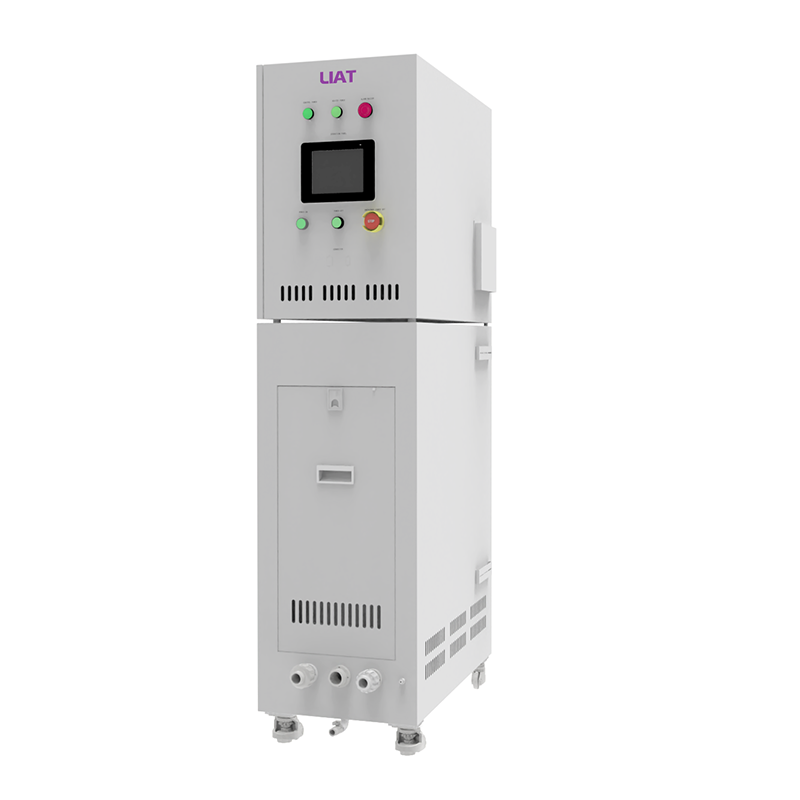
Illustrative view of a process-line heating-jacket application.
Control Is a System Connection
Heating performance depends on how the semiconductor heating jacket works with its controller, sensor location, insulation, and process hardware. A sensor mounted where it reads jacket temperature may not describe the actual line or fluid temperature. Conversely, a sensor positioned close to the process may introduce response delay or installation constraints. The control approach should therefore be discussed with the measurement point and allowable deviation in view.
It also helps to identify fault handling before commissioning. Consider high-temperature limits, sensor plausibility checks, power isolation, alarm handoff, and what should happen after a planned or unplanned power interruption. The correct arrangement depends on the process and the site’s electrical and automation practices. A heating jacket can be part of a stable temperature-control arrangement, but it is not a substitute for confirming the entire control loop.
Mechanical Fit Often Determines Serviceability
In tight equipment spaces, a semiconductor heating jacket must follow bends, valves, fittings, and support locations without creating installation friction. That makes dimensional information important: outside diameter or profile, straight lengths, bend radii, obstructions, fastener clearance, and the position of leads or connectors. A drawing or physical fit-up review can reveal issues that a simple diameter measurement misses.
Maintenance deserves equal attention. Ask whether technicians can remove the heating jacket without disturbing nearby hardware, whether replacement can be completed within the available access window, and how the unit will be identified after service. Continuous observations during early operation are useful; one stable reading is not enough to establish the long-term behavior of a process-adjacent assembly.
A Practical Cleanroom-Duty Review Sequence
-
Describe the thermal objective: Record the material or process concern, target range, ambient condition, and load changes.
-
Map the physical envelope: Document geometry, fittings, insulation, supports, access limits, and cable routes.
-
Align with cleanroom controls: Have the responsible facility or process team review materials, cleanability, installation method, and zone-specific restrictions.
-
Define measurement and control: Specify sensor location, controller connection, limits, alarms, and restart behavior.
-
Plan validation: Agree on installation checks, monitored conditions, acceptance evidence, and service records before deployment.
This sequence avoids a common mistake: treating a heating jacket as an isolated accessory. In semiconductor applications, its thermal function, mechanical fit, and environmental handling are closely connected.
Questions to Bring to the Supplier Discussion
A useful supplier conversation should be specific enough to produce a reviewable proposal. Provide the line or assembly drawing, temperature range, electrical constraints, control architecture, access limitations, and the cleanroom or local installation requirements that apply. Then ask what information is still needed to determine fit.
Lingheng Thermal Control Technology (Suzhou) works in precision temperature-control and thermal-management applications. For a heating jacket inquiry, the most productive starting point is a shared list of process conditions and connections rather than a request for a generic configuration. That creates a clearer path for reviewing how the semiconductor heating jacket may fit within the wider equipment and validation plan.
Conclusion
A semiconductor heating jacket handles tight cleanroom duty by being matched to the real operating context: thermal objective, physical geometry, control loop, material review, and service process. Start with those conditions, document what needs verification, and involve the relevant process, facility, and integration stakeholders early. That approach produces a more useful technical discussion than selecting from temperature rating alone.
 Hot News