
Why an Air Cooled Industrial Water Chiller Suits Restricted Sites
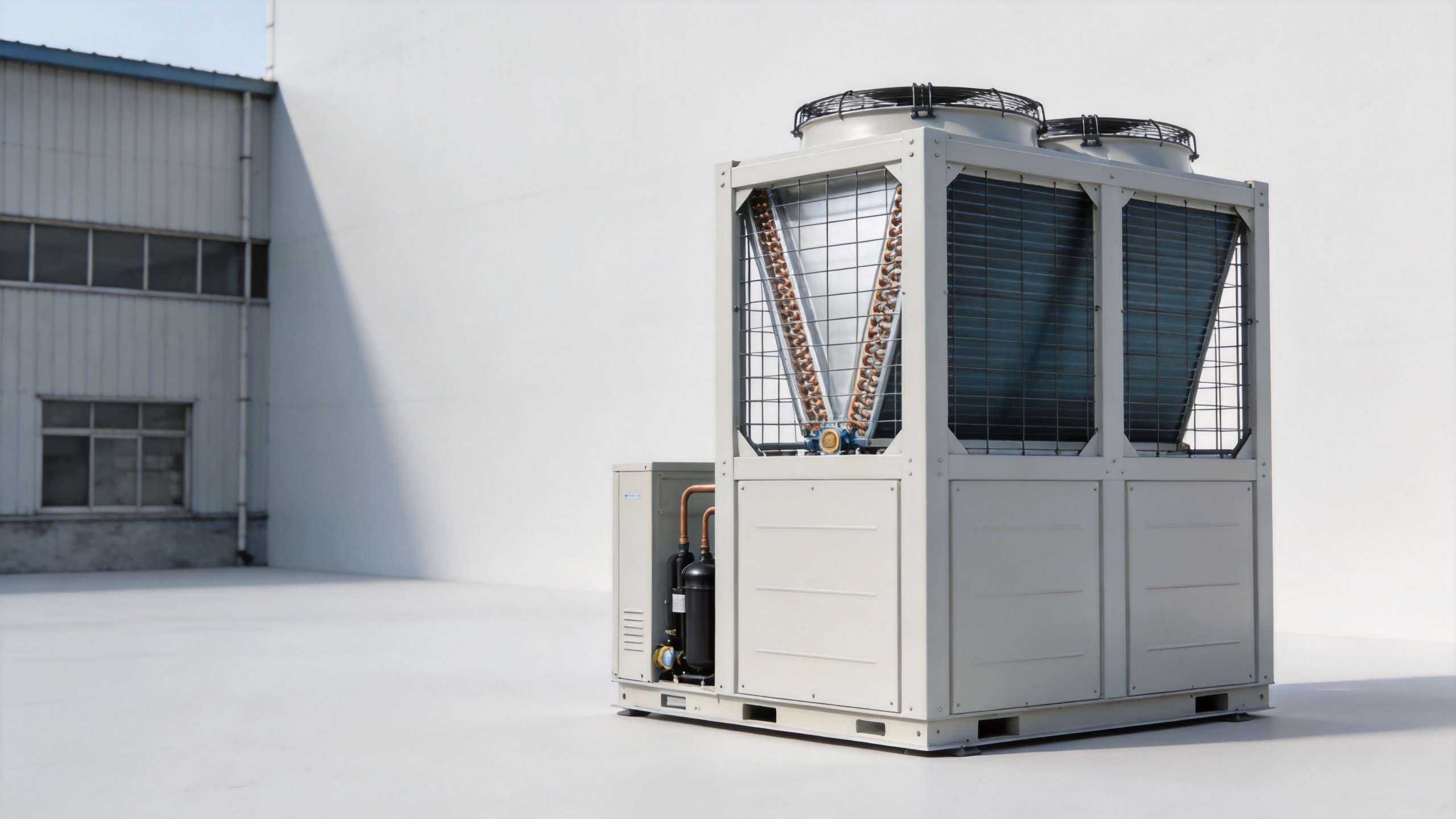
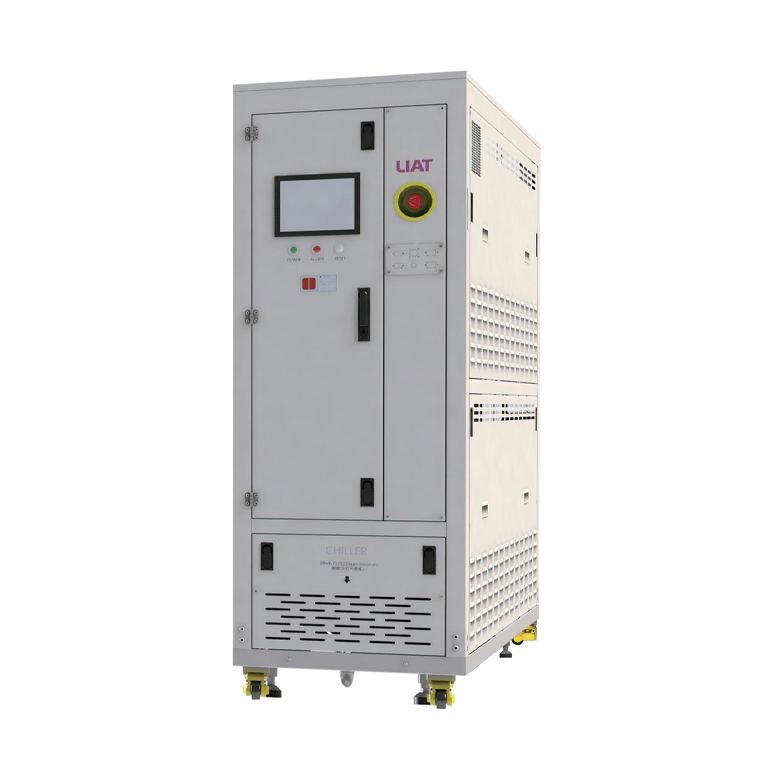
When floor area, utilities, or building access are tight, an air cooled industrial water chiller can be a practical starting point for process cooling. It rejects condenser heat to the surrounding air rather than relying on a separate condenser-water loop and cooling tower. That difference can simplify the site arrangement. It does not, however, turn every compact location into a suitable chiller location. The heat load, design ambient, airflow path, electrical supply, process-water circuit, and service clearance still need to be checked together.
From an industrial procurement perspective, the useful question is not whether an air-cooled unit is universally preferable. It is whether an air cooled industrial water chiller matches the restrictions of a particular site without introducing avoidable operating or maintenance constraints. For a small production cell, lab support area, test station, or retrofit project, that distinction keeps selection grounded in the conditions that actually govern performance.
Why restricted sites change the cooling decision
A restricted site may have limited plant-room space, no practical route for condenser-water piping, constrained roof access, or a schedule that leaves little room for civil works. A water-cooled arrangement can be appropriate in many projects, but it normally requires a heat-rejection path beyond the chiller itself. An air cooled industrial water chiller instead uses fans and a condenser coil to move heat to ambient air. This can reduce the amount of supporting infrastructure that must be planned around the unit.
That benefit is meaningful only when the surrounding air can circulate properly. Placing a unit in a narrow alcove, beneath a low canopy, or beside another heat source can cause warm discharge air to return to the condenser. In other words, removing cooling-tower work does not remove installation engineering. It shifts attention toward airflow and the real ambient conditions at the selected location.
What an air-cooled layout can simplify
For sites with limited utility capacity or difficult construction access, an air cooled industrial water chiller may simplify several parts of the project:
- Fewer external cooling components: The site may avoid planning a separate cooling tower, condenser-water pumps, and associated water-treatment scope.
- More self-contained placement: The chiller can often be assessed as a packaged cooling asset with process connections, electrical supply, airflow space, and service access as the main installation connections.
- Reduced water-side coordination: Where water availability, drainage planning, or local water management adds complexity, an air-cooled route can limit the related coordination work.
- Retrofit flexibility: Existing rooms and production areas sometimes have more available outdoor or semi-outdoor space than they have capacity for new plant infrastructure.
These are planning advantages rather than universal efficiency claims. The practical outcome depends on the operating profile and the manufacturer’s selected configuration. A well-defined project should compare the full installation and service picture, not just the unit footprint.
The constraints that still need verification
An air cooled industrial water chiller is often considered for a compact site because it appears self-contained. Yet the space around it matters as much as the space beneath it. Before approving a layout, verify the following items against the chosen unit’s drawings and project conditions.
Airflow and ambient temperature
Air-cooled condensers need a clear path for intake and discharge air. The required clearances are model-specific because fan layout, coil arrangement, and air direction differ. Avoid substituting a generic distance for the installation manual. Check whether walls, louvers, overhead structures, adjacent units, or recirculated hot air could change the actual inlet condition. The design should also reflect the highest expected ambient temperature during the process duty, not only an average day.
Heat load and load variation
An industrial water chiller should be matched to the process heat load and to how that load changes over time. A constant duty from a single tool calls for a different assessment from cycling test equipment, multiple intermittent users, or a line that ramps quickly. Define the required leaving-water temperature, acceptable control band, fluid type, flow rate, and peak-versus-normal load. Until these conditions are confirmed, it is not wise to judge suitability from nominal cooling capacity alone.
Process-water loop and electrical connections
Restricted projects often fail at interfaces rather than at the chiller itself. Map the process piping route, isolation points, filtration needs, fluid compatibility, elevation changes, and drainage provisions. On the electrical side, confirm supply voltage, available capacity, protection requirements, cable routing, and any controls coordination. For a retrofit, document what the existing system can actually support instead of assuming that an available panel or pipe connection is adequate.
Maintenance access, noise, and location rules
A compact installation still needs room for inspection, coil cleaning, component replacement, and safe technician access. Service doors that cannot open or coils that cannot be cleaned can create an operating burden long after commissioning. Also review noise limits, weather exposure, local siting rules, and lifting access. An air cooled industrial water chiller may be a strong fit for a restricted site only if the layout remains workable throughout its service life.
A practical comparison: infrastructure versus operating conditions
| Decision area | Why it matters at a restricted site | What to confirm |
|---|---|---|
| Heat rejection | Air cooling can reduce dependence on separate condenser-water infrastructure. | Ambient design condition, discharge-air path, and risk of hot-air recirculation. |
| Physical layout | A packaged unit can simplify coordination, but airflow and service space may exceed the cabinet footprint. | Installation drawing clearances, access routes, lifting plan, and surrounding obstructions. |
| Utilities | Water-side infrastructure may be reduced, while electrical and process-water connections remain essential. | Power availability, pipe routing, fluid specification, flow, drainage, and controls coordination. |
| Operating profile | Peak ambient and changing thermal loads influence the selected solution. | Target temperature, load profile, operating hours, and seasonal conditions. |
| Maintenance | Limited access can increase the difficulty of routine work. | Coil-cleaning access, panel clearance, safe working space, and service responsibilities. |
Where an air cooled industrial water chiller is commonly considered
Projects often review an air cooled industrial water chiller for equipment testing, production support, laboratory utilities, electronics thermal management, and process areas where a dedicated cooling tower is impractical. The application alone does not determine the answer. For example, a test system with changing heat output may need close attention to its load curve and control requirements, while a process loop with a stable duty may put more weight on piping layout and plant access.
Lingheng Thermal Control Technology (Suzhou) Co., Ltd. works around precision temperature-control and thermal-management discussions across semiconductor, new-energy, pharmaceutical and chemical, and aerospace-related applications. The useful starting point is to clarify the target temperature range, heat load, fluid, control expectations, and mechanical connections before comparing configurations. This approach helps keep an industrial water chiller discussion tied to the actual project instead of an isolated specification.
Use a site survey before final selection
A short site survey can turn a broad equipment choice into a defensible specification. Gather:
- Required supply-water temperature, allowable variation, fluid, flow rate, and heat-load profile.
- Outdoor or indoor location details, including peak ambient conditions and likely airflow obstructions.
- Available floor or pad dimensions plus the manufacturer’s required clearance envelope.
- Electrical supply, process piping route, controls points, drainage, and emergency access.
- Noise, weather, local installation, and maintenance-access constraints.
With those inputs, the project team can compare an air cooled industrial water chiller against other heat-rejection approaches on a like-for-like basis. The decision becomes clearer: choose the arrangement that can meet the required thermal duty while remaining installable, maintainable, and verifiable at the intended site.
Conclusion
An air cooled industrial water chiller can suit a restricted site because it can reduce the need for separate condenser-water infrastructure and concentrate planning around a packaged cooling system. The deciding conditions are still specific: ambient air, airflow clearance, heat load, water-loop details, electrical capacity, noise, and service access. Treat the unit as part of a complete thermal-management layout, then validate its fit with the selected model’s documents and the project’s real operating conditions.
 Hot News