What an Etch Chamber Heating Jacket Does for Wafer Processing
An etch chamber heating jacket is an external thermal-management component fitted around a defined chamber section, lid, gas-delivery component, exhaust section, or related process hardware. Its job is not to replace the electrostatic chuck or to set wafer temperature by itself. Instead, this external heater helps an engineering team manage selected equipment surfaces when their thermal condition matters to process stability, maintenance planning, or material behavior.
That distinction matters. In plasma etching, the wafer sits in a controlled environment where plasma, gas chemistry, pressure, RF conditions, and wafer-side thermal control interact. A heating jacket is normally evaluated as one element of the wider thermal system. Whether an etch chamber heating jacket is relevant depends on the chamber geometry, target surface, chemistry, cleaning routine, available utilities, and the tool maker’s operating limits.
Why chamber-side temperature deserves attention
Etching creates precise patterns on wafers, but the chamber is more than an empty enclosure. Its walls, hardware interfaces, seals, delivery paths, and nearby surfaces experience changing thermal conditions over repeated process and clean cycles. Process species can interact with those surfaces, and deposits may influence the consistency of later runs. For this reason, a team may investigate an etch chamber heating jacket when it needs a more deliberate way to condition a specific external surface.
That does not mean every temperature-related issue calls for an external heater. Wafer temperature can be controlled through components such as an electrostatic chuck and backside-gas arrangement. Chamber-side heat management addresses a different question: whether a particular piece of hardware should remain within a defined thermal window so that its temperature is less sensitive to ambient changes, tool idle time, or changing duty cycles.
What an etch chamber heating jacket actually does
At a practical level, the external thermal assembly transfers heat through a contact area and insulation layer into the selected component. A controller, sensor arrangement, power circuit, and mechanical fastening method work together to make that heating repeatable. The exact construction varies with the component shape, access constraints, materials, and service rules.
- Conditions an external surface: The assembly can help reduce drift at a selected surface after downtime or during variable ambient conditions.
- Supports a defined process window: When a chamber section has an approved setpoint range, the assembly can apply controlled heat rather than relying on incidental process heat.
- Helps engineering comparison: It creates a clear thermal-management option to assess alongside insulation, sensor placement, control logic, clean recipes, and hardware design.
- Shapes maintenance decisions: A removable or segmented thermal cover may be easier to inspect and reinstall than a fixed solution, but only if it fits the chamber’s approved service procedure.
A heating jacket should therefore be described as a controlled heat source for a defined external surface, not as a standalone answer to etch uniformity, particle control, or deposit management.
A typical evaluation scenario
Consider a process engineer who sees a chamber-related condition vary after extended idle periods or after a change in throughput. The team first separates the observation from assumptions: is the change tied to wafer temperature, chamber-wall condition, a gas line, a sensor reading, a clean sequence, or a mechanical connection? Only then can it decide whether an etch chamber heating jacket belongs in the investigation.
A common mistake is to state only the desired temperature without confirming how the thermal load changes across the cycle. A surface may see process heat, conductive losses, airflow effects, and temperature changes from adjacent assemblies. When thermal load changes are substantial, one nominal setpoint alone does not define how the etch chamber heating jacket will behave in service.
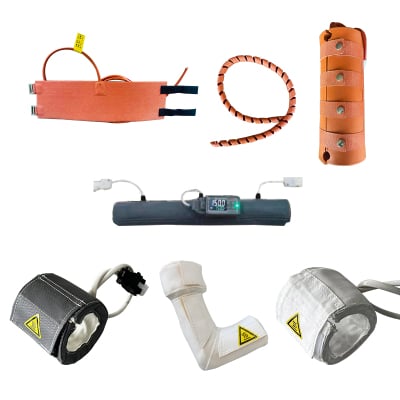
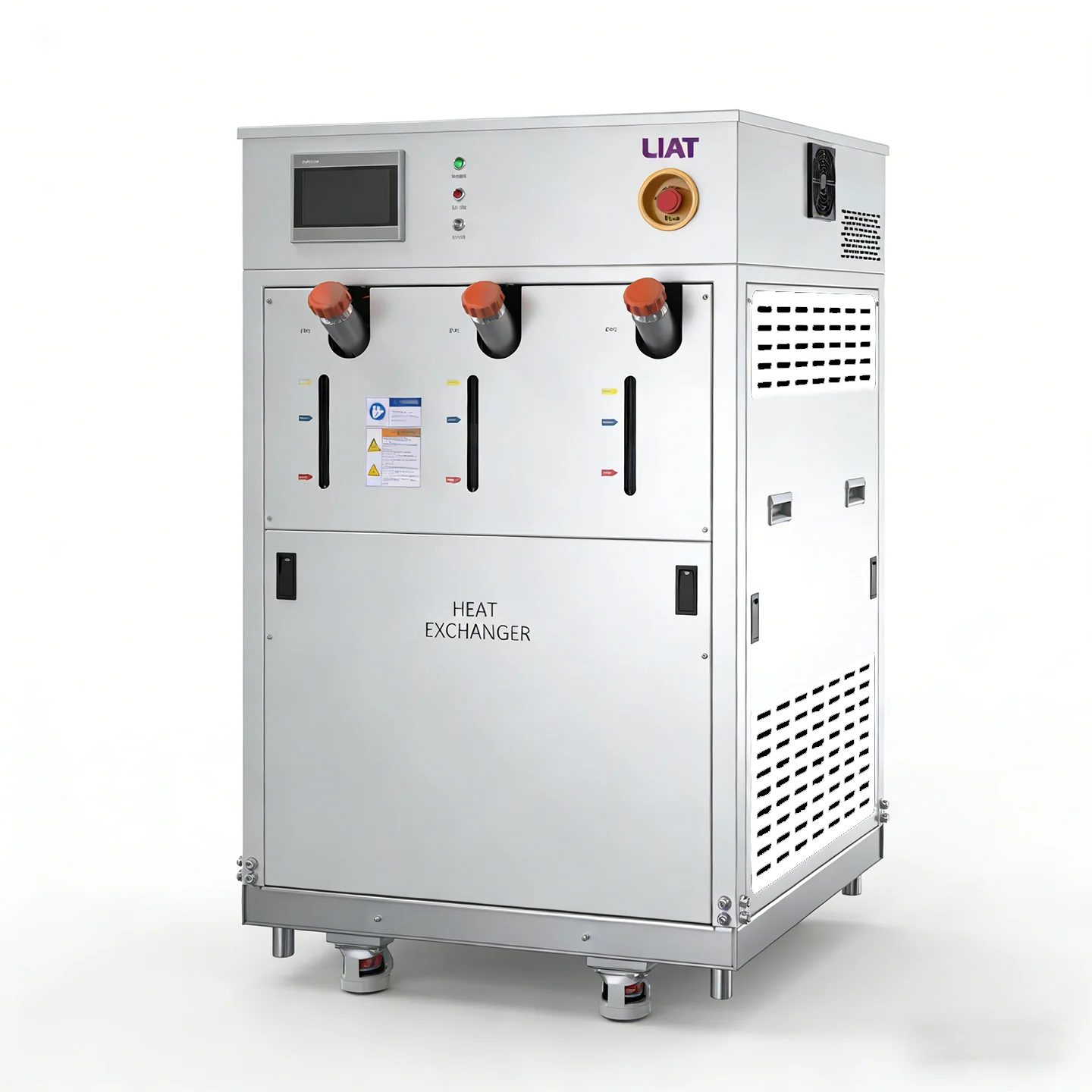 Illustrative view of an external thermal-management arrangement on process equipment.
What to verify before specifying a heating jacket
For procurement and engineering review, an etch chamber heating jacket should be treated as a configuration task rather than a generic accessory purchase. Begin with the chamber documentation and the tool owner’s approved modification process. Then turn the application into a short verification list.
- Identify the exact surface. Confirm the component name, geometry, dimensions, obstructions, access points, and which areas must remain uncovered. An etch chamber heating jacket cannot be evaluated accurately from a broad chamber description alone.
- Define the permitted temperature window. Record the target range, allowable deviation, startup conditions, process-cycle duration, and any limits imposed by seals, coatings, wiring, or nearby equipment.
- Review materials and cleanroom compatibility. The outer material, insulation, fastening hardware, sensor leads, and connectors should fit the site’s contamination-control and maintenance requirements. Compatibility needs tool-specific confirmation.
- Plan sensing and control. Ask where temperature is measured, how the controller responds to sensor faults, and whether the control scheme is integrated with existing tool interlocks or operated independently.
- Check service access. A heating jacket that complicates inspection, chamber opening, leak checks, or replacement work may add operational friction even when its thermal concept is sound.
- Set an acceptance method. Agree on inspection, fit-up, electrical checks, heat-up observation, and documented operating criteria before the component is placed into routine use.
Why control architecture matters as much as the jacket
An etch chamber heating jacket is only as useful as the way it is controlled and verified. Sensor location affects what the system is actually measuring. A sensor on the jacket exterior may not represent the temperature of the chamber surface beneath it. Likewise, a stable display reading does not by itself establish that the relevant process condition is stable.
For that reason, teams commonly review thermal zones, sensor attachment, alarm behavior, wiring routes, electrical protection, and the relationship between the jacket controller and the chamber’s existing controls. If the process has large thermal swings, target temperature alone is usually not enough information to judge the setup. The next question is how the chosen surface responds during the real sequence of idle, process, clean, and recovery steps.
What an etch chamber heating jacket does not do
Clear boundaries make technical discussions more useful. An etch chamber heating jacket does not automatically correct plasma chemistry, substitute for electrostatic-chuck temperature control, or prove improved wafer results. It does not remove the need to evaluate chamber condition, gas delivery, RF settings, pressure, cleaning, and metrology. A heating jacket may be part of a disciplined response when surface-temperature management is relevant, but the result still depends on the full process and equipment context.
Questions to take into a supplier or internal review
Before moving forward, ask: Which exact chamber part needs external heating? What operating range has been approved? What thermal loads and cycle times apply? Which materials may contact the tool exterior? How will the etch chamber heating jacket be secured and removed? Where will sensors sit? What electrical documentation, inspection points, and maintenance instructions are required? Answers to these questions make it easier to compare designs on fit, serviceability, and evidence rather than relying on a broad product label.
Conclusion
An etch chamber heating jacket is a focused tool for managing the temperature of selected external chamber hardware during wafer-processing operations. Its value lies in a defined application: the right surface, a verified operating window, appropriate materials, thoughtful control integration, and a documented validation plan. Treat the jacket as one part of the thermal-management system, and use the application review to determine whether it fits the chamber, process, and maintenance workflow.
 Hot News