
How a Semiconductor Chiller Delivers Sub-Degree Temperature Stability
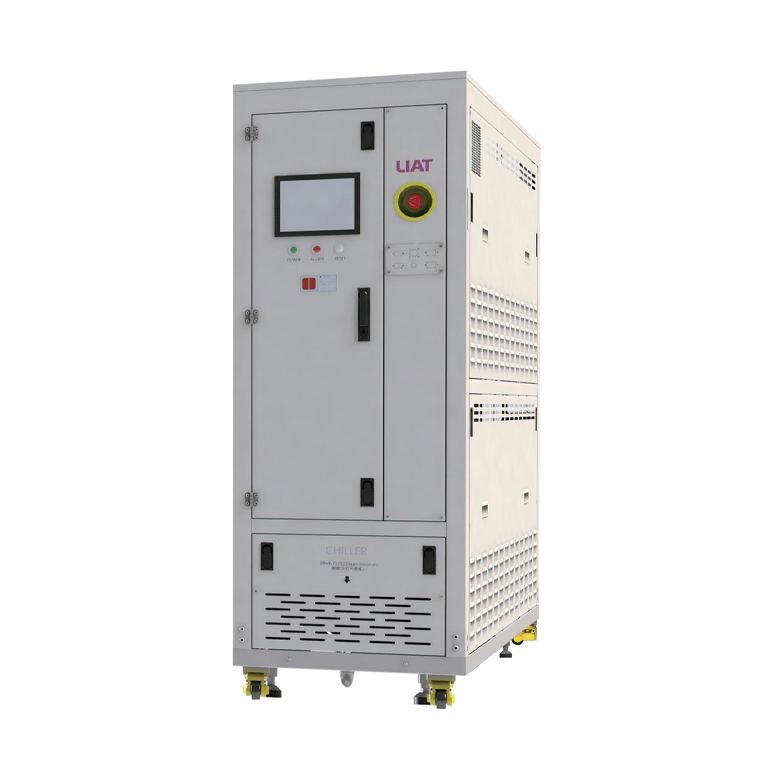
A semiconductor chiller earns its place in a process tool by controlling more than a number on a display. It has to manage changing heat input, fluid flow, piping losses, sensor delay, and the control response that ties those factors together. For wafer processing, metrology, laser work, and device test, a small temperature excursion can change the conditions seen by a critical component. That is why sub-degree stability is more usefully understood as a system result, not as a standalone brochure specification.
From a process-risk perspective, the useful question is not simply, “What stability can this semiconductor chiller claim?” It is, “At which measurement point, under which heat load, with which fluid circuit?” A precision chiller may hold a supply-fluid setpoint very tightly while the actual load still drifts if the loop has too much thermal lag or an unstable flow condition.
Why sub-degree stability matters in semiconductor work
Thermal control supports repeatable physical and chemical conditions. In semiconductor equipment, temperature can influence dimensions, material behavior, optical alignment, electrical test conditions, and the way heat moves through a fixture or chamber. The acceptable tolerance is determined by the tool and process, rather than by a universal rule. As a bounded example, one semiconductor process-cooling source describes requirements around ±0.5–1°F for many fab applications; that range should be treated as a starting point for discussion, not as a design guarantee for every process.
A semiconductor chiller therefore needs to absorb disturbances without sending a delayed correction that overshoots the target. The disturbance may come from an RF source changing state, a pump speed changing, a wafer-handling sequence, ambient variation, or a different recipe. The practical goal is stable temperature where the process experiences it, not merely stable temperature at the chiller outlet.
The control loop behind a stable semiconductor chiller
1. Capacity must match the real heat load
Every semiconductor chiller begins with a thermal balance. The refrigeration circuit removes heat, but its capacity must be evaluated across the requested temperature range, the chosen fluid, and the expected load profile. Oversizing does not automatically produce better control: an oversized system can short-cycle or respond too abruptly if its controls are not designed for the application. Undersizing is equally problematic because the unit may run continuously and lose recovery margin when the load steps up.
A useful specification separates steady heat load from transient heat load. It also identifies how quickly the heat changes. A process chiller serving a steady platen behaves differently from one supporting a cycling test fixture. If only the target temperature is known, but the load and its rate of change are not, what basis is there for comparing two systems?
2. Flow stability protects heat-transfer consistency
The fluid circuit is part of the thermal plant. Stable flow helps the heat exchanger deliver predictable heat transfer and keeps the temperature difference through the load understandable. Changes in pump speed, restrictions in small passages, bypass behavior, air entrainment, or a clogged filter can alter the temperature seen downstream even when the semiconductor chiller itself is holding its outlet sensor near setpoint.
For that reason, an industrial cooling system should be reviewed as a loop: reservoir, pump, heat exchanger, supply and return piping, tool passages, valves, and instrumentation. Fluid selection matters too. Water quality, glycol concentration, compatibility, conductivity requirements, and allowable pressure drop all affect the usable operating window. A precision chiller is only as predictable as the hydraulic circuit it is asked to control.
3. Sensor location determines what the controller can see
Sensor placement is often the hidden reason a good semiconductor chiller produces disappointing process stability. A sensor located far from a changing workload sees the effect late. The controller may then continue adding cooling or reducing cooling after the process has already crossed its ideal temperature, creating a cycle of overshoot and undershoot.
Engineering guidance on dynamic thermal systems makes the principle clear: sensing nearer to the workload can reduce thermal delay and improve response to changes. In practice, the appropriate location depends on the control objective. The semiconductor chiller may need one sensor for supply control and another monitored point near the process. More accurately, this conclusion applies only after the fluid path, sensor installation, and control responsibilities have been confirmed.
4. Tuning balances speed against overshoot
A semiconductor chiller uses its controller to decide how aggressively to respond to error. A very fast correction may recover quickly after a load step but can induce oscillation if the loop has transport delay. A slow correction may look calm at idle yet allow a larger deviation during recipe changes. PID settings, compressor or valve modulation, heater trim, pump behavior, and filtering must be coordinated with the thermal mass of the actual loop.
Commissioning should therefore include controlled load changes, not just an idle setpoint test. Record supply temperature, return temperature, flow, ambient conditions, and the temperature at the critical load. That record turns a stated precision chiller rating into an application-specific result.
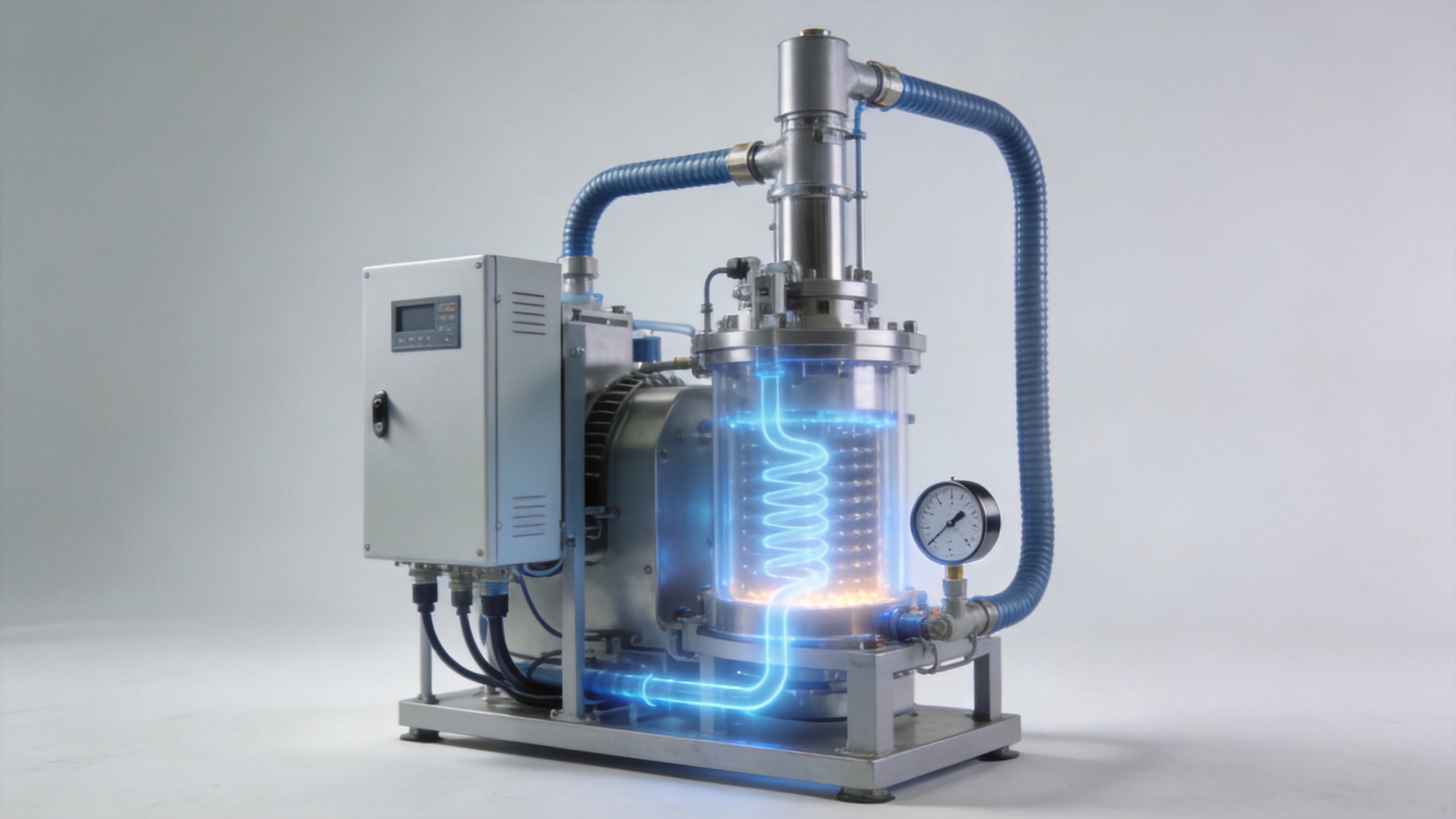
What separates a precision chiller from a general cooling unit
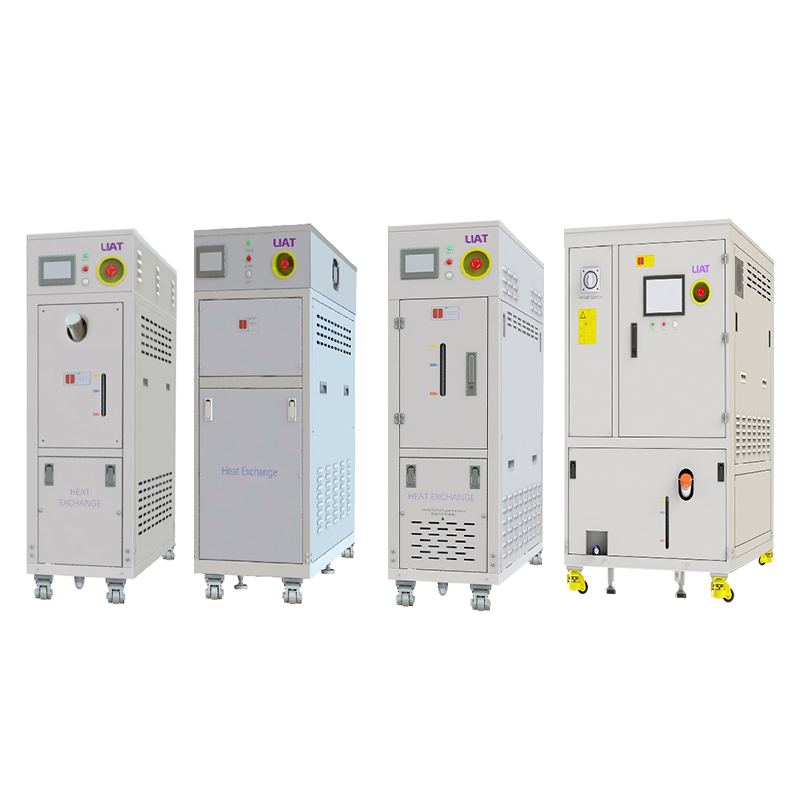
A general industrial cooling system is often selected primarily for heat rejection and operating range. A precision chiller adds closer attention to measurement resolution, repeatability, control authority, fluid circulation, and recovery after disturbances. That does not mean every semiconductor chiller needs the same architecture. Some tools need a compact local loop; others require a larger conditioned supply with carefully designed secondary circuits.
The decision should be tied to the process risk. A semiconductor chiller for a laser source, a probe station, an etch subsystem, or a thermal test fixture may require different temperature ranges, fluid cleanliness, flow rates, and communication interfaces. The common thread is that the requested tolerance must be traced back to the process measurement point.
A practical specification and commissioning checklist
- Define the control point: State whether the tolerance applies at chiller supply, tool inlet, return, or a process-adjacent sensor.
- Map the heat load: Capture steady load, peak load, step size, duty cycle, and recovery expectation.
- Confirm the fluid circuit: Review fluid chemistry, conductivity needs, flow range, pressure drop, filtration, piping length, and insulation.
- Specify stability honestly: Request the tolerance, sensor location, ambient condition, load condition, and test duration together.
- Plan instrumentation: Use calibrated sensors with a resolution appropriate to the target and log more than a single display value.
- Test real disturbances: Validate the semiconductor chiller during representative recipe changes or controlled load steps before sign-off.
Making the stability claim useful
The strongest semiconductor chiller specification is not the smallest number in isolation. It is a transparent statement of operating conditions and verification method. Start with target temperature, heat load, fluid, flow, interface requirements, and allowable drift at the actual load. Then use commissioning data to refine control settings and identify whether a piping, sensing, or flow issue is masking the capability of the unit.
For a process chiller in a sensitive tool, that approach reduces avoidable surprises. It also helps procurement, engineering, and operations discuss the same constraints instead of comparing nominal capacities alone. Sub-degree performance becomes credible when the refrigeration system, controls, sensors, and process loop are designed and tested as one system.
 Hot News