
Why Your Semiconductor Chiller Needs Precise Flow Control
A semiconductor chiller is often specified around a temperature setpoint, but setpoint accuracy alone does not tell the full thermal story. The coolant loop has to move enough heat, at a sufficiently stable flow, through the process tool and back to the chiller. When flow changes unexpectedly, the temperature sensor may still display a familiar number while the thermal conditions at the tool drift away from what the process expects.
From an equipment-integration perspective, the useful question is not simply, “What temperature can the unit hold?” It is, “Can the semiconductor chiller, piping, heat exchanger, control logic, and process tool maintain the required temperature and flow conditions together?” That distinction matters for wafer-processing equipment, test fixtures, laser-related systems, and other tools where a heat-transfer-fluid loop removes or adds heat at a controlled interface.
Temperature Control Depends on a Moving Fluid
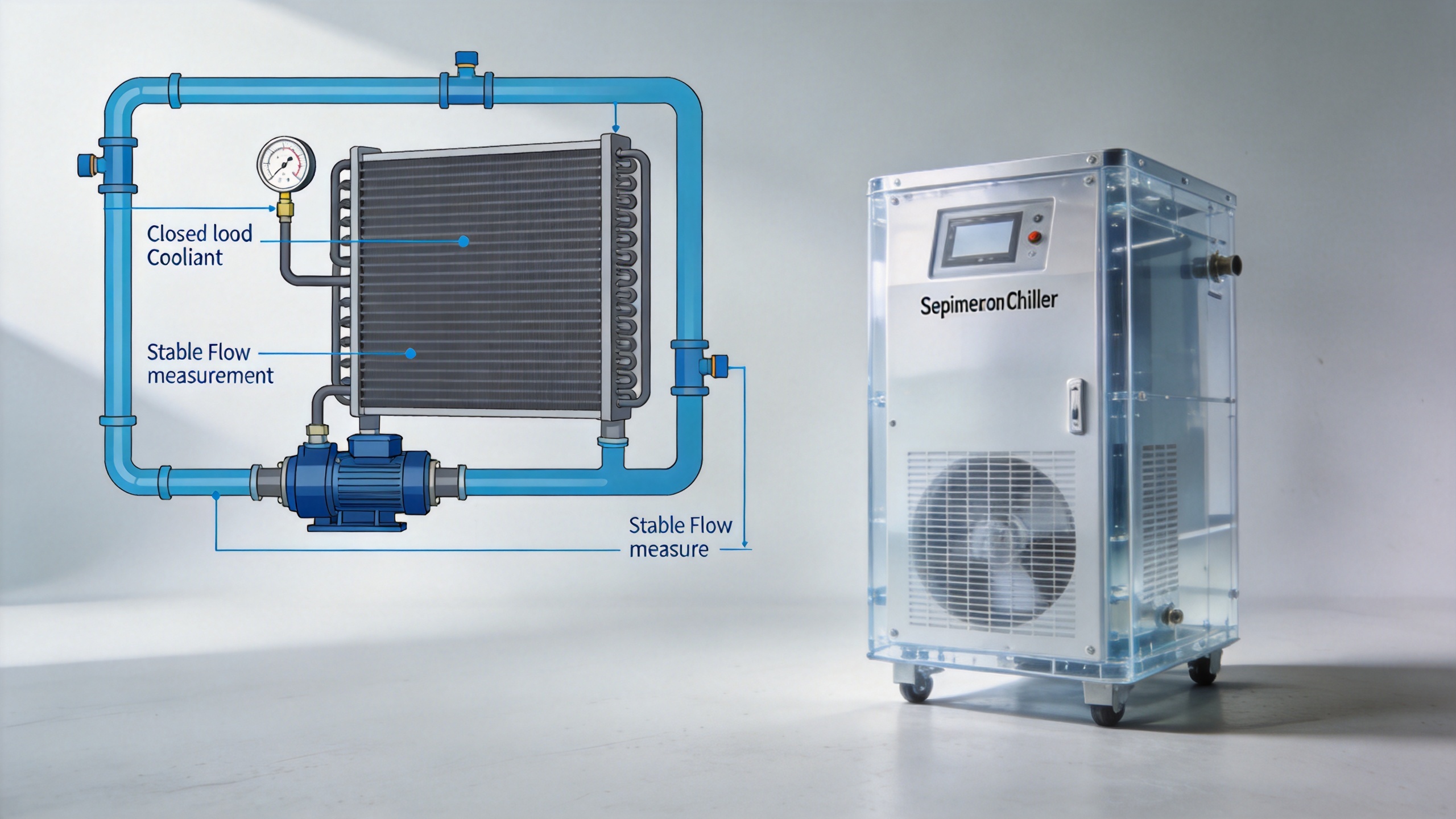
In a closed-loop recirculating chiller, the circulating fluid carries heat between the process equipment and the refrigeration system. The chiller may regulate the fluid temperature at its own sensor, yet the process receives thermal performance through the combination of fluid temperature, flow rate, pressure drop, piping condition, and the tool-side heat exchanger. If one of those conditions changes, the delivered result can change too.
A simple heat-balance relationship illustrates why. The heat removed by a liquid loop is related to mass flow, the fluid’s heat capacity, and the temperature difference between supply and return. This does not mean a higher setting is automatically better. It means a flow rate that is too low for the actual heat load can leave an excessive supply-to-return temperature rise, reduce effective heat transfer, or make the system slower to recover after a load change. Conversely, forcing flow beyond the tool’s permitted range can create pressure, vibration, or control issues. The correct target is the verified operating envelope of the specific tool and loop.
What Precise Flow Control Protects
1. Stable heat transfer at the process interface
The process tool does not experience the chiller cabinet; it experiences coolant passing through its channels, cold plates, or internal heat exchanger. Stable flow helps keep the heat-transfer condition repeatable. If flow falls because of a partially restricted filter, an air pocket, a valve position, or a pump-control change, the tool-side heat-transfer coefficient may change. The temperature loop then has to work with a different system than the one it was commissioned on.
2. Predictable response to changing heat loads
Semiconductor equipment can move between operating states with different thermal demands. A process chiller should be evaluated against the load profile, not only a single steady-state point. When flow is stable, the relationship between a change in tool heat load and the return-temperature signal is easier to interpret. When flow is unstable, the controller may respond to a mixed signal caused by both a thermal shift and a hydraulic shift.
3. More meaningful temperature readings
It is possible for a semiconductor chiller to appear stable at its outlet while the process sees a different result downstream. Long or undersized piping, changing pressure drop, poor insulation, branch circuits, and varying tool restrictions all affect what happens between the outlet sensor and the process. That is why supply temperature, return temperature, flow, and pressure should be considered as a set of related observations rather than isolated values.
Why a Heat Exchanger Makes Flow a Control Variable
A heat exchanger transfers energy across a surface; it does not make heat disappear by itself. The fluid conditions on each side affect how effectively that surface can do its job. In the external loop, flow influences residence time, turbulence characteristics, and the temperature rise of the coolant. The exact relationship depends on the fluid, channel geometry, heat load, and equipment design, so it should not be reduced to a universal flow-rate number.
For a semiconductor chiller project, confirm the tool supplier’s required flow range and allowable pressure drop first. Then compare those limits with the pump curve, expected piping losses, valves, quick-connect fittings, filters, and any parallel branches. A flow specification that looks acceptable at the chiller outlet may not remain acceptable at the tool connection after the whole circuit is assembled.
Common Flow Problems That Are Easy to Miss
- Filter loading: A filter can protect the loop while gradually increasing resistance. Trend differential pressure or another appropriate maintenance indicator instead of waiting for an obvious temperature alarm.
- Air in the loop: Entrained air can disturb pump behavior, reduce effective contact in small passages, and make readings less repeatable. Follow the equipment maker’s filling and venting procedure.
- Valve and bypass settings: A bypass can prevent deadheading, but an uncontrolled bypass may divert flow away from the process. Confirm the intended hydraulic path during commissioning.
- Changing tool restrictions: A tool modification, hose replacement, or added fitting can alter pressure drop. Recheck flow after changes rather than assuming the original setup remains valid.
- Overreliance on one sensor: A stable outlet-temperature display is useful, but it should be interpreted alongside return temperature, flow indication, and applicable pressure measurements.
A Practical Commissioning Sequence for a Semiconductor Chiller
- Define the process requirement. Document the specified supply-temperature range, allowable stability band, fluid type, required flow range, allowable pressure, heat-load profile, and any cleanliness requirements from the tool documentation.
- Map the complete loop. Include the semiconductor chiller, hoses or hard piping, fittings, filters, valves, manifolds, and the process-side heat exchanger. This reveals where pressure drop and heat gain can enter the system.
- Verify flow at the relevant point. Use the measurement method and location appropriate to the installation. A pump command or nominal pump capacity is not proof of actual process flow.
- Record supply and return behavior. Observe normal operation and representative load transitions. A growing supply-to-return difference can be a prompt to check load, flow, or both; it is not a diagnosis by itself.
- Set alarms around approved limits. Where the control system supports it, use the tool’s documented flow and pressure boundaries. Avoid inventing generic alarm thresholds that may not suit the process.
- Plan maintenance around hydraulic health. Include filter inspection, fluid condition, leak checks, venting, hose condition, and sensor verification in the routine plan for the recirculating chiller loop.
Choosing a Process Chiller: Questions That Clarify the Real Requirement
A productive selection discussion goes beyond nominal cooling capacity. Ask for the required flow window at the tool, the allowable pressure drop, the fluid and concentration, the maximum and minimum heat loads, the expected load-change rate, the piping layout, and the signals that must be shared with the tool controller. These conditions make it possible to judge whether a process chiller and its pump/control arrangement are compatible with the installation.
It is also worth separating confirmed requirements from assumptions. For example, an early estimate of heat load can start a conversation, but a final selection should be checked against actual operating states and interface information. That evidence-first approach reduces the chance of treating a catalog value as a guarantee of process performance.
The Bottom Line
Precise flow control gives a semiconductor chiller a more reliable way to deliver its temperature-control capability to the equipment that needs it. Stable flow supports repeatable heat transfer, clearer diagnostics, and more predictable reaction to changing loads. It does not replace correct temperature control, pump sizing, piping design, or tool integration; it connects them.
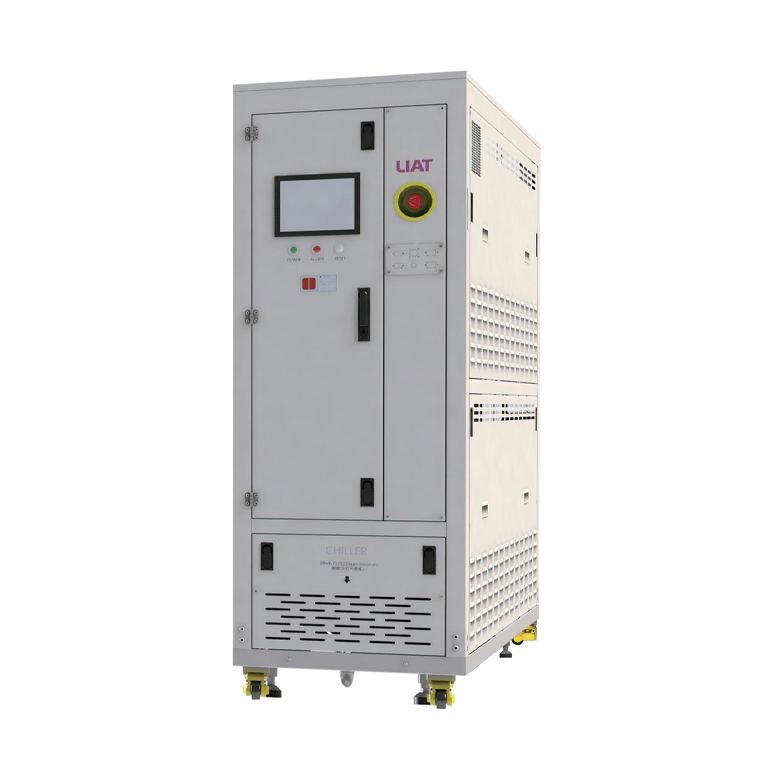
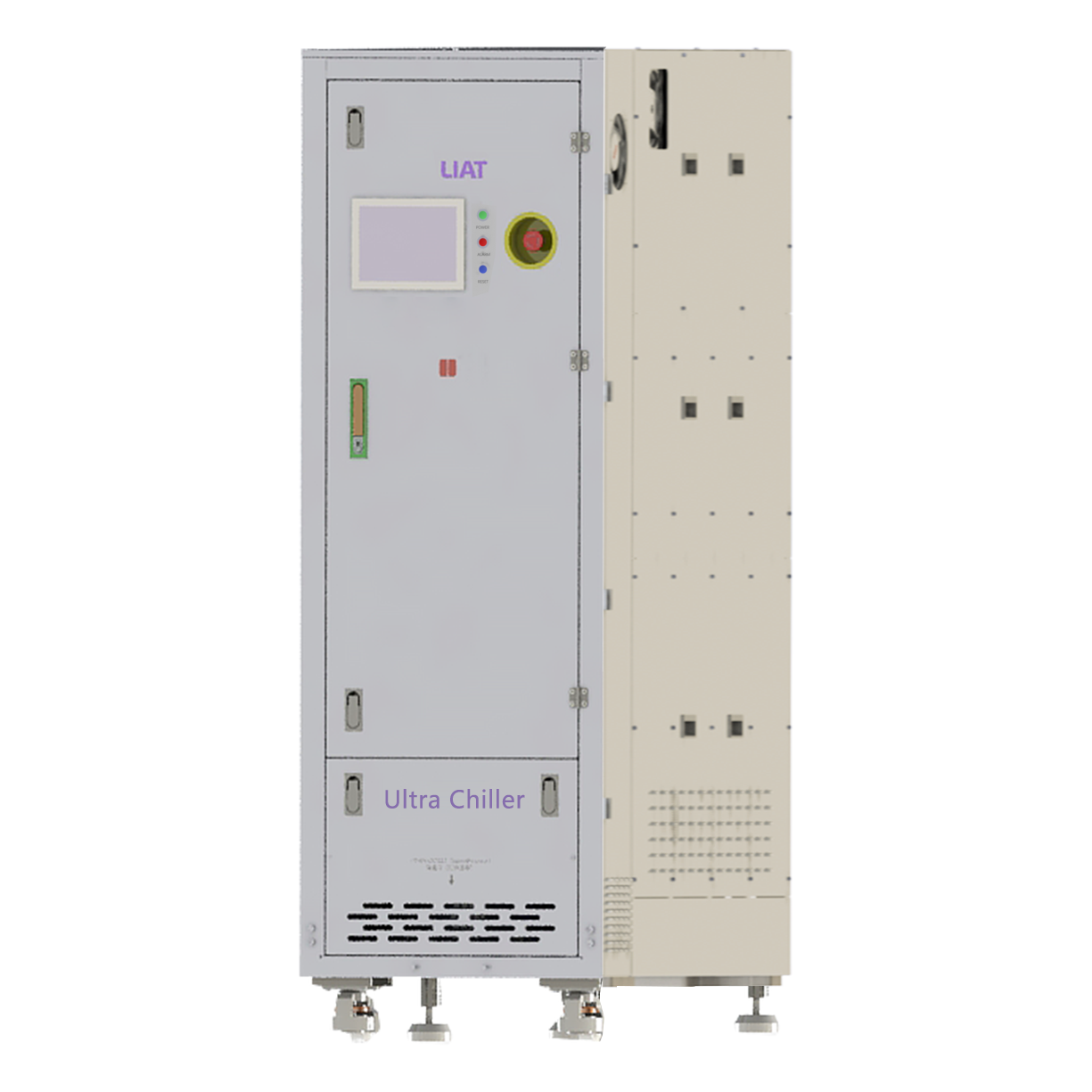
Before commissioning or replacing a semiconductor chiller, build a verification list around the full loop: required flow, allowable pressure, supply and return temperatures, fluid condition, pressure drop, and process-tool requirements. With those inputs defined, the chiller can be assessed as part of a controlled thermal system rather than as an isolated box with a temperature display.
 Hot News