How to Choose a Semiconductor Chiller for Etch Process Stability
Choosing a semiconductor chiller for an etch tool is not a matter of matching a catalog temperature range to the setpoint on a recipe. In plasma etch and related processes, the cooling loop influences electrostatic chuck behavior, chamber-wall conditions, RF hardware, pumps, and other heat-producing subsystems. If coolant temperature, flow, or pressure changes beyond what the process can absorb, the result may show up as drift in etch rate, selectivity, uniformity, endpoint behavior, or tool uptime.
From a semiconductor equipment-integration perspective, the right starting question is not “Which industrial chiller is largest?” It is “What thermal duty must the loop hold steady, through which load changes, and at which interface?” This guide turns that question into a practical selection workflow. It is intentionally conditional: the allowable band, fluid, and redundancy plan must be confirmed against the specific tool and process recipe.
Start with the etch stability requirement, not the chiller brochure
Temperature changes can affect surface reaction rates and the physical conditions around the wafer. That is why a semiconductor chiller should be specified from the process tolerance backward. Ask the process and tool teams to define the controlled point, the target temperature, the permitted steady-state variation, and the permitted response to a load step. A supplier may describe a precision chiller as capable of control around ±0.1°C or tighter, but that is a capability statement, not a universal etch requirement. The meaningful number is the stability achieved at your actual sensor location, flow rate, load, and ambient condition.
- Identify the controlled asset: chuck loop, chamber wall, RF generator, turbo-pump support circuit, or a separate subassembly.
- Define the response case: recipe transitions, RF power changes, wafer loading, idle-to-run recovery, and facility-water variation can matter more than a quiet-state reading.
- Agree on the measurement method: sensor type, mounting point, sampling interval, and acceptance window should be documented before comparing units.
This prevents a common error: accepting a nominal stability number that was measured in a test loop unlike the one on the tool.
Build the heat-load model before sizing the semiconductor chiller
Cooling capacity is necessary, but capacity alone does not make a process chiller suitable for etch. Begin with a load inventory. Include continuous dissipation, intermittent peaks, and heat entering through hoses, manifolds, or nearby equipment. For a water-based loop, engineers often use the relationship Q = ṁ × Cp × ΔT as a first check, where heat duty depends on mass flow, fluid heat capacity, and allowable supply-to-return temperature rise. It is a sizing tool, not a substitute for a tool-level thermal test.
| Input to confirm | Why it changes selection | Practical question |
|---|---|---|
| Continuous and peak heat load | Sets capacity and transient margin | What is the measured or calculated duty in each recipe state? |
| Supply and return temperatures | Defines the usable temperature lift | What temperature range is allowed at the equipment inlet? |
| Required flow and pressure drop | Determines pump and hydraulic fit | Can the unit maintain flow at the actual restriction of filters, hoses, and manifolds? |
| Fluid chemistry and cleanliness | Affects materials, filtration, and maintenance | Is the loop DI water, a water-glycol mixture, or another approved medium? |
| Load profile | Reveals control and buffer needs | How fast and how often does the thermal load change? |
Apply margin thoughtfully. A large capacity reserve can help recover from a peak, but oversizing without considering controller turndown, buffer volume, and cycling can make stable low-load operation harder. A temperature control chiller should be evaluated across the expected operating envelope, not only at maximum duty.
Match temperature control to the dynamic behavior of the loop
Etch tools rarely present a perfectly steady load. Plasma power, gas conditions, wafer contact, and the state of auxiliary hardware can change the heat balance. For this reason, ask how the semiconductor chiller regulates under a step change, not just how accurately it holds a static setpoint.
Look beyond the advertised stability figure
- Sensor placement: A stable internal reservoir does not automatically mean a stable tool inlet. Ask where the control sensor sits and whether a remote sensor or compensated control is available.
- Control resolution and tuning: The control algorithm must suit the loop volume, fluid properties, and load response. A loop with long hoses behaves differently from a compact local loop.
- Heating and cooling coordination: Some processes need the loop to reject heat in one state and add controlled heat in another. Confirm whether the precision chiller configuration supports the needed bidirectional response.
- Buffer strategy: A reservoir or external buffer can damp rapid disturbances, but it also changes response time. Size it from the load profile rather than treating it as a default accessory.
A useful factory or site acceptance test reproduces representative recipe transitions and records inlet temperature, return temperature, flow, pressure, alarms, and recovery time. This converts “stable” from a marketing adjective into an agreed test result.
Size the pump for flow, pressure, and clean-loop reliability
A process chiller needs more than refrigeration capacity. The pump must deliver the required flow at the total pressure drop of the complete circuit. That total includes the tool, hoses, quick disconnects, heat exchangers, valves, filters, and any future branch. A pump curve taken at the chiller outlet is not enough if the loop loses pressure at the far end of the tool.
Request the required flow-versus-pressure data from the equipment integrator, then compare it with the proposed pump curve at the selected fluid and temperature. Also decide whether variable-speed pumping is appropriate. It can reduce energy use and support different modes, but the control strategy should avoid unstable flow when restrictions change.
Cleanliness deserves the same attention. Semiconductor loops can be sensitive to particulate, corrosion products, biofilm, or incompatible additives. Confirm wetted materials, filter rating, service access, water-quality requirements, and whether deionized-water use requires a specific piping or sealing approach. These are system questions; a high-quality industrial chiller cannot correct a poorly managed loop.
Check integration details that often determine uptime
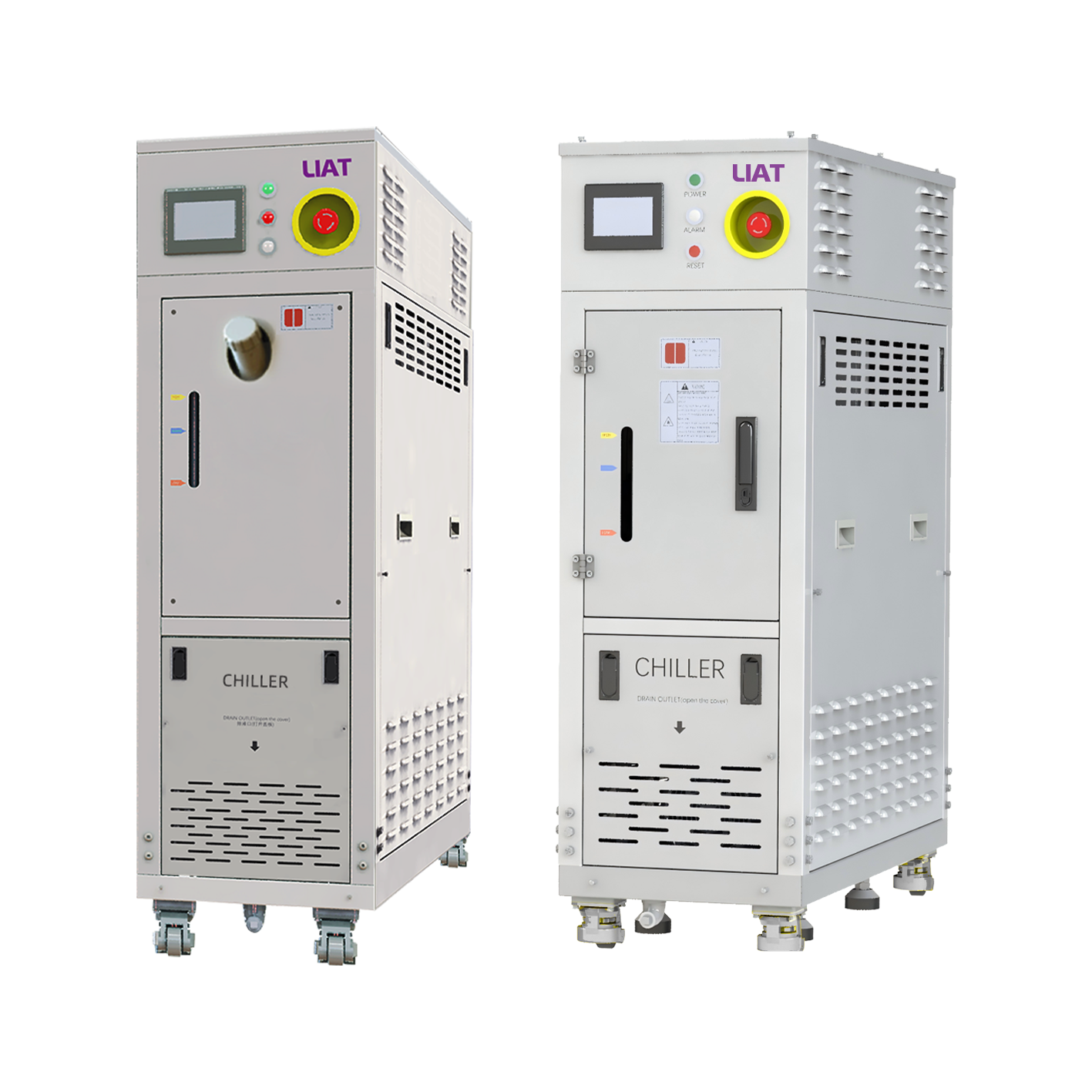
The refrigeration package is only one part of an etch-tool cooling solution. Before selecting a semiconductor chiller, review the interfaces that determine whether it can be installed, monitored, and maintained without disrupting production.
- Electrical and controls: Confirm voltage, fault logic, remote enable, interlocks, alarm contacts, communications protocol, and how a chiller alarm should affect the tool.
- Facility conditions: Verify ambient range, ventilation, heat-rejection method, facility-water quality where applicable, drain provisions, and service clearances.
- Redundancy philosophy: Decide whether the process needs standby capacity, dual pumps, bypass capability, or a rapid-change service plan. The answer depends on the cost of a temperature excursion and the time available for recovery.
- Maintainability: Plan filter changes, fluid sampling, leak checks, calibration, and preventive maintenance around production windows.
Do not assume that an air-cooled and a water-cooled temperature control chiller are interchangeable. The facility heat-rejection path, sound limits, room heat load, and water availability can change the better choice.
When a general industrial chiller is not enough
A general industrial chiller may be appropriate for noncritical utilities or broad-tolerance equipment. Etch applications often demand a more deliberate configuration because the loop can influence sensitive process conditions. The distinction is not a brand label. It is whether the unit can reliably meet the required temperature behavior, hydraulic conditions, cleanliness controls, alarm integration, and documentation at the application point.
For example, a chiller with adequate kilowatts but slow response, an unsuitable pump curve, or no practical means to verify inlet stability can still create a process risk. Conversely, adding features that do not map to a known thermal or uptime requirement increases cost without improving etch stability. A strong specification links each feature to a measurable operating condition.
A commissioning checklist for the selected process chiller
Before release to production, run the chosen semiconductor chiller through a documented commissioning plan:
- Verify supply temperature, return temperature, flow, and pressure at the tool interface.
- Confirm stability and recovery during representative recipe or load transitions.
- Check alarm, remote enable, emergency-stop, and communications behavior with the equipment control system.
- Inspect fittings, insulation, filtration, fluid quality, and leak detection after thermal cycling.
- Record baseline values so later drift can be distinguished from normal operating variation.
In short, select a semiconductor chiller as part of the etch system rather than as an isolated utility. When heat load, temperature tolerance, flow, pressure drop, fluid compatibility, controls, and commissioning tests are specified together, the cooling loop becomes easier to validate and easier to maintain. That is the practical route to more stable process conditions.
 Hot News