How a PECVD Heating Jacket System Keeps Films Uniform
Film uniformity in plasma-enhanced chemical vapor deposition is not controlled by one setting alone. RF power, pressure, gas chemistry, wafer handling, chamber condition, and temperature all interact. A PECVD heating jacket system helps the thermal part of that interaction stay stable around temperature-sensitive hardware, especially gas-delivery lines, chamber-adjacent assemblies, and other surfaces where unwanted cooling can affect process repeatability.
From an equipment-integration perspective, the practical question is not whether a heating jacket can solve every film issue. It is whether its temperature zones, sensors, insulation, and controls match the location where thermal drift is occurring. That distinction matters when thickness, refractive index, stress, or within-wafer consistency must be evaluated against a defined process window.
Why thermal consistency matters in PECVD
PECVD uses plasma to activate precursor gases, allowing deposition at temperatures that can be lower than those used for thermal CVD. Process conditions still matter greatly. Published studies of low-temperature PECVD films examine substrate temperature alongside plasma power and pressure because these variables can change film density, composition, and mechanical behavior. A reported SiO2 example at 260 °C achieved a particular uniformity result under its own conditions; it should be read as a process-specific reference, not a transferable specification.
A PECVD heating jacket system does not replace control of the wafer chuck or the plasma. Instead, it can support the surrounding thermal environment. If a precursor line or chamber integration boundary cools below its intended condition, condensation risk, viscosity changes, altered delivery behavior, or local heat sinks may complicate troubleshooting. The right response is to identify the affected zone and verify the actual temperature there.
Where a heating jacket contributes
Conditioning gas-delivery hardware
A heating jacket is often considered for transfer lines, valves, fittings, or manifolds when the process requires those components to remain within a controlled thermal range. Uniform heating around an insulated line can reduce abrupt external temperature gradients. The useful design variables are the line diameter, material, routing, ambient exposure, required setpoint range, sensor location, and accessible connection points.
Reducing local thermal disturbances
Chamber-adjacent components can exchange heat by conduction, radiation, and convection. A PECVD heating jacket system can reduce the impact of cold surfaces near an integration boundary, but its contribution depends on contact quality, insulation coverage, controller tuning, and the heat path into nearby equipment. More heat is not automatically better. The aim is repeatable, measured conditions that fit the process recipe and hardware limits.
Creating a traceable control loop
The heater, sensor, controller, electrical protection, and installation method need to be treated as one loop. A displayed controller value alone may not represent the temperature at the process-relevant surface. During commissioning, compare the control sensor with independent measurements where permitted, record warm-up behavior, and observe whether the zone recovers consistently after normal process interruptions.
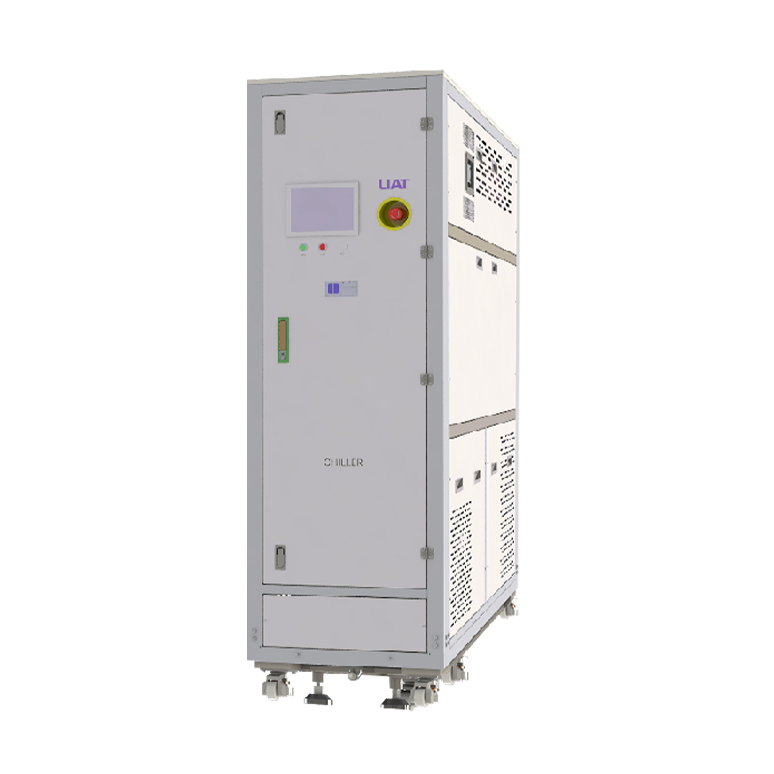
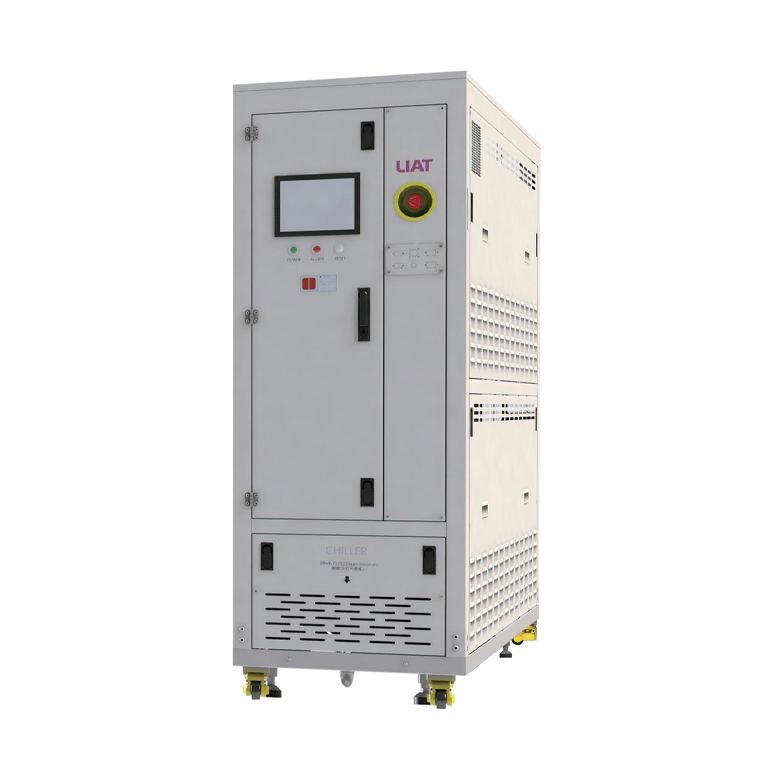
 Illustrative view of thermal management around PECVD gas-delivery hardware.
A practical uniformity troubleshooting sequence
- Define the observed variation. Separate within-wafer thickness variation, wafer-to-wafer drift, refractive-index shift, film stress, and edge effects. These symptoms do not point to the same cause.
- Map the thermal zones. List the chuck, chamber wall, delivery path, valves, line fittings, and jacketed sections. Note the intended setpoint, sensor position, insulation condition, and any exposed sections.
- Check process conditions before assigning blame. Confirm recipe version, RF power behavior, pressure control, gas-flow stability, chamber seasoning, and maintenance changes. A heating jacket cannot compensate for an unrelated plasma or flow-control deviation.
- Look for repeatable thermal patterns. Compare data before and after warm-up, after idle periods, and across environmental changes. A consistent time-dependent shift is more useful than a single outlier.
- Validate the integration boundary. Confirm that jacket coverage, fastening, cable routing, sensor attachment, and insulation do not introduce a cold gap or mechanical conflict. If the design includes multiple zones, verify their interaction rather than tuning each in isolation.
How to specify a PECVD heating jacket system
Start with process conditions rather than a generic heater size. Provide the operating temperature range, allowable temperature deviation, heated length and geometry, material compatibility, vacuum or cleanroom constraints, electrical supply, controller integration boundary, sensor type, installation clearances, and maintenance access. Also state whether the objective is precursor-line conditioning, integration boundary stabilization, or another defined thermal-control task.
For semiconductor equipment, system coordination is usually more informative than an isolated wattage figure. The heat load, ambient losses, line contents, insulation, and upstream or downstream hardware all influence final behavior. If a proposed configuration has not been verified under the relevant conditions, treat it as a candidate for review and testing rather than a performance promise.
Questions to ask before release
- Which surface temperature is process-critical, and where is it measured?
- What thermal range is required during warm-up, deposition, standby, and maintenance?
- Could a cold junction, exposed fitting, or sensor placement distort the reading?
- What acceptance data will show that the heating jacket and the process are stable together?
- Which changes to RF power, pressure, gas chemistry, or chamber condition must be controlled during the comparison?
Keep the thermal-control claim proportionate
A PECVD heating jacket system can be a useful part of a disciplined film-uniformity strategy when it addresses an identified heat-loss path or temperature-sensitive delivery component. The evidence should come from the actual equipment layout, measured thermal behavior, and film data under controlled process conditions. That approach keeps the discussion focused: heating jackets support a stable thermal environment, while film uniformity remains the result of the whole PECVD system working together.
 Hot News