How Atomic Layer Deposition Heating Jacket Supports Conformal Films
A purpose-built thermal wrap is not simply insulation wrapped around a process component. In an ALD tool, it can be part of the temperature-management approach for precursor delivery hardware, valves, manifolds, or other surfaces where a chemistry must remain within a controlled thermal envelope. From a semiconductor equipment integration perspective, the useful question is not whether the jacket arrangement is present, but whether its temperature zones, sensing, insulation, and controls fit the precursor, recipe, and tool interfaces.
ALD depends on sequential surface reactions. That makes delivery conditions important: if vapor transport changes between pulses, the chamber may not receive the same chemistry exposure from cycle to cycle. The jacket can support stable conditions around a relevant delivery surface, but it does not by itself prove film performance. Results still depend on chemistry, dose, purge, chamber conditions, substrate features, and recipe validation.
Why thermal conditions matter before the chamber
Conformal films are associated with ALD because the process uses self-limiting surface chemistry rather than a continuous coating flow. For that chemistry to repeat as intended, precursor delivery must be considered from the source through the heated line and into the chamber. A properly specified thermal wrap helps the integration team manage heat loss and local temperature variation on components that need controlled conditions.
Some precursor systems require heat so that vapor can remain suitable for transport. With solid precursor delivery, technical guidance commonly notes that delivery lines may be heated to reduce condensation risk. The operating boundary matters just as much: more heat is not automatically more useful. Prolonged or excessive heating can be unsuitable for certain chemistries, which is why the atomic layer deposition heating jacket should be evaluated with the precursor supplier's handling information and the qualified recipe.
How a heating jacket fits the delivery path
A heating jacket is usually only one layer of the thermal design. The system may also include heaters, insulation, temperature sensors, controllers, cable routing, fittings, and interlocks. A tailored wrap can make a component easier to thermally manage, particularly where geometry, service access, or local heat loss makes a rigid heater arrangement less convenient. It should be treated as an integration component, not as a stand-alone film-quality claim.
In practice, the temperature setpoint must be interpreted together with the actual surface location being controlled. A sensor placed near a heater can report a different condition from a colder fitting, valve body, or exposed bend. That is why the jacket specification should identify the coverage area, sensor position, controller logic, insulation boundaries, and expected operating environment.
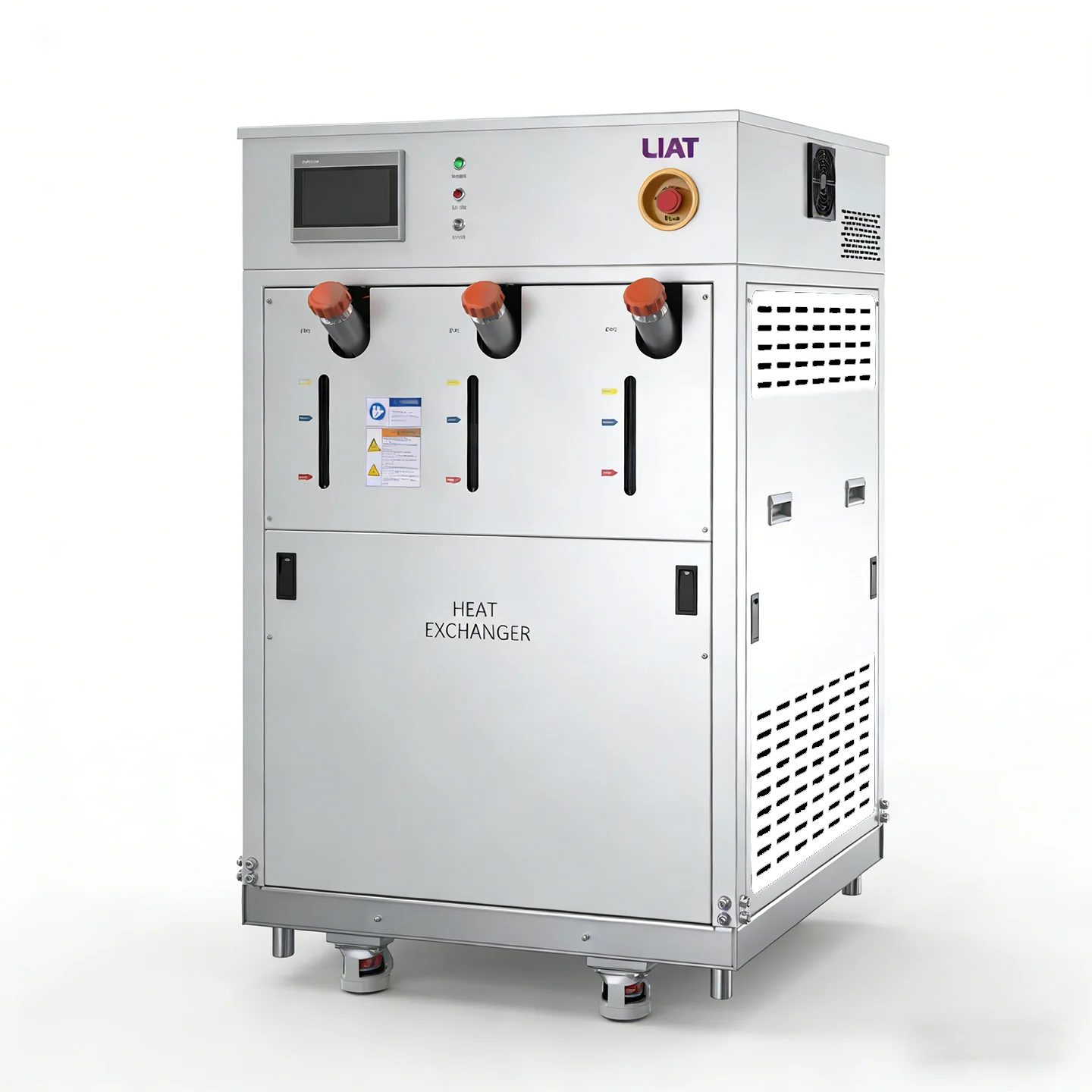 A controlled heater zone is evaluated with the delivery path, sensor placement, and process conditions in view.
What thermal nonuniformity can change
When a delivery surface is colder than the surrounding path, a process team may need to investigate condensation, adsorption, or changes in vapor delivery. When it is hotter than intended, chemistry stability and material compatibility may need review. These are process questions, not automatic diagnoses. The value of a controlled jacket arrangement is that it gives the team an element to include in a broader verification plan.
For conformal-film work, repeatability matters alongside coverage. A temperature change upstream can alter the conditions under which precursor pulses reach complex features. The effect, if any, must be established through the actual process. The jacket therefore supports the conditions for disciplined testing; it does not replace thickness mapping, composition analysis, feature-coverage checks, or run-to-run review.
Integration checks for an atomic layer deposition heating jacket
Before selecting or installing an atomic layer deposition heating jacket, define the component and the decision boundary. The following checklist helps turn a general request into an engineering discussion:
- Process conditions: Confirm the precursor identity, intended temperature window, pressure conditions, pulse sequence, purge approach, and idle periods.
- Coverage geometry: Map the pipe, valve, canister, or manifold surfaces that need controlled heat, including fittings and unavoidable exposed sections.
- Control approach: Specify sensor locations, allowable temperature deviation, controller communication, alarm behavior, and what happens after a sensor fault.
- Materials and interfaces: Check jacket materials, fasteners, cable exits, electrical ratings, cleanroom requirements, and compatibility with local service procedures.
- Mechanical access: Consider installation clearance, removal sequence, inspection points, and whether nearby components can be serviced without disturbing the jacket.
A common mistake is to start by comparing wattage or nominal temperature alone. If the thermal load, component geometry, ambient exposure, and control location are unknown, those figures have limited meaning. More accurately, the selected jacket should be judged by whether it can be incorporated into the required thermal zone and verification method.
Build validation into the ALD workflow
Temperature control is most useful when it is tied to evidence. During commissioning, record the setpoint, sensor reading, controller output, and relevant process conditions. During recipe work, compare those records with appropriate film measurements rather than inferring a result from the jacket setting. The jacket can then be assessed as part of a traceable process-control chain.
It also helps to separate known facts from items still requiring confirmation. Known inputs may include a component's geometry and the qualified recipe target. Items needing confirmation may include heat transfer through a particular installation, behavior during long idle periods, or the effect of maintenance changes. This distinction keeps the thermal-control discussion technically useful without overstating what a generic configuration can deliver.
Questions to ask during a design review
- Which exact surfaces require controlled temperature, and why?
- Where will the temperature be measured versus where must it be maintained?
- What precursor documentation defines acceptable handling conditions?
- How will alarms, tool interlocks, and maintenance access work together?
- Which film and delivery measurements will verify the final configuration?
Turning thermal control into a repeatable decision
For semiconductor equipment teams, an atomic layer deposition heating jacket is most valuable when it is discussed with the full delivery path in view. Start with the chemistry and operating envelope, translate that into coverage and control requirements, then verify the assembled system under representative process conditions. This approach connects a heating jacket to the real objective: repeatable precursor delivery that gives the ALD recipe a consistent basis for forming conformal films.
If your project is still defining its thermal zones, gather the precursor handling limits, line and component drawings, target temperatures, electrical interfaces, and validation plan before finalizing the jacket configuration. Those inputs enable a more useful engineering review than a specification based on a setpoint alone.
 Hot News