
What Is a Pipe Heating Jacket and How Does It Work
When a process line cools between the vessel and the point of use, the question is rarely just whether to add heat. It is whether the line needs heat, insulation, temperature sensing, or a combination of all three. What is a pipe heating jacket? In practical terms, it is an external, fitted assembly that wraps around a section of pipe and applies controlled heat to help maintain the temperature of the pipe wall and the material inside it.
From a thermal-management application engineer’s perspective, what is a pipe heating jacket cannot be answered by the cover alone. The useful answer depends on the process temperature, heat loss to the surroundings, pipe material and diameter, fluid behavior, insulation, electrical arrangement, and control method. The same style of jacket can be appropriate for one short, accessible line and unsuitable for a long or highly complex run.
What is a pipe heating jacket?
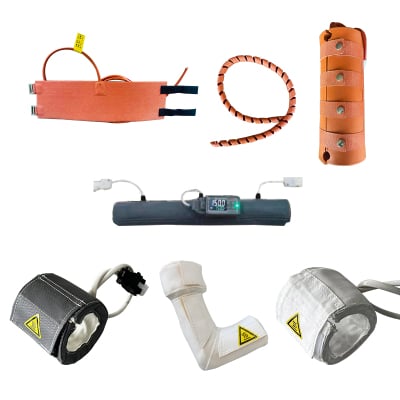
What is a pipe heating jacket in its most common industrial form? It is a removable or semi-removable heated wrap built to fit the outside diameter and geometry of a pipe, elbow, valve, or small assembly. It commonly combines a heating element, an insulating layer, an outer protective layer, fasteners, and a lead or connection point. When energized, the element transfers heat through the jacket and pipe wall toward the process fluid.
The purpose is usually temperature maintenance, viscosity management, freeze-risk reduction, or controlled warm-up. A pipe heating jacket is different from insulation alone: insulation slows heat loss, but it does not introduce heat. It is also different from a pipe-within-a-pipe jacketed construction, where a heating or cooling medium flows in an outer annulus. Because the terms sound similar, confirming the intended construction early avoids a specification mismatch.
How does a pipe heating jacket work?
To understand what is a pipe heating jacket, follow the heat path. Electrical energy is converted to heat in the internal element. That heat moves through the jacket’s inner surface into the pipe wall, then toward the fluid. The insulation in the assembly and any outer insulation reduce heat escaping to the ambient environment. The result is not an instant, uniform fluid temperature; it is a balance between heat supplied, heat lost, pipe mass, fluid movement, and the target operating condition.
A sensor and controller often make that balance more useful. A surface sensor may switch or modulate the jacket according to a setpoint and control band. The actual control strategy needs to reflect what the process requires. Flow and no-flow sections behave differently, while valves, flanges, dead legs, and standby branches can create local conditions unlike a straight run.
This is why what is a pipe heating jacket is partly a controls question. Without a suitable sensing location and control plan, a heating assembly may run longer than the process needs. With an appropriate control approach, the system can respond to operating changes instead of treating every section of pipe as identical.
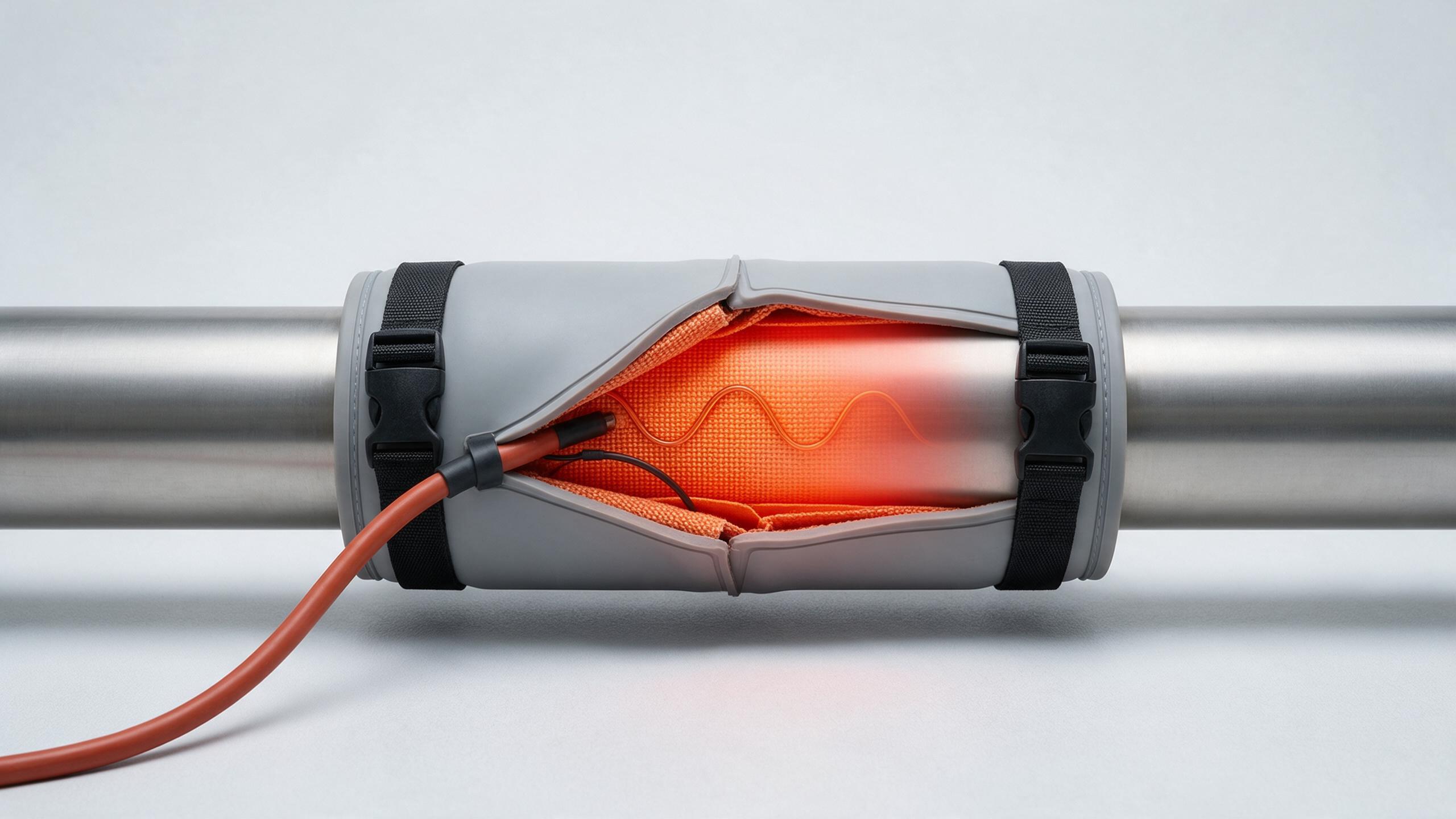
What is inside a typical pipe heating jacket?
- Heating element: the resistive portion that creates heat when supplied with electrical power.
- Inner contact layer: a layer designed to sit against the pipe and support heat transfer across the contact area.
- Thermal insulation: material that limits outward heat loss and helps direct more heat toward the pipe.
- Outer cover and closures: a protective shell plus straps, hooks, lacing, or another closure system for access and fit.
- Power and control components: leads, sensors, controllers, over-temperature protection, and electrical protection selected for the installation.
The exact construction should match the environment and duty. For example, washdown exposure, outdoor weather, frequent removal, surface temperature limits, and hazardous-area requirements all change the questions an engineer needs to ask. In other words, what is a pipe heating jacket is not a single universal product definition; it describes an external heating approach that must be matched to the service.
Pipe heating jacket vs. heat tracing vs. insulation
| Approach | What it does | Where it can fit |
|---|---|---|
| Pipe heating jacket | Applies localized, removable external heat around a defined component or section. | Accessible straight sections, valves, fittings, laboratory or pilot-scale lines, and maintenance-sensitive areas. |
| Electric heat tracing | Uses a heating cable along a pipe route, normally under insulation. | Longer runs or distributed temperature-maintenance duties where cable routing and circuit design are practical. |
| Insulation only | Reduces the rate of heat gain or heat loss without adding energy. | Lines that already remain within their required temperature range or have another heat source. |
| Jacketed pipe construction | Uses an outer pipe or channel carrying a heating or cooling medium. | Process systems designed around a circulating thermal medium and integrated piping fabrication. |
So, what is a pipe heating jacket compared with heat tracing? The jacket is often a targeted, externally fitted solution; heat tracing is commonly a route-based system. Neither label establishes capacity, temperature range, safety suitability, or process compatibility on its own.
When might a pipe heating jacket be considered?
A pipe heating jacket may be considered when a material becomes harder to move or process as it cools, when a short line loses heat between operations, or when a component needs more accessible heating than a permanently routed cable arrangement provides. Engineers sometimes also review it for valves, bends, filters, instruments, and transfer sections where geometry and service access matter.
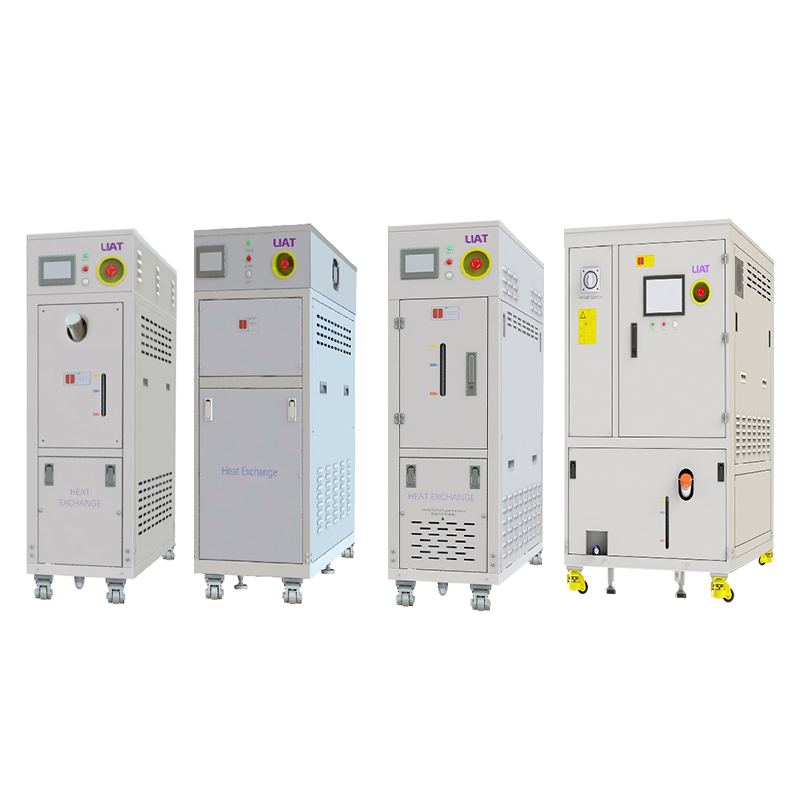
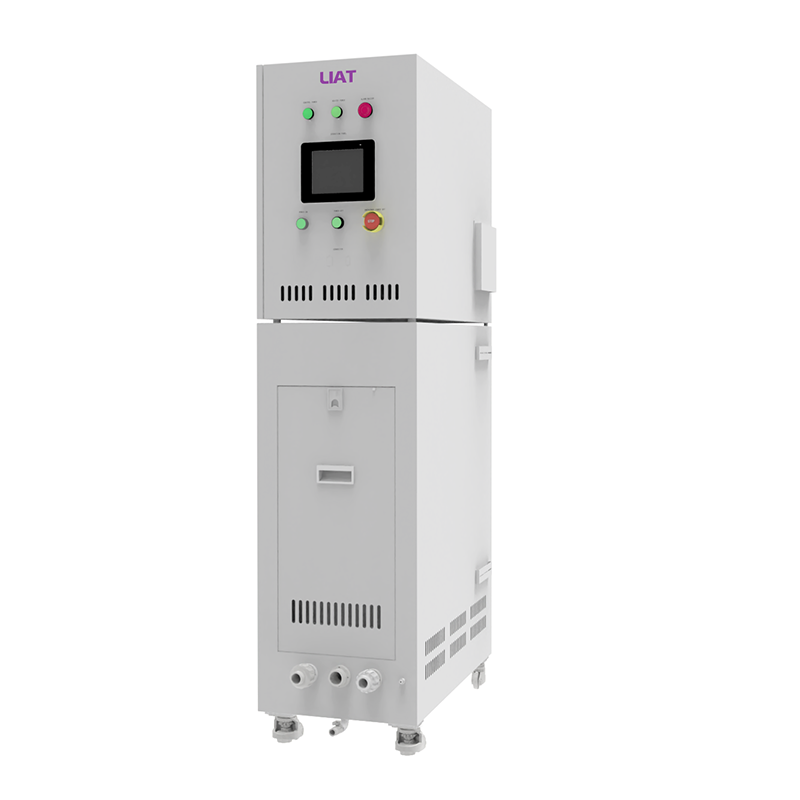
The phrase what is a pipe heating jacket also appears in temperature-management discussions around utilities. An industrial water chiller has the opposite thermal duty—removing heat rather than adding it—but both systems depend on defining the fluid, target temperature range, heat load, piping layout, and controls. Treating the jacket as an isolated accessory can obscure those system-level conditions.
Selection questions before specifying one
Before deciding that a pipe heating jacket is appropriate, gather the operating information. The following checklist produces a more useful review than comparing wattage in isolation:
- What fluid or material is in the line, and how does its viscosity or handling change with temperature?
- What temperature range must be maintained, and is the duty warm-up, maintenance, or both?
- What are the pipe size, material, wall thickness, length, fittings, valves, and accessible surfaces?
- What are the ambient temperature, airflow, washdown, weather, and insulation conditions?
- Is the section flowing, static, intermittently used, or on standby?
- Where can the sensor be placed, and what controller, protection, and electrical classification are required?
- Who will install, inspect, remove, and maintain the assembly?
These questions explain why what is a pipe heating jacket should lead to a condition-based selection discussion. A preliminary heating estimate can be useful, but final sizing and electrical design should be verified against the process, installation, and safety requirements.
Installation and operating considerations
A well-fitted jacket needs close, repeatable contact with the intended pipe surface. Gaps, loose closures, damaged insulation, or interference at supports can change heat transfer and surface temperatures. The pipe condition also matters: coatings, corrosion, leaks, edge condition, and access limitations should be evaluated before fitting an external heater.
During commissioning, document the sensor location, setpoint, controller behavior, circuit protection, and measured operating response. Then inspect closures, leads, insulation condition, and temperature behavior at intervals suited to the service. If the line has changing flow patterns or idle periods, review those states rather than relying only on a single steady-state reading.
For sites that also use an industrial water chiller or other temperature-control equipment, coordinate the control boundaries. Heating and cooling devices should not work against one another because their sensors, setpoints, or operating logic were defined separately.
Frequently asked questions
What is a pipe heating jacket used for?
What is a pipe heating jacket used for? It is used to add controlled external heat to a defined pipe section or component when the process needs temperature maintenance, warm-up support, or help managing a temperature-sensitive material. The required design depends on the actual heat loss and process conditions.
Does a pipe heating jacket replace insulation?
No. A heating jacket supplies heat, while insulation reduces the rate of heat loss. In many applications they are considered together because insulation can reduce the heat input needed to maintain a line at its required condition.
Can any pipe use the same heating jacket?
No. What is a pipe heating jacket suitable for depends on diameter, geometry, material, operating temperature, environment, control needs, and electrical requirements. A tailored review is appropriate before installation.
Key takeaway
What is a pipe heating jacket? It is a controlled external heating assembly designed to wrap a pipe or component and offset heat loss or support a defined temperature condition. Its performance depends on the complete thermal situation, not on the jacket alone. Start with the fluid, required temperature, heat loss, piping geometry, insulation, and controls; then confirm whether a removable jacket, heat tracing, integrated jacketed piping, or another temperature-management approach fits the job.
 Hot News