
What a Heating Jacket for Industrial Use Should Be Made Of
When a line loses heat between the vessel and the point of use, material selection becomes more than a purchasing detail. A heating jacket industrial design has to fit the equipment, survive the operating environment, and give operators a workable way to install, inspect, and remove it. For engineers reviewing thermal equipment specifications, the useful question is not simply “what fabric is used?” It is how the layers work together around the process temperature, medium, geometry, and maintenance routine.
A well-specified heating jacket is a layered assembly. Its outer cover, insulation, heating element, attachment method, and electrical protection each address a different job. Selecting these parts as one system helps a team avoid a jacket that fits neatly on paper but becomes difficult to use around valves, instruments, or routine access points.
Start With the Process Conditions, Not the Material Name
The same material can behave differently when the equipment sees cycling temperatures, washdown, oil mist, vibration, or a corrosive atmosphere. Before choosing a heating jacket industrial construction, document the target temperature range, heat-up expectation, operating hours, exposed surface, and medium carried inside the pipe or vessel. This is also the point to identify whether a surface-mounted heating jacket will be used for temperature maintenance, controlled warm-up, viscosity management, or protection from unwanted cooling during a process step.
Material choices should follow those conditions. A jacket intended for a dry indoor skid can prioritize flexibility and quick removal. A unit exposed to splash, dust, or frequent handling may need a tougher outer layer and more protected cable routing. If a process medium could contact the jacket during a leak or cleaning event, compatibility should be reviewed with the supplier rather than assumed from a generic temperature rating.
The Layers That Matter in a Heating Jacket Industrial Assembly
Outer cover: the working surface
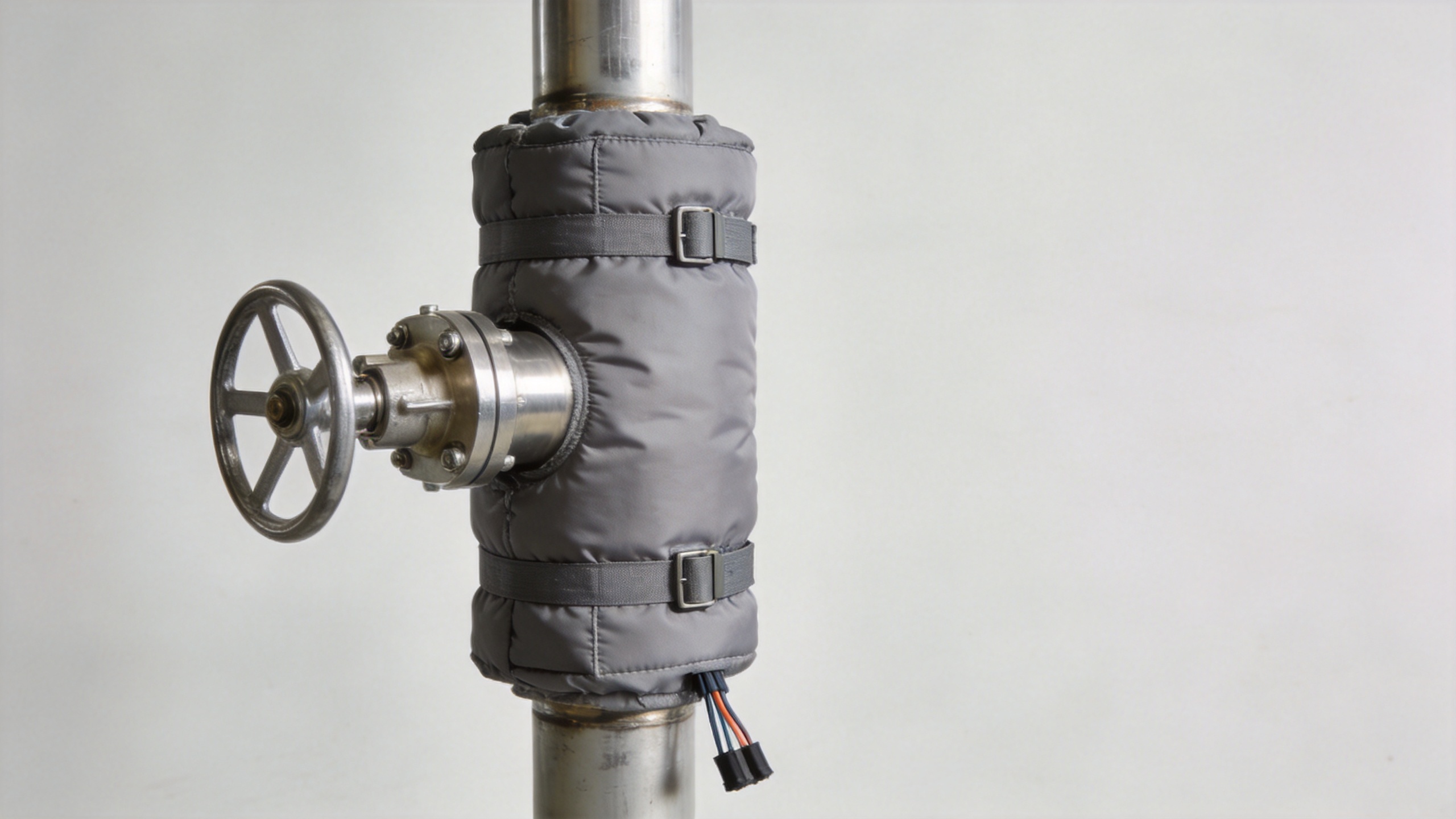
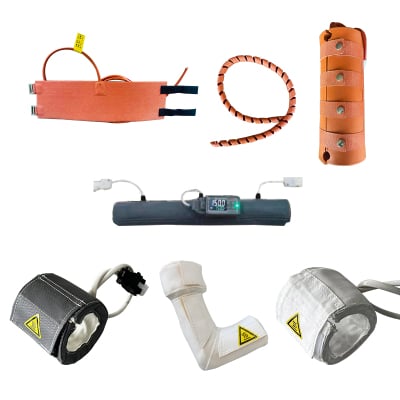
The outer cover protects the insulation and heating circuit from routine contact, abrasion, and site conditions. Woven glass-fiber fabrics, coated technical textiles, and metalized surfaces are common categories, but the correct choice depends on the thermal exposure and environment. A heating jacket industrial outer layer should be selected for mechanical durability, cleaning needs, and temperature exposure as a combination. It should also be assessed at edges, seams, and areas where it bends around brackets or flanges.
Insulation: controlling heat loss and surface comfort
Insulation reduces heat loss from the equipment and helps the heating jacket use its input more effectively. Mineral-fiber or glass-fiber insulation is often considered where elevated temperatures are involved, while flexible engineered insulation can suit complex shapes. Thickness is not a stand-alone answer. More insulation may reduce heat loss, yet it can make a removable jacket bulkier and can interfere with handles, drains, or nearby components. The practical selection is the one that meets the thermal task while keeping access workable.
Heating element: matched to the heat path
The heating element must distribute energy across the contact area without concentrating it at folds, edges, or interrupted sections. Resistive heating circuits are commonly integrated into a heating jacket industrial product, but circuit layout, zone control, and sensor placement require an engineering review. Equipment geometry matters: a short straight pipe, a conical hopper, and a valve body do not present the same heat path. Ask how the element is routed around seams, fasteners, sensors, and areas that may be opened during service.
Inner facing and contact side
The inner-facing layer supports fit and protects the insulation as the heating jacket is installed. It should conform closely enough to limit major gaps while allowing normal expansion and removal. On irregular equipment, a tailored construction with separate panels can provide a more controlled fit than forcing one large blanket around every feature.
Closures, Seams, and Cables Are Material Decisions Too
Industrial teams sometimes focus on the visible fabric and overlook the parts that determine daily usability. Fasteners, straps, hooks, lacing, and reinforced seams all need to tolerate the expected temperature and handling frequency. A heating jacket industrial design should allow operators to reach controls and disconnect it without dismantling unrelated pipework. If the jacket must be removed for cleaning or inspection, closure locations deserve the same review as insulation type.
Cable jackets, connector protection, strain relief, and sensor leads are equally important. Specify where the cable exits, how it is supported, and whether the layout creates a snag point. Electrical connections should be matched to the site’s control approach and verified by qualified personnel. Material selection cannot substitute for correct installation, control settings, or the applicable electrical and site-safety requirements.
Choose for the Equipment Shape and Maintenance Path
A heating jacket for a simple cylindrical section may be relatively straightforward. A jacket for a pump casing, filter housing, transfer line with fittings, or instrumented vessel needs a more deliberate layout. Mark access points before requesting a quotation: drains, nameplates, sight glasses, pressure connections, brackets, and lifting points can all affect panel breaks. For a heating jacket industrial application, a removable multi-piece design may make more sense than one continuous wrap when service access is frequent.
This is where a requirements checklist helps purchasing and engineering work from the same information. Rather than comparing only a nominal wattage or fabric label, compare how each construction addresses the actual equipment drawing and work sequence.
- Operating and maximum surface temperatures
- Equipment dimensions, protrusions, and areas that must remain accessible
- Ambient conditions, splash exposure, and cleaning method
- Process-medium compatibility questions for the contact environment
- Power supply, temperature sensing, control zones, and cable routing
- Expected removal frequency and the person or team responsible for maintenance
What to Ask Before Approving a Heating Jacket
Material descriptions become useful when they are connected to evidence. Ask a supplier to explain the proposed layer stack, nominal insulation thickness, temperature limits for each component, closure construction, and the boundaries of intended use. For a heating jacket industrial requirement, drawings or photographs of comparable equipment geometry can clarify where seams and lead exits will land. The goal is not to chase the longest feature list; it is to identify whether the assembly fits the process and the maintenance path.
It is also reasonable to ask how the jacket will be labeled for installation, how panels are identified after removal, and what inspection points should be checked over time. These details matter when several similar heating jacket sections are installed in one area. Clear identification can reduce reinstallation confusion and supports a more organized maintenance routine.
A Practical Material Selection View
For many projects, the sound approach is to treat a heating jacket industrial assembly as a thermal and mechanical connection, not as a single textile product. The outer cover deals with exposure and handling. Insulation supports heat retention. The element and sensors support controlled heat input. Closures and cable protection determine whether the unit can be used safely and repeatedly in the real plant layout.
Lingheng Thermal Control Technology (Suzhou) Co., Ltd. works in precision thermal-management contexts where temperature range, heat load, medium, interfaces, and maintenance conditions should be reviewed together. For any heating jacket inquiry, provide the equipment drawing, operating conditions, available power, and access constraints so the proposed construction can be assessed against the actual process.
Frequently Asked Questions
What insulation is used in a heating jacket industrial product?
Insulation may use mineral-fiber, glass-fiber, or engineered flexible materials depending on the temperature, equipment shape, and environmental conditions. The appropriate choice should be confirmed for the specific process rather than selected only by material name.
Can one heating jacket fit every pipe or vessel?
No. A heating jacket should reflect the equipment diameter, length, fittings, access points, and removal needs. Complex geometry often benefits from tailored panels or a multi-piece construction.
Which details should be included in a jacket request?
Include the target temperature range, equipment dimensions, process environment, available power, control needs, and any access restrictions. This information helps evaluate a heating jacket industrial design as a complete assembly.

 Hot News