
How an Industrial Heating Jacket Keeps Processes on Schedule
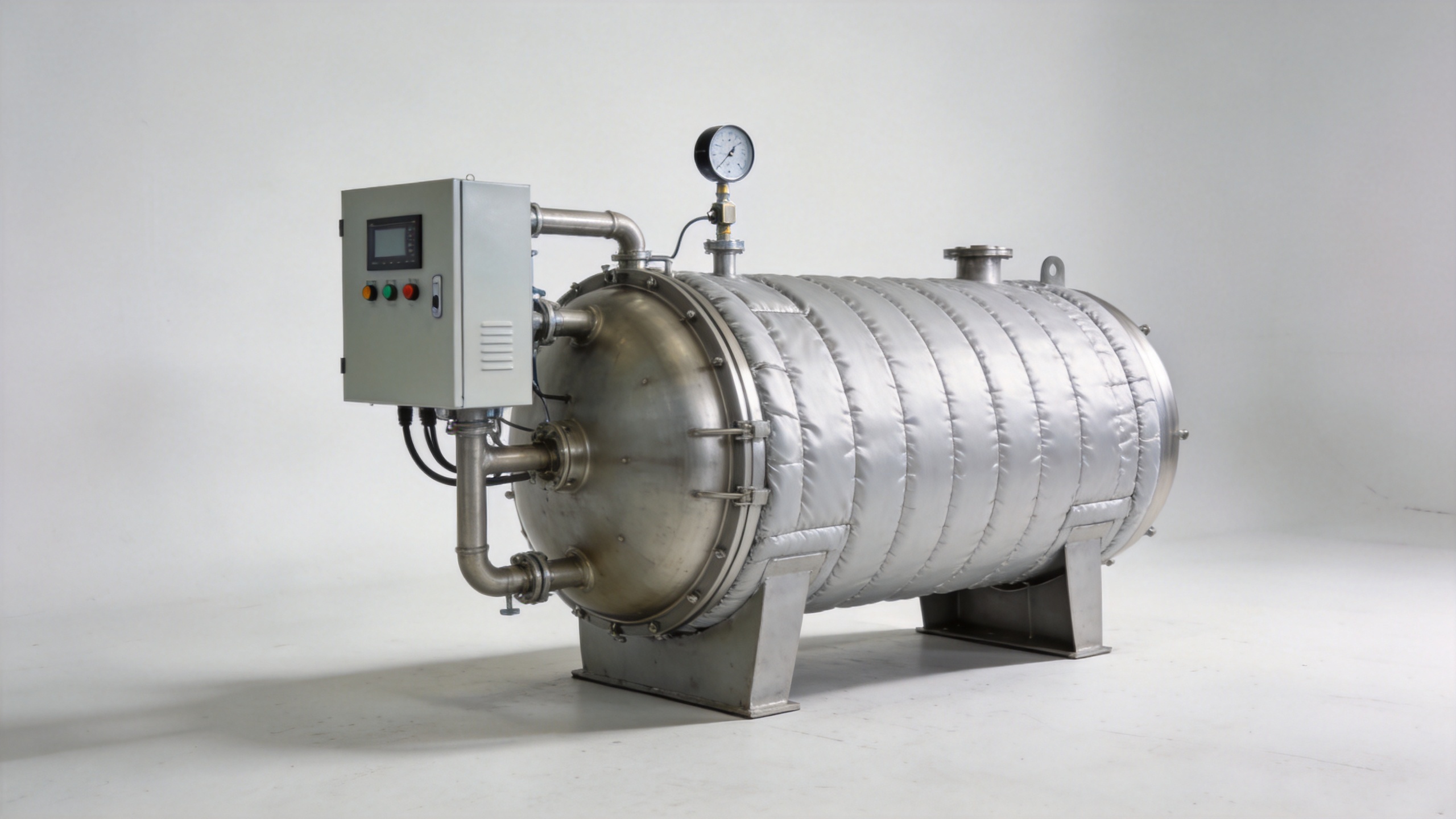
When a line depends on a material staying fluid, reactive, dry, or within a narrow working range, lost heat can quickly become a scheduling problem. An industrial heating jacket is not wearable heated clothing. It is a fitted process-heating assembly designed around equipment such as drums, vessels, valves, pipes, pumps, or transfer lines. Used with an appropriate controller and verified operating limits, an industrial heating jacket can help a team manage thermal recovery and reduce the uncertainty that turns a routine changeover into an avoidable delay.
From a heat-management application engineer’s perspective, the first question is not which industrial heating jacket to buy. It is which temperature range, heat loss, material behavior, access requirement, and operating sequence the jacket must support. That distinction matters because a jacket that is physically easy to install may still be poorly matched to the process.
Why temperature drift disrupts the production plan
Many processes lose time before anyone calls it a thermal issue. A viscous product may transfer slowly. A line may need a longer warm-up after a stop. A valve body may cool faster than the upstream vessel. Operators then wait, adjust the process, or schedule extra intervention. The lost minutes can accumulate across batches, shifts, and maintenance windows.
Passive insulation slows heat loss, but it does not add heat when the surrounding conditions or process duty pull temperature downward. An industrial heating jacket can supply controlled heat while insulation reduces the demand placed on that heat source. Still, this is a design principle rather than a promise of a particular outcome: ambient conditions, equipment geometry, product properties, and heat-transfer paths need to be reviewed together.
Start with the process condition, not the jacket style
A useful specification for an industrial heating jacket begins with the job to be done. Define the desired operating range, the starting condition after downtime, the acceptable recovery period, and the maximum temperature that the product and equipment can tolerate. Then document the equipment dimensions, fittings, supports, access doors, nearby components, and any zones that must remain visible or serviceable.
Heat loss is not a single number taken from a catalogue. Surface area, exposed metal, insulation condition, air movement, contact with a cold support, and interruptions in coverage can all change the load. If the jacket covers a vessel or line with irregular geometry, gaps and compression points deserve attention. An industrial heating jacket should fit the real equipment layout, including connections and maintenance clearances, rather than an idealized drawing.
Match heating capacity to the actual duty cycle
The most important schedule question is often how the system behaves over time. Some applications need steady holding heat. Others need a controlled warm-up before a transfer, a short recovery after opening a vessel, or compensation for a recurring exposure to colder surroundings. A correctly specified industrial heating jacket is evaluated against that duty cycle, not only against a nominal setpoint.
Ask the engineering team to work through four conditions:
- Startup: What temperature and material condition exist at the beginning of a shift or after a stop?
- Normal operation: Where does heat leave the equipment while the process is running?
- Disturbance: What changes when product flow, room conditions, or equipment access interrupt the thermal balance?
- Recovery: How will the control arrangement return the process to its intended range without overshoot?
This review may show that one large zone is not the practical answer. A segmented industrial heating jacket or a layout with separately managed areas can make verification and service access easier, but the appropriate arrangement depends on the equipment and control strategy.
Use measurement and control to make timing repeatable
Heat input alone does not create a stable process. A temperature-control loop needs a meaningful measurement point, a setpoint appropriate to the process, and a response that has been checked under real operating conditions. Sensor placement matters: a sensor on the outside of a vessel may not represent the temperature of the product inside, while a poorly located sensor can react to a localized hot or cold spot.
For an industrial heating jacket, the commissioning plan should state what temperature is being measured, who can change the setpoint, what alarms or limits are required by the site, and how the system will be observed during startup. Safety functions, electrical protection, and installation practices must be reviewed by qualified personnel under the applicable site requirements. Do not infer these details from a general-purpose heating article.
When the control logic is clear, operations can plan around verified warm-up and recovery behavior rather than informal judgment. That is the practical connection between an industrial heating jacket and a more predictable schedule.
Design for access, inspections, and changeovers
A heating solution that is difficult to remove, reinstall, or inspect can transfer delay from the process to maintenance. During selection, identify valves, instrumentation, lifting points, labels, and connections that must remain accessible. Confirm how technicians will handle the industrial heating jacket during cleaning, calibration, repair, or equipment replacement.
Also consider the boundaries between heated and unheated sections. A cold flange, unsupported elbow, or exposed fitting can become a local weak point even when most of the equipment is covered. Mapping those details before fabrication gives the team a more useful basis for deciding coverage, insulation interfaces, cable routing, and controller placement.
A practical verification checklist before release
Before putting an industrial heating jacket into production service, document the operating assumptions and verify them during a controlled trial. The checklist below keeps the discussion focused on evidence rather than generic claims:
- Confirm the equipment identity, dimensions, connections, and areas requiring access.
- Record the target operating range, maximum permitted temperature, and expected duty cycle.
- Review heat-loss conditions, insulation condition, and cold spots that can affect recovery.
- Verify sensor location, controller setup, electrical installation, and site safety requirements with qualified personnel.
- Observe startup, normal operation, a representative disturbance, and recovery before relying on the timing in the production plan.
- Keep a service record for removal, reinstallation, inspection findings, and any process changes that alter the thermal load.
Keep schedule protection grounded in process data
An industrial heating jacket can be a useful part of schedule control when it is treated as a process component, not a generic accessory. The strongest decisions connect the jacket to a documented temperature objective, heat-loss condition, control approach, and maintenance routine. If the product, equipment geometry, or production sequence changes, revisit those assumptions before expecting the same timing.
In short, the value of an industrial heating jacket comes from making thermal conditions easier to understand, verify, and manage. That gives operations, engineering, and maintenance a common basis for protecting the schedule while keeping technical limits visible.
 Hot News