
How Industrial Cooling Systems Meet Growing Thermal Demand
Growing output, denser equipment, and tighter process windows are changing what plants ask of industrial cooling systems. A loop that was adequate for a steady line may become difficult to manage when production adds stations, a test program introduces rapid load changes, or a sensitive process moves closer to its thermal limit. The useful question is not simply whether a larger unit is needed. It is whether the entire thermal path can remove heat at the required rate while delivering stable fluid where the process needs it.
From a thermal-management application engineer’s perspective, industrial cooling systems should first be discussed in terms of heat load, temperature range, fluid, and controls. That framing keeps a specification tied to operating conditions rather than an isolated nameplate value. It also makes later expansion planning more practical.
Why thermal demand grows faster than expected
Thermal demand can rise for several reasons at once. More machines may add a fairly predictable base load, while shorter cycle times, higher power density, or simultaneous test steps can create higher peaks. In many processes, the return-fluid temperature changes before operators see a clear production issue. For that reason, industrial cooling systems should be assessed against a load profile, not only a monthly utility average.
A load profile separates continuous heat from startup, batch, cleaning, and upset conditions. It helps an engineering team ask whether the required cooling capacity is present during the short periods that matter most. If heat removal is sized only around average demand, the loop may recover slowly after a peak. Conversely, extra capacity alone does not settle a stability problem if flow, control response, or heat rejection is constrained.
Start with the process, not the equipment catalog
The first input for industrial cooling systems is the temperature the process must actually receive. Chiller leaving temperature and temperature at the load can differ because piping, flow balance, and heat gain along the route matter. The next inputs are peak heat load, required flow, allowable fluid temperature rise, fluid properties, ambient conditions, and expected operating schedule.
These inputs turn an open-ended equipment discussion into a design conversation. A useful review asks: What heat source is being controlled? Is the load steady, staged, or highly transient? Which fluid is suitable for the temperature range and materials? Which connections must exchange status or alarms? Industrial cooling systems can then be evaluated in the context of the process rather than treated as a standalone utility.
Match the cooling architecture to the load pattern
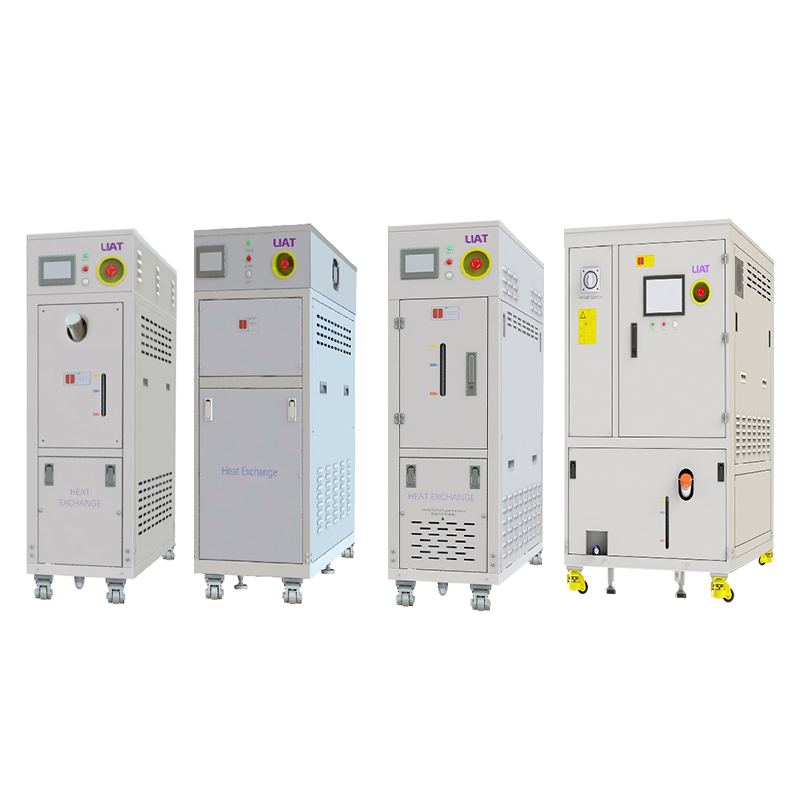
Not every application needs the same arrangement. Centralized industrial cooling systems can make sense when several loads share operating conditions and a common distribution loop is practical. Local or dedicated loops can be easier to tune when one machine has a distinct temperature range, fluid requirement, or schedule. The appropriate choice depends on the operating boundaries, not on a universal preference.
| Operating condition | What to review in industrial cooling systems |
|---|---|
| Steady process load | Capacity at design temperatures, flow balance, and heat-rejection conditions. |
| Changing production rate | Peak-versus-base load, control response, and the sequence for added cooling stages. |
| Multiple process temperatures | Separate loops or mixing logic, fluid compatibility, and cross-interaction risk. |
| Expansion in phases | Space, headers, electrical provisions, controls, and commissioning steps for future modules. |
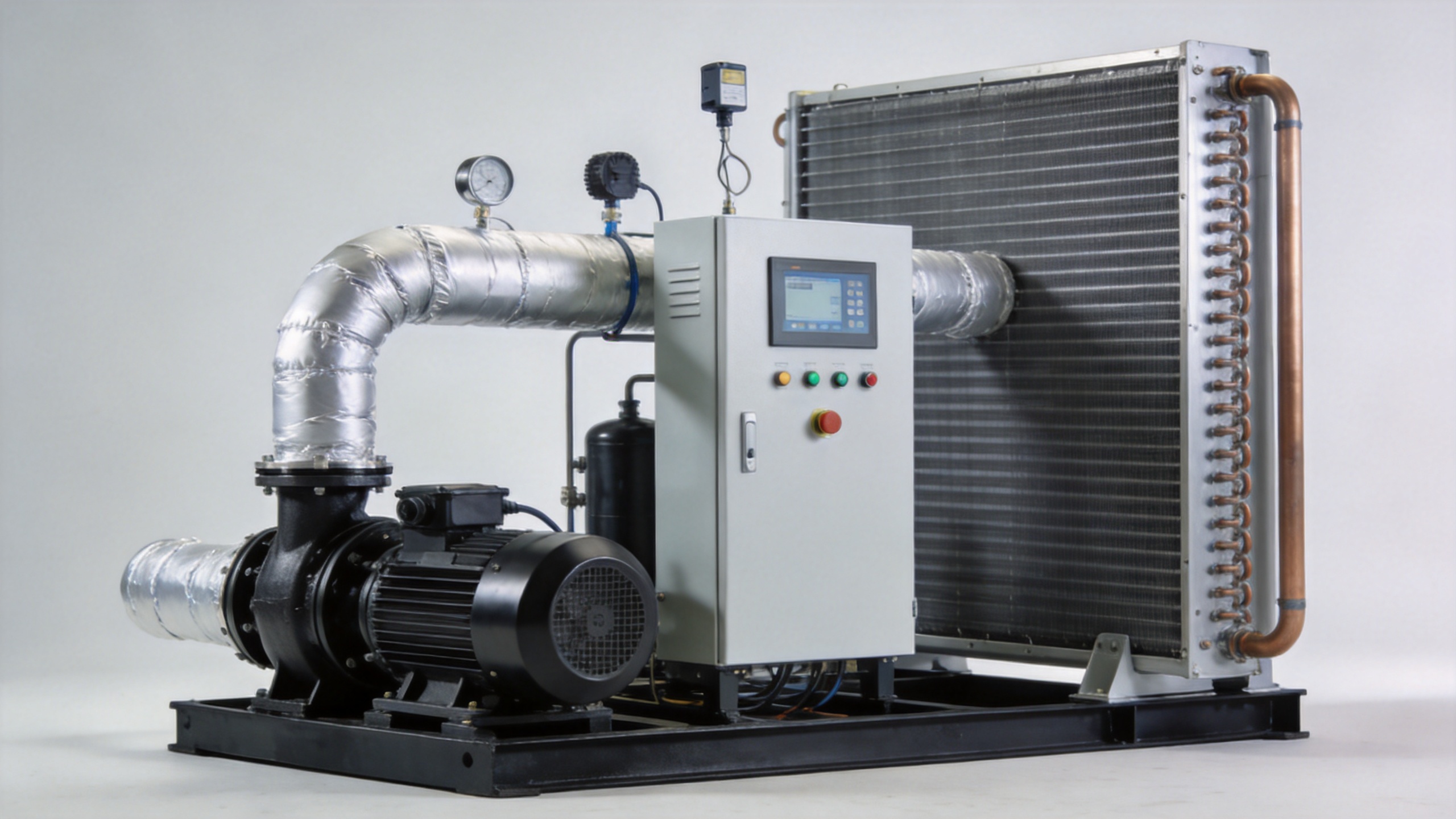
This is where a system view is important. Pumps, valves, buffers, piping, heat exchangers, chillers, towers or dry coolers, sensors, and supervisory controls all influence delivered performance. Industrial cooling systems that look sufficient at the chiller can still fall short at a distant load if distribution conditions are not verified.
Use controls to manage variation, not hide it
Control strategy becomes more important as thermal demand changes. Trend data for supply temperature, return temperature, flow, pressure, equipment status, and alarms can show whether a variation is caused by process load, heat rejection, or the distribution loop. For industrial cooling systems, that information supports staged capacity, appropriate setpoint management, and maintenance planning.
A stable setpoint is not necessarily the same as a stable process. A tight supply-temperature reading may coexist with inadequate flow through one branch. Likewise, a large buffer may soften a brief transient but cannot correct an undersized heat-rejection path. A commissioning plan should therefore test representative low, normal, and high-load conditions. Initial conclusions should be treated as items to verify against project records and measured operating data.
Where a semiconductor chiller fits
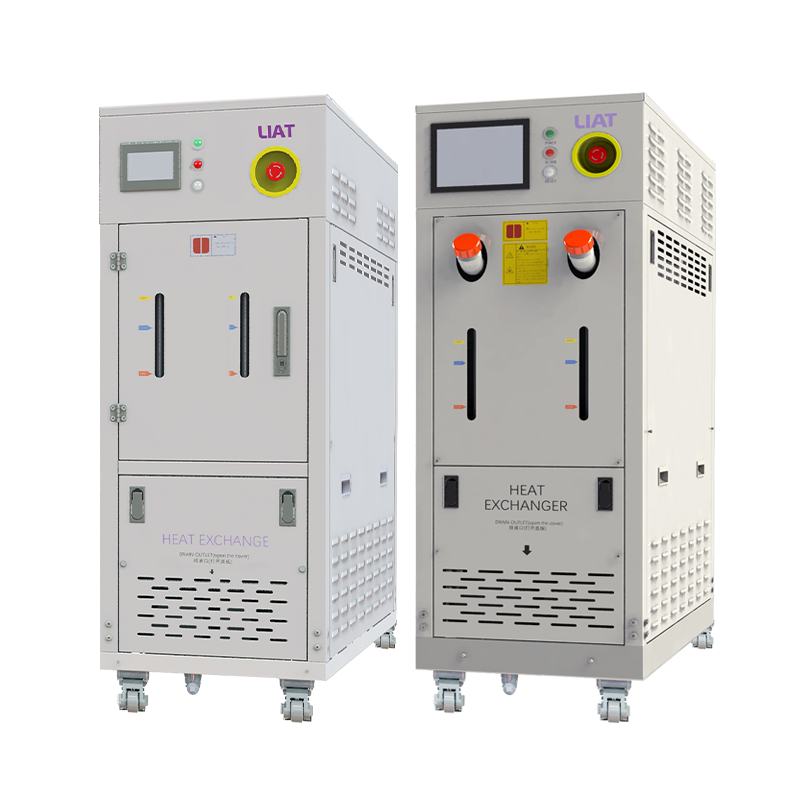
A semiconductor chiller illustrates why a generic capacity comparison is often incomplete. Semiconductor production, packaging, and test equipment can have sensitive thermal interfaces, so the relevant questions include temperature range, fluid cleanliness, flow stability, control integration, and the behavior of the loop during changing equipment states. A semiconductor chiller may be part of a dedicated closed loop when those conditions differ from the rest of the facility.
That does not mean every facility needs the same level of separation or precision. The practical approach is to define the process requirement, confirm the equipment connection, and review the load profile. Industrial cooling systems supporting these applications should be selected only after those boundaries are clear. A semiconductor chiller is a useful example of a system component whose fit depends on the complete duty, not its label alone.
Plan for capacity growth without losing maintainability
When future demand is likely, industrial cooling systems benefit from an expansion plan that is specific enough to be tested. Teams can reserve physical space and utility connections, identify how another cooling stage will be sequenced, and document the isolation points required for service. That preparation gives teams a clearer path when a new line arrives or a testing program changes.
Maintainability belongs in the same plan. Filter access, water or fluid treatment practices, sensor verification, pump service, leak checks, and clear alarm ownership affect how consistently industrial cooling systems operate over time. In other words, the design should account for the people who will inspect and adjust the loop, not only the equipment installed on day one.
A practical review checklist
- Document the required process temperature and the acceptable variation at the load.
- Estimate base, peak, and transient heat loads rather than relying on one average value.
- Confirm flow, allowable temperature rise, fluid properties, piping losses, and heat-rejection conditions.
- Map controls and alarms between the process equipment and the cooling loop.
- Define how industrial cooling systems will add capacity, isolate equipment, and be tested after expansion.
As thermal demand rises, industrial cooling systems are most effective when their capacity, distribution, controls, and service plan are considered together. Begin with the real process duty, verify the conditions that change over time, and use those findings to guide configuration and future expansion.
 Hot News