
What an EV Battery Testing Cooling TCU Controls in Tests
An ev battery testing cooling tcu is the thermal-control unit that makes a battery test condition repeatable. It is not simply an industrial chiller switched on before a run. During cell, module, or pack evaluation, the unit has to hold a defined thermal boundary while current, state of charge, ambient conditions, and safety logic change. That distinction matters: if coolant temperature or flow changes unexpectedly, the test may be measuring the rig as much as the battery.
From a thermal-management application-engineering perspective, the useful question is not “does the ev battery testing cooling tcu cool?” It is “which variables does it control, measure, log, and protect during this specific procedure?” The answers should come from the test plan, the battery connection, and the declared operating limits.
The short answer: it controls a thermal test boundary
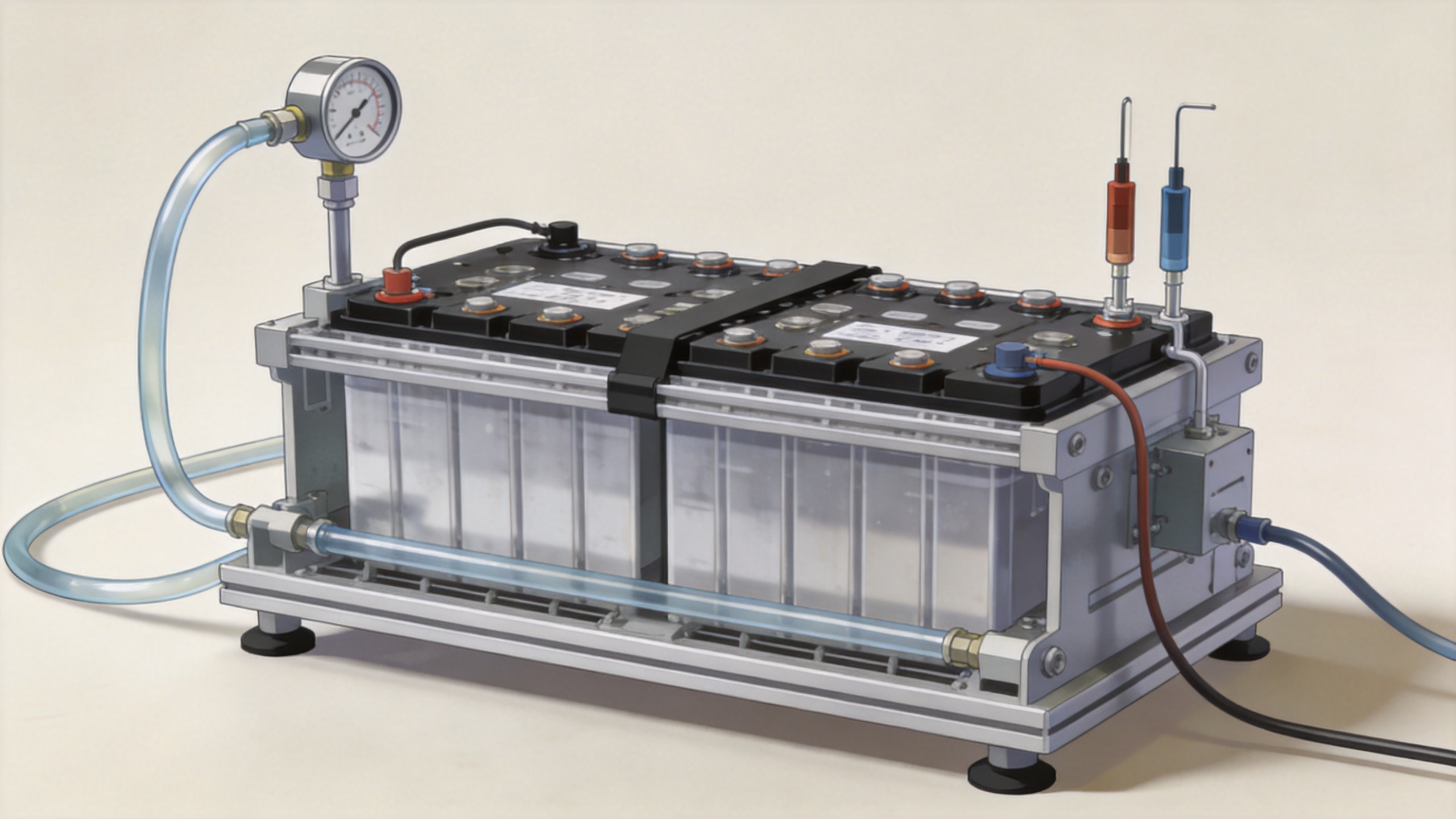
At its core, an ev battery testing cooling tcu regulates the heat-transfer loop connected to the device under test. Depending on the laboratory setup, that loop may condition a cold plate, a pack coolant circuit, a fixture, or a chamber connection. The controller compares measured values with a commanded profile and adjusts cooling, heating, pumping, or valves to keep the boundary within the allowed band.
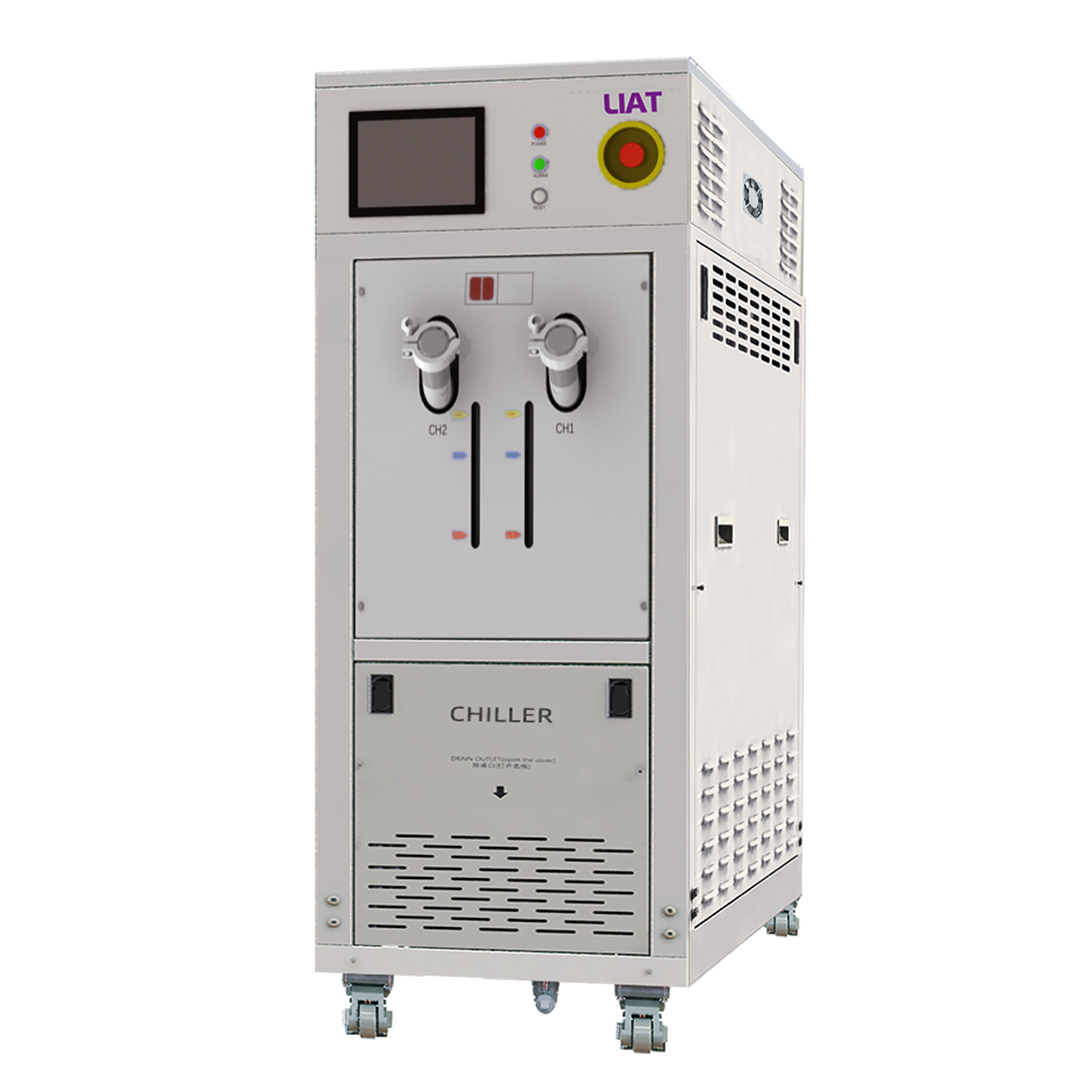
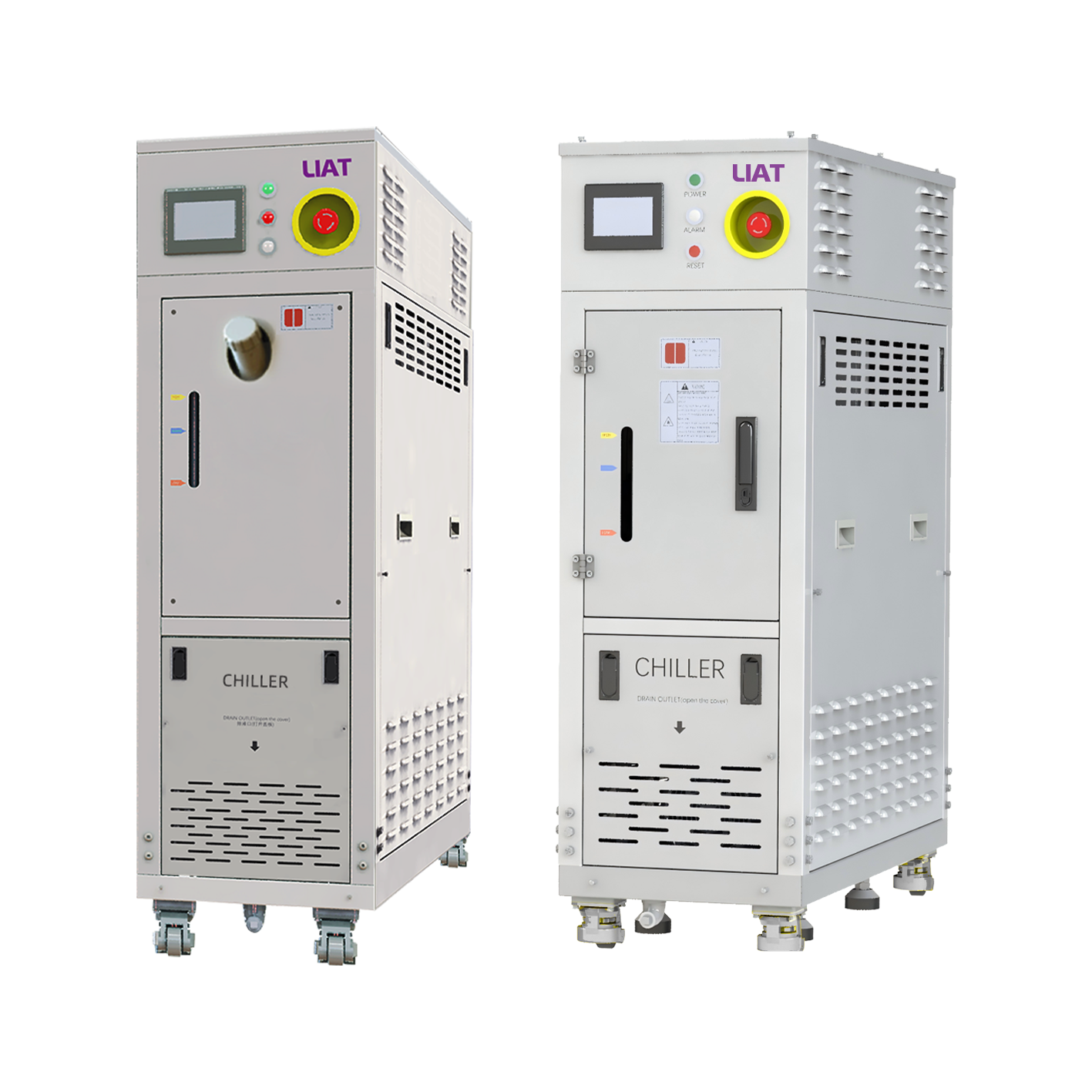
A technical specification may describe an industrial chiller by its nominal cooling capacity. For battery testing, capacity alone is incomplete. The same industrial chiller can produce very different results if the coolant setpoint, ramp rate, flow stability, hose resistance, heat load, or control response is different. The ev battery testing cooling tcu therefore needs a defined control strategy, not just a temperature display.
1. Coolant supply temperature and return temperature
The most visible control is supply temperature: the temperature of fluid delivered to the battery fixture or pack connection. The ev battery testing cooling tcu may hold one setpoint for a steady-state discharge, follow a programmed temperature profile, or transition between conditions. Return temperature is equally informative. The difference between supply and return often shows whether heat is being absorbed by the device under test and whether the loop is responding as expected.
These two readings should be recorded with their sensor locations and timestamps. A supply reading close to setpoint does not establish that the battery connection is at the same temperature. Hose length, insulation, connection design, and thermal contact can all create a gap. This is why an industrial chiller should be evaluated as part of the complete test loop rather than as an isolated utility.
2. Temperature ramp rate and stabilization criteria
Many procedures require more than reaching a target temperature. They require a controlled transition and a documented dwell. An ev battery testing cooling tcu can manage ramp-rate limits so that a fixture or coolant loop does not change temperature faster than the procedure allows. It can also apply a stabilization rule, such as holding a setpoint band for a declared period before the electrical test begins.
This controls repeatability between runs. Published work discussing IEC 62660-1 test implementation describes standardized temperature and current conditions, including 25 °C and 45 °C ambient-temperature examples for a cycle-life procedure. Those values are examples from a defined procedure, not universal setpoints. The laboratory should program the temperatures, tolerance, dwell time, and measurement locations specified for its own method.
3. Coolant flow, pressure, and hydraulic health
Temperature is not the whole thermal boundary. An ev battery testing cooling tcu may regulate pump speed or valve position to achieve a required flow, then monitor pressure and differential pressure for evidence of restriction, leakage, or poor circuit fill. With a liquid-cooled pack, a stable temperature but falling flow can hide a serious change in heat-transfer conditions.
For this reason, a test record should identify the coolant type, supply and return pressure, flow target, allowable deviation, and any air-purge or filling steps. If an industrial chiller is used as the thermal source, its fluid compatibility, filtration requirements, and pressure limits need to fit the fixture and the battery circuit. These are test inputs to verify, not assumptions to copy from a generic data sheet.
4. Heat-load response during electrical events
Battery heat generation is linked to the electrical profile. Fast charge, high-power discharge, pulse sequences, and repeated cycling can change the thermal load quickly. The ev battery testing cooling tcu needs sufficient control authority to follow those changes without excessive overshoot or oscillation. It should also log its own output state so an engineer can distinguish a battery-driven temperature change from a cooling-loop limitation.
A useful test review compares electrical current, battery temperature sensors, coolant supply and return, flow, and the controller command on one time base. When those traces are synchronized, the team can ask a practical question: did the ev battery testing cooling tcu maintain the requested boundary, or did the battery see a different condition during the event?
5. Safety interlocks, alarms, and fault behavior
A testing TCU also supervises conditions that can invalidate a run or require a safe stop. Typical logic may include high and low coolant temperature limits, low-flow detection, overpressure limits, leak detection where installed, pump faults, communication loss, and emergency-stop behavior. The exact interlocks belong to the documented rig risk assessment and test procedure.
Thermal-system faults deserve explicit testing rather than a vague assumption that cooling is available. UL 2580 test summaries list failure of a cooling or thermal-stability system among battery test methods. That does not mean every rig or battery follows the same method. It does show why the ev battery testing cooling tcu should make faults visible, timestamped, and linked to a defined action: continue under a qualified condition, pause, abort, or transfer control to a safe state.
6. Data logging and traceability
The controller’s final job is evidence. A capable ev battery testing cooling tcu provides or exports enough data to reconstruct test conditions: setpoint, actual supply and return temperatures, flow, pressure, pump or valve command, alarms, operating mode, and calibration status. The test system should also record the test recipe version and clock synchronization with the battery cycler.
Data traceability is especially important when results from two packs appear different. Before assigning that difference to cells or design, review whether both tests had the same thermal setpoint, stabilization rule, hydraulic condition, and fault history. An industrial chiller with undocumented control behavior can add uncertainty; a logged and validated thermal loop makes that uncertainty easier to assess.
A practical control checklist for battery-test teams
Before a run, define the thermal inputs and acceptance criteria in one place. The ev battery testing cooling tcu should be checked against the following list:
- Supply-temperature setpoint, tolerance, sensor location, and required dwell time.
- Permitted ramp rate and the condition that declares the loop stabilized.
- Coolant type, flow target, pressure limits, hose routing, and fixture connections.
- Expected heat-load range across charge, discharge, pulse, and rest stages.
- Alarm thresholds, interlock action, recovery rules, and the person authorized to restart.
- Data channels, sample timing, calibration evidence, and recipe version to retain with the run.
The ev battery testing cooling tcu does not decide whether a battery passes a test. It controls and documents the thermal conditions that make the result interpretable. When selecting or configuring an industrial chiller and control loop, first confirm the temperature range, heat load, fluid, connection, and test protocol. Then validate the complete loop under representative conditions before relying on its data for engineering decisions.
 Hot News