
What a Pipe Heating Jacket Must Offer for Gas Lines
A pipe heating jacket for a gas line is not simply insulation with a power lead. It is a controlled thermal assembly whose material, heat output, sensors, terminations, and installation method must suit the actual line and the area around it. From a thermal-management application-engineering perspective, the useful starting point is the operating temperature, heat loss, line material, gas-service conditions, and area classification—not a catalogue size alone.
This distinction matters because gas-service work can involve ignition-risk controls, approved installation methods, and site procedures that a general-purpose wrap may not address. A pipe heating jacket should therefore be specified as part of a documented heating system, reviewed by qualified personnel under the rules that apply at the site.
Start by defining the job of the pipe heating jacket
The first question is whether the pipe heating jacket is intended to maintain process temperature, offset heat loss, avoid condensation, or support a controlled warm-up. These are different duties. A jacket selected only by pipe diameter can be poorly matched if the ambient temperature, wind exposure, insulation condition, flow state, or target temperature changes.
For gas lines, the process owner should also confirm whether heating is actually appropriate for the gas composition and pressure regime. A pipe heating jacket is not a substitute for a hazardous-area assessment, pressure-system design, leak testing, or operating procedures. It is one element in a wider design decision.
1. Fit, coverage, and a heat-transfer path that can be checked
A practical pipe heating jacket needs a geometry that follows the pipe outside diameter, straight length, fittings, and any allowed clearances. Gaps, loose contact, or unheated discontinuities can change surface temperature and make the assumed heat-loss calculation unreliable. The jacket should state how it fastens, where seams sit, and how the installer verifies contact without damaging the cable or pipe coating.
Insulation is usually part of the thermal path, not an afterthought. The design review should identify the insulation type, thickness, weather protection, and locations where insulation must remain removable for inspection. Where a line has valves, supports, flanges, or instrument takeoffs, ask whether the pipe heating jacket covers those regions, transitions around them, or stops at a defined boundary.
2. Controlled heat output rather than a single headline wattage
Heat output must be related to the application conditions. The required duty depends on the temperature objective, lowest expected ambient, pipe size, insulation, exposed length, wind, and operating state. A pipe heating jacket should therefore come with enough design information to relate power density and maximum surface temperature to the intended installation.
Ask how the assembly behaves at start-up, during low flow, and when the line is out of service. A thermostat, sensor, limiter, or control panel may be needed, but the right arrangement depends on the risk assessment and control philosophy. The key question is not whether a pipe heating jacket has a controller; it is whether the sensing location, setpoint range, failure response, and alarm logic are suitable for the line.
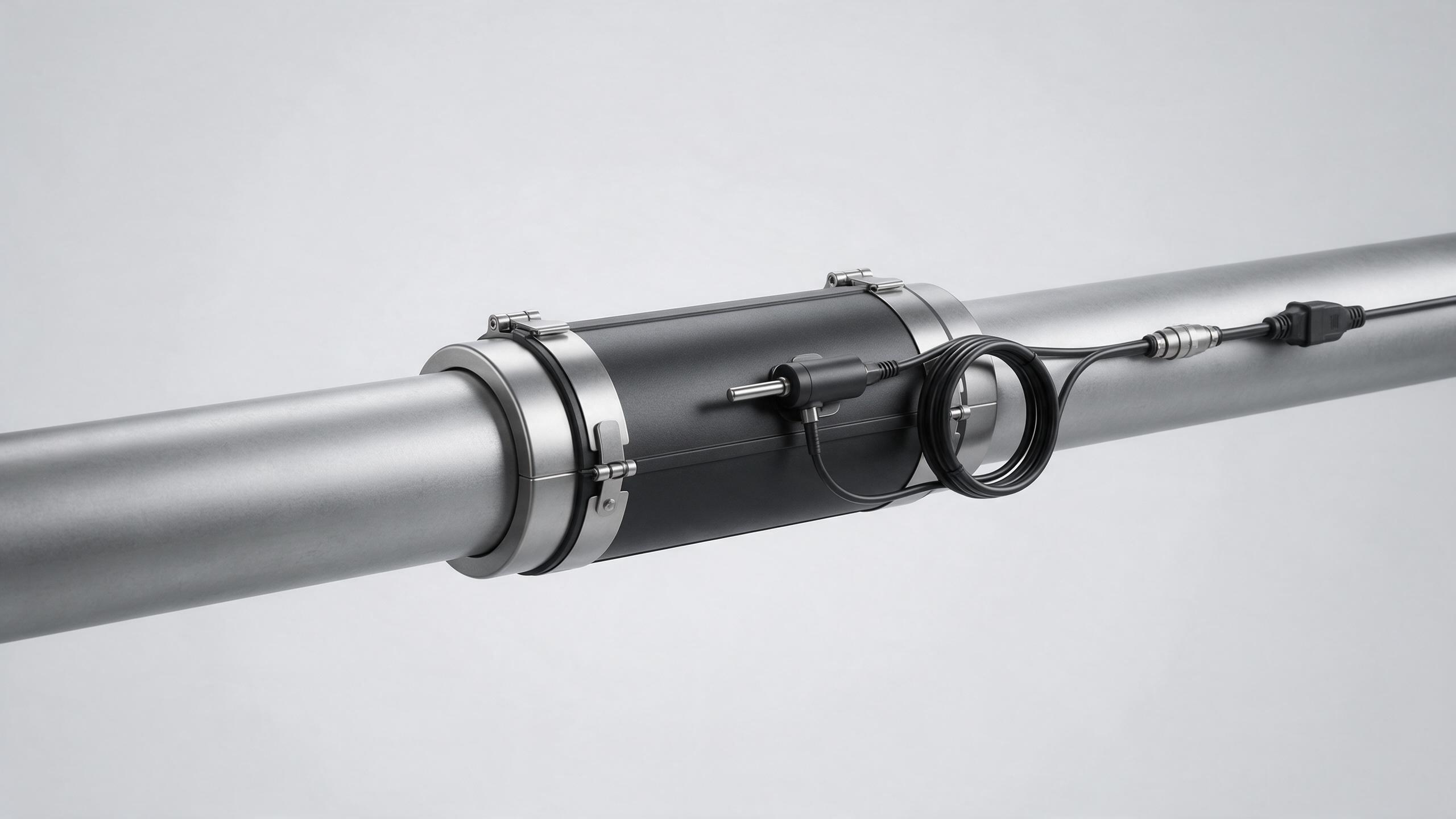
3. Area classification and temperature limitation for gas service
If the installation can contain a flammable atmosphere, the pipe heating jacket must be evaluated against the site’s area classification and the applicable local requirements. IEC/IEEE 60079-30-1 covers general and testing requirements for electrical-resistance trace heating in explosive atmospheres, including termination assemblies and control methods. In a U.S. installation, NFPA 70 Article 427 is also a relevant code frame for fixed electric heating equipment on pipelines and vessels. Neither reference replaces the project-specific classification or the authority having jurisdiction.
Documentation should identify the equipment marking where applicable, the maximum temperature basis, the permitted ambient range, and any restrictions on field alterations. A pipe heating jacket that is suitable in an ordinary location should not be assumed suitable for a classified gas-service area. This is a verification point, not a detail to resolve after installation.
4. Reliable electrical interfaces and maintainable terminations
A pipe heating jacket needs more than a heating element. Examine the cold lead, junction or connection method, strain relief, ingress protection, grounding or bonding provisions, and routing of power and sensor cables. The assembly should allow inspection and replacement activities without forcing improvised repairs near the heated section.
Field conditions deserve equal attention. Outdoor exposure, washdown, dust, vibration, ultraviolet light, and mechanical contact can all affect the cable route and enclosure choice. Installation drawings should define the power source, overcurrent protection, isolation point, temperature-control hardware, and any monitoring needed by the site. For a removable pipe heating jacket, the disconnect and reconnection method should be explicit.
5. Materials that match the pipe environment
The jacket fabric, insulation, closures, cable sheath, and external protection should be checked against the expected environment. Consider weather, splash, chemical exposure, abrasion, cleaning practices, and the pipe’s coating system. A pipe heating jacket may be physically easy to install yet still create a poor long-term arrangement if its materials hold moisture, damage a coating, or make routine inspection difficult.
Material compatibility also includes the temperature range of every component, not only the heater. The supplier should state the operating limits and the conditions assumed for those limits. If an industrial water chiller is part of a larger thermal-control facility, do not treat that separate equipment as evidence that a pipe heating jacket is suitable for the gas line; each circuit needs its own design review.
6. Installation evidence, commissioning, and lifecycle checks
Before energizing a pipe heating jacket, retain the information needed to show what was installed and how it was tested. A useful handover package can include the circuit identification, layout drawing, inspection record, insulation-resistance test where applicable, controller settings, temperature-sensor location, and maintenance instructions. The exact test method must follow the approved design, manufacturer documentation, and site rules.
During commissioning, record the conditions under which temperatures are observed. A stable reading at one sensor does not describe every section of a complex line. Review the output after changes in insulation, ambient conditions, line operation, or maintenance. That record turns the pipe heating jacket from an isolated component into a maintainable system with clear evidence boundaries.
A procurement checklist for the pipe heating jacket
- Confirmed pipe dimensions, fittings, exposed length, insulation arrangement, and access constraints.
- Target temperature, lowest and highest expected ambient, heat-loss basis, and operating states.
- Gas-service area classification and the applicable jurisdictional requirements.
- Heating duty, maximum-temperature basis, controls, sensors, limiters, and fault response.
- Electrical connection, protection, isolation, cable routing, and enclosure requirements.
- Material compatibility, ingress exposure, inspection access, installation records, and commissioning tests.
Choose on verified conditions, not a generic label
A pipe heating jacket for gas lines should offer controlled heating, documented temperature limits, suitable interfaces, compatible materials, and a route to compliant installation and maintenance. The final choice depends on verified operating data and the rules that govern the facility. Providing the pipe schedule, insulation details, target temperature, ambient range, area classification, and control requirements to a qualified designer gives the selection process a defensible starting point.

 Hot News